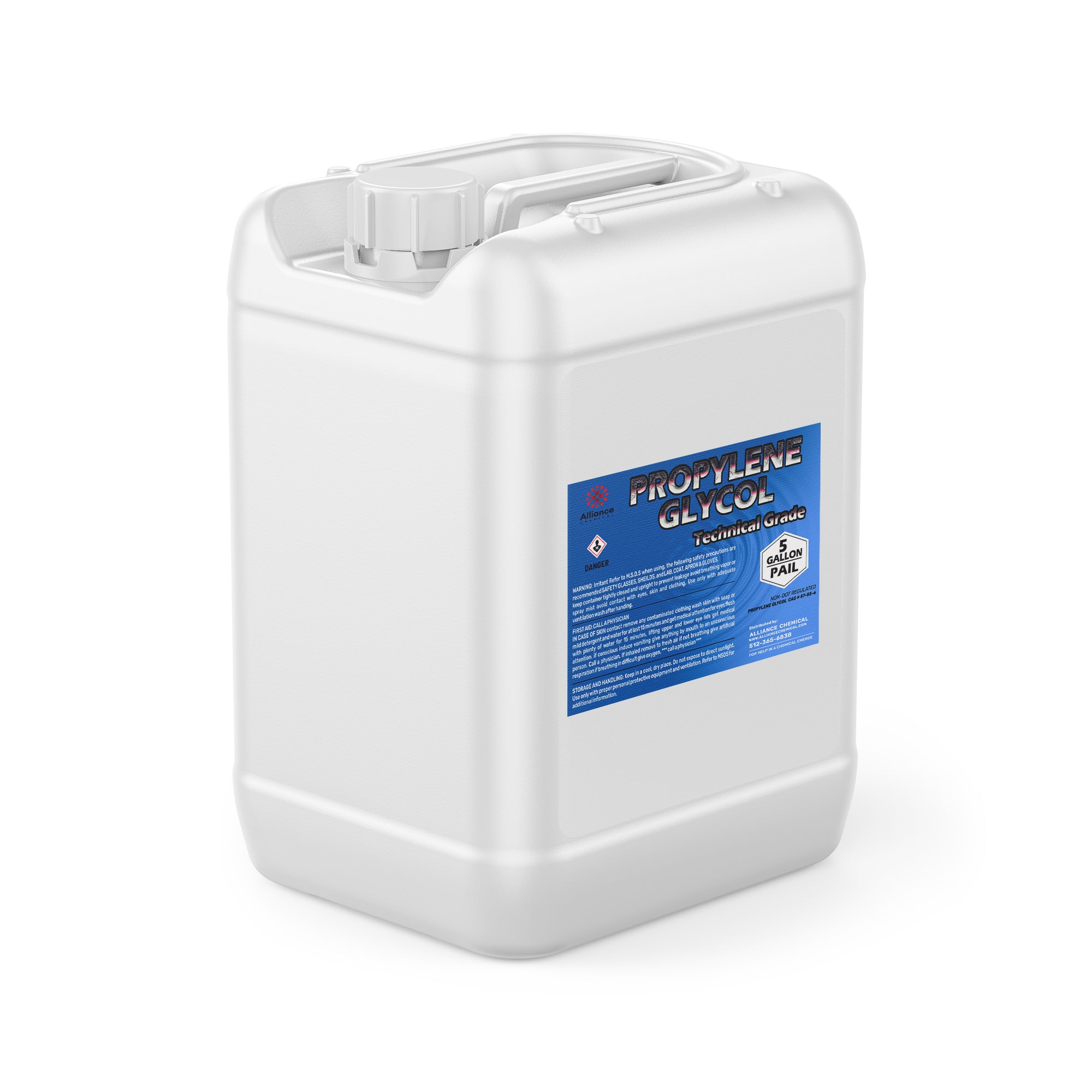
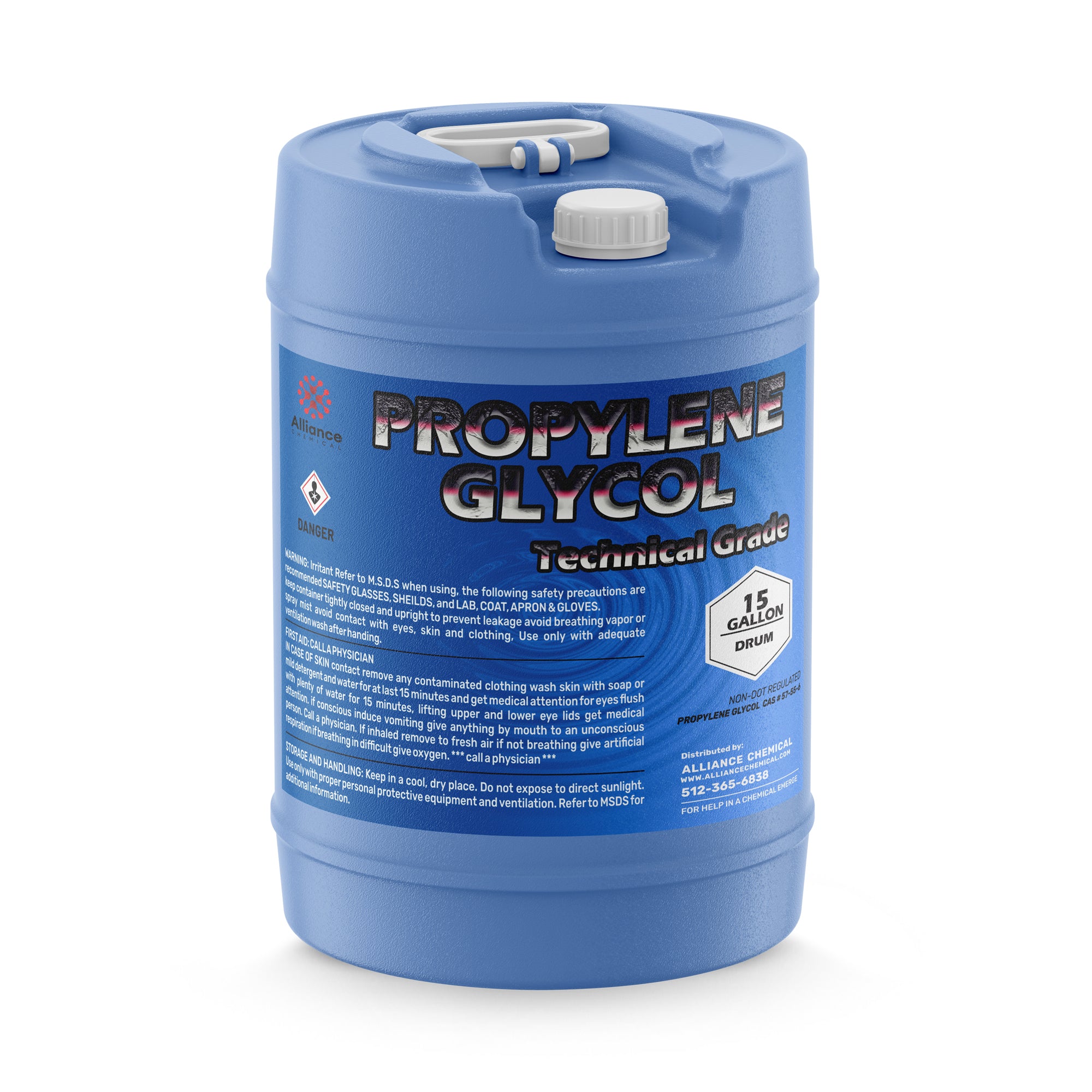
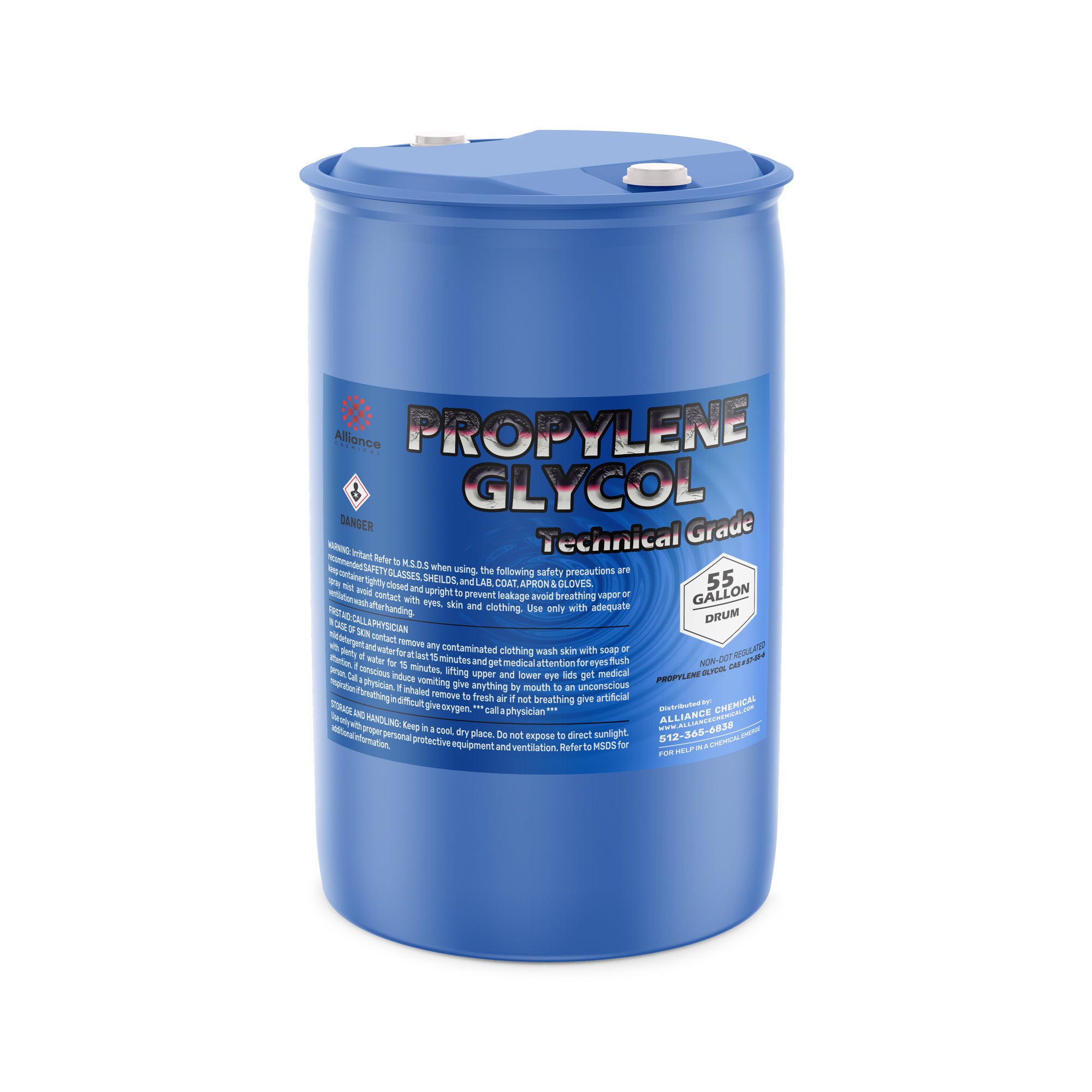
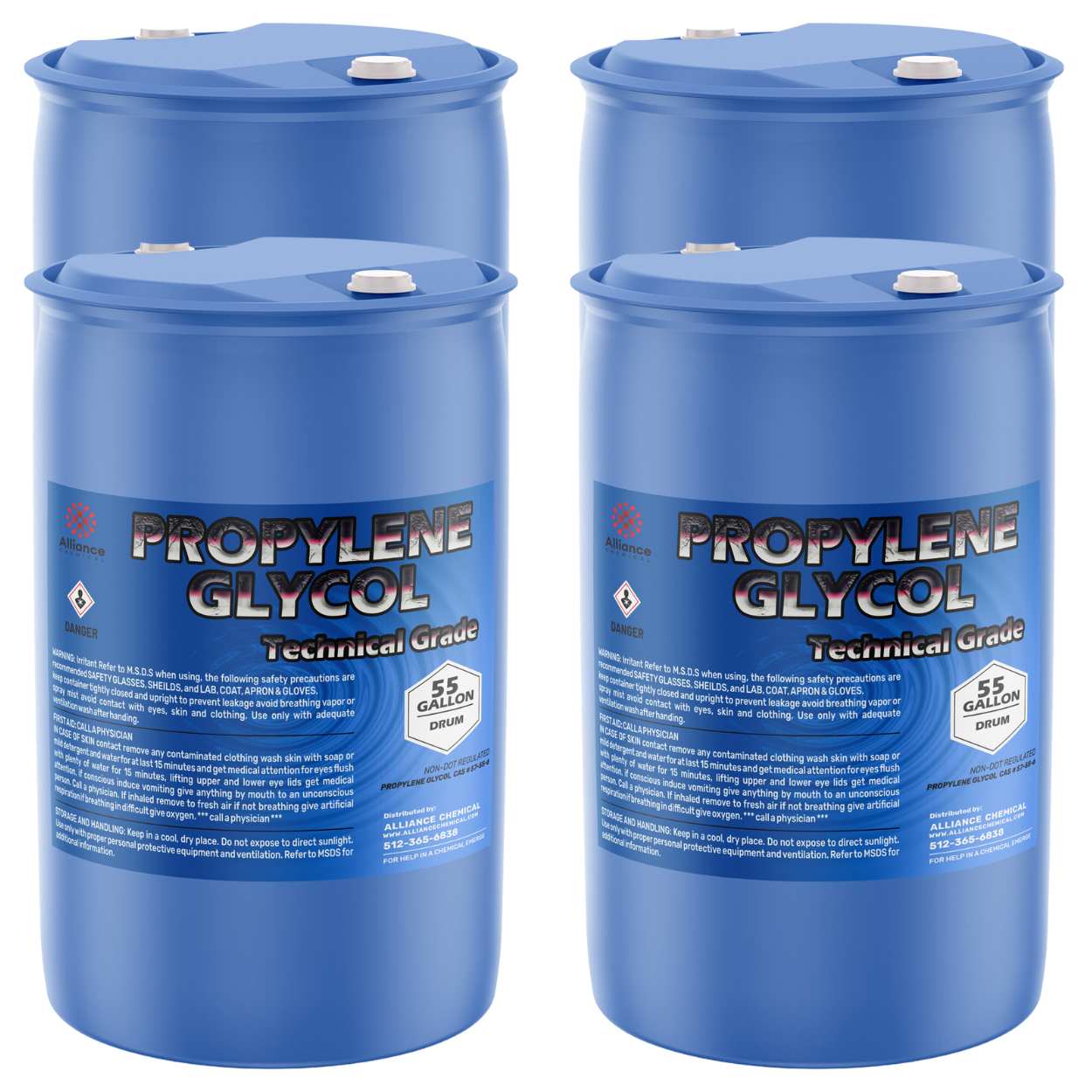
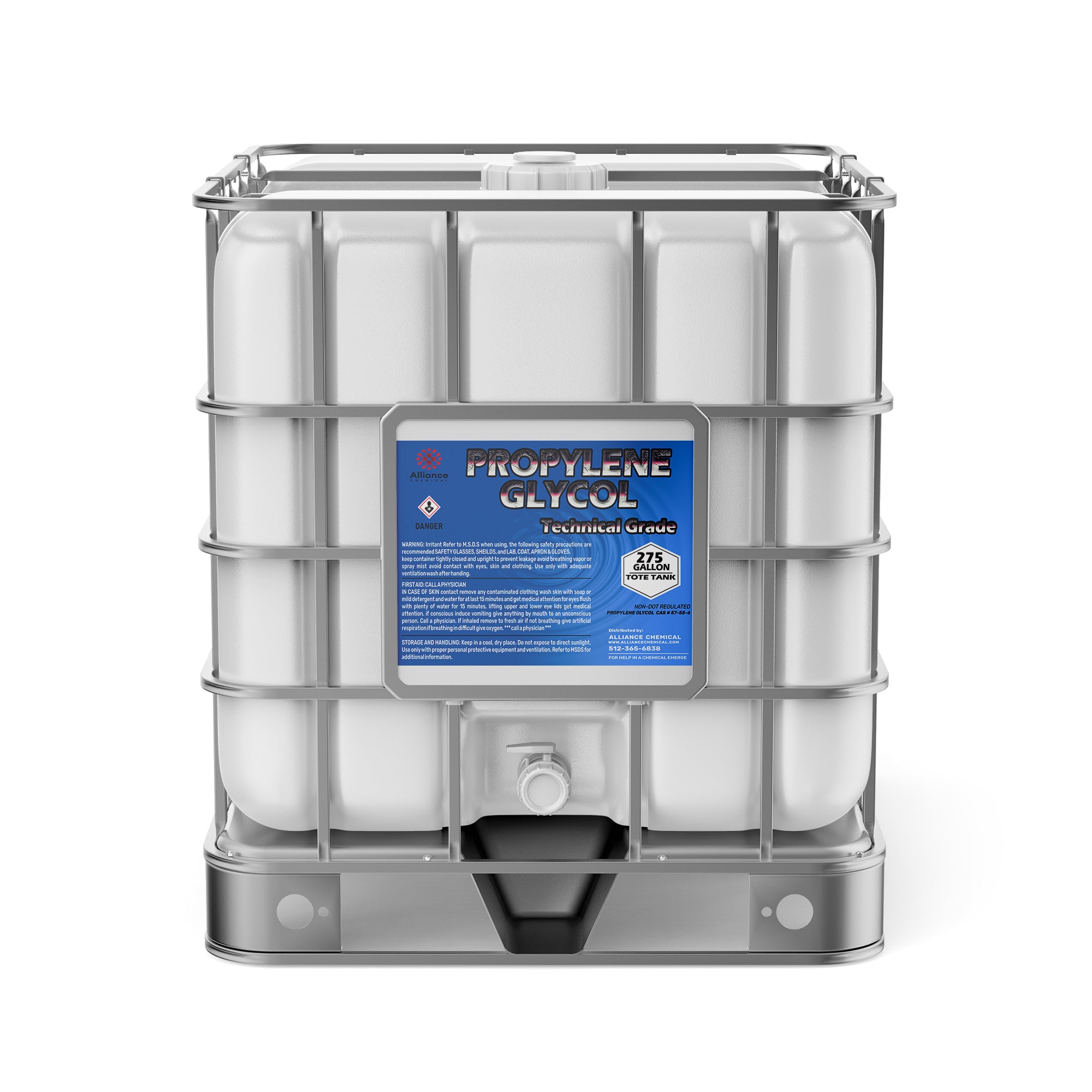
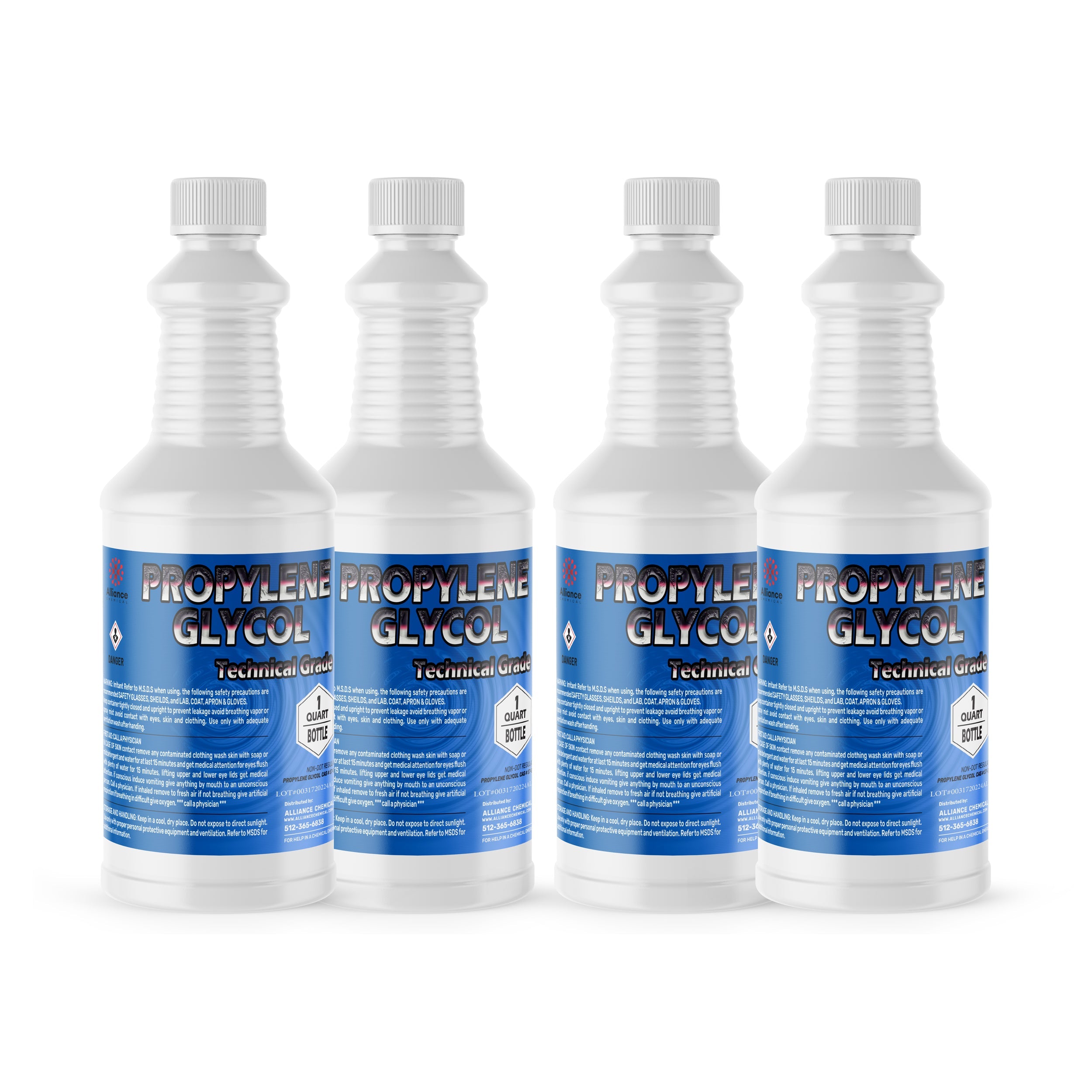
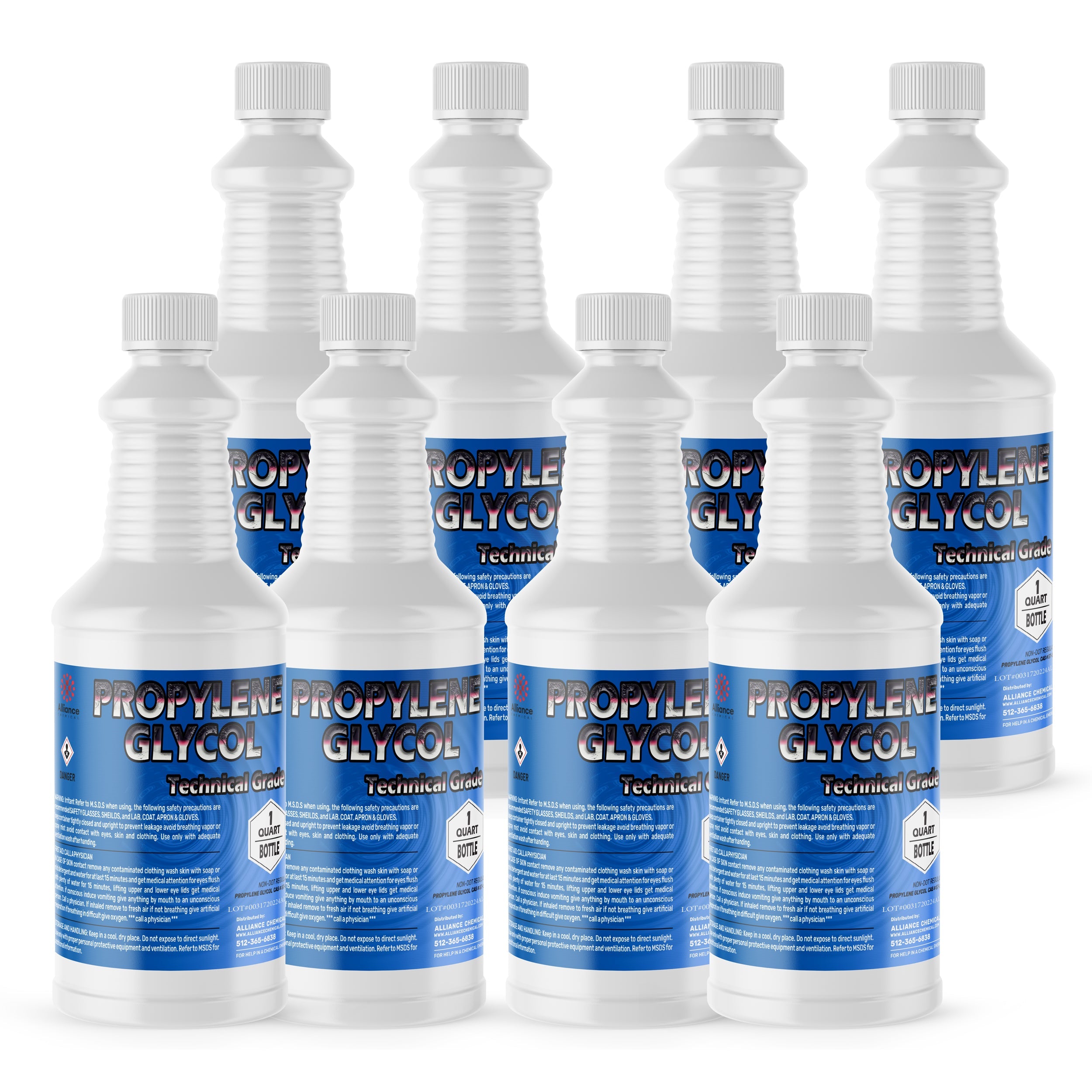
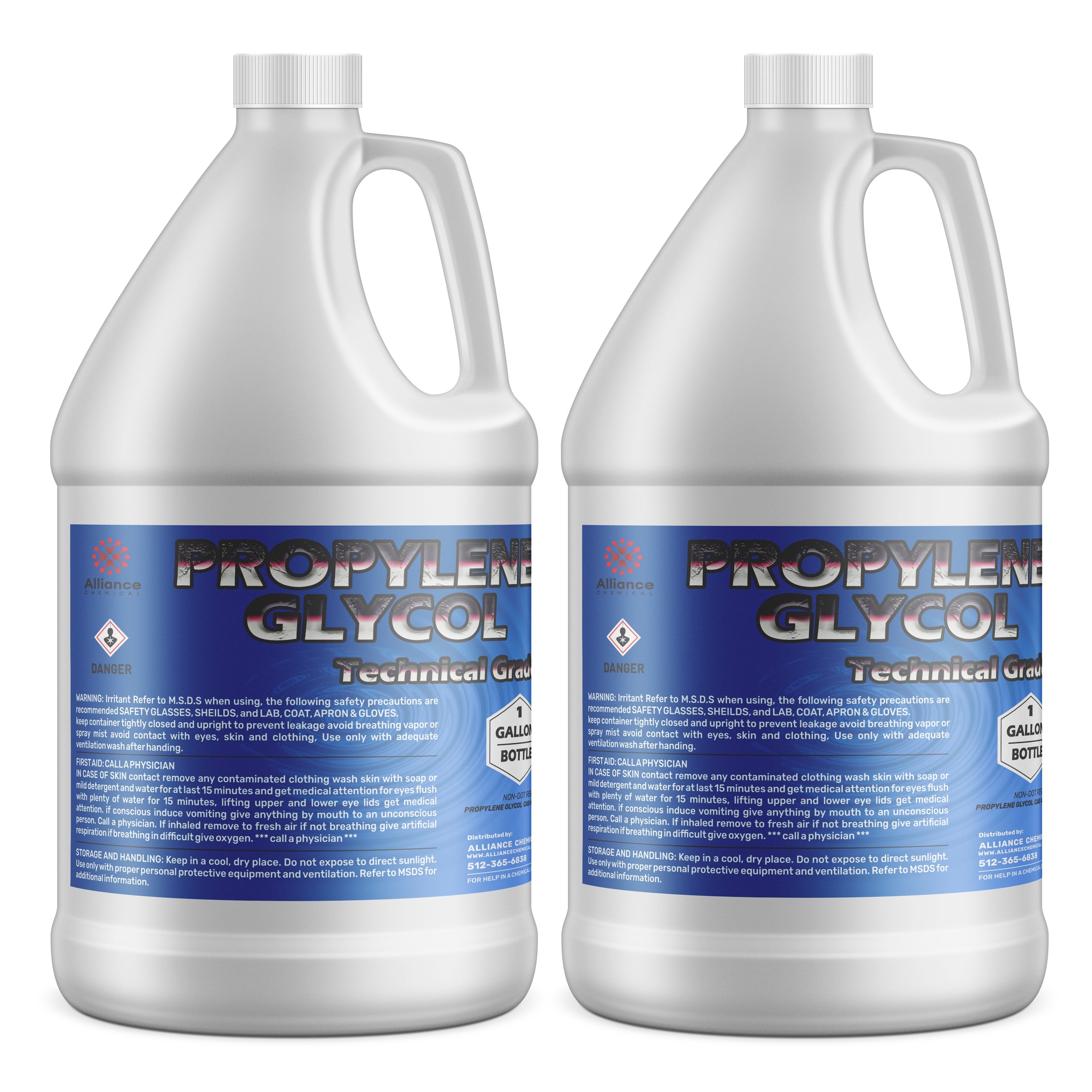
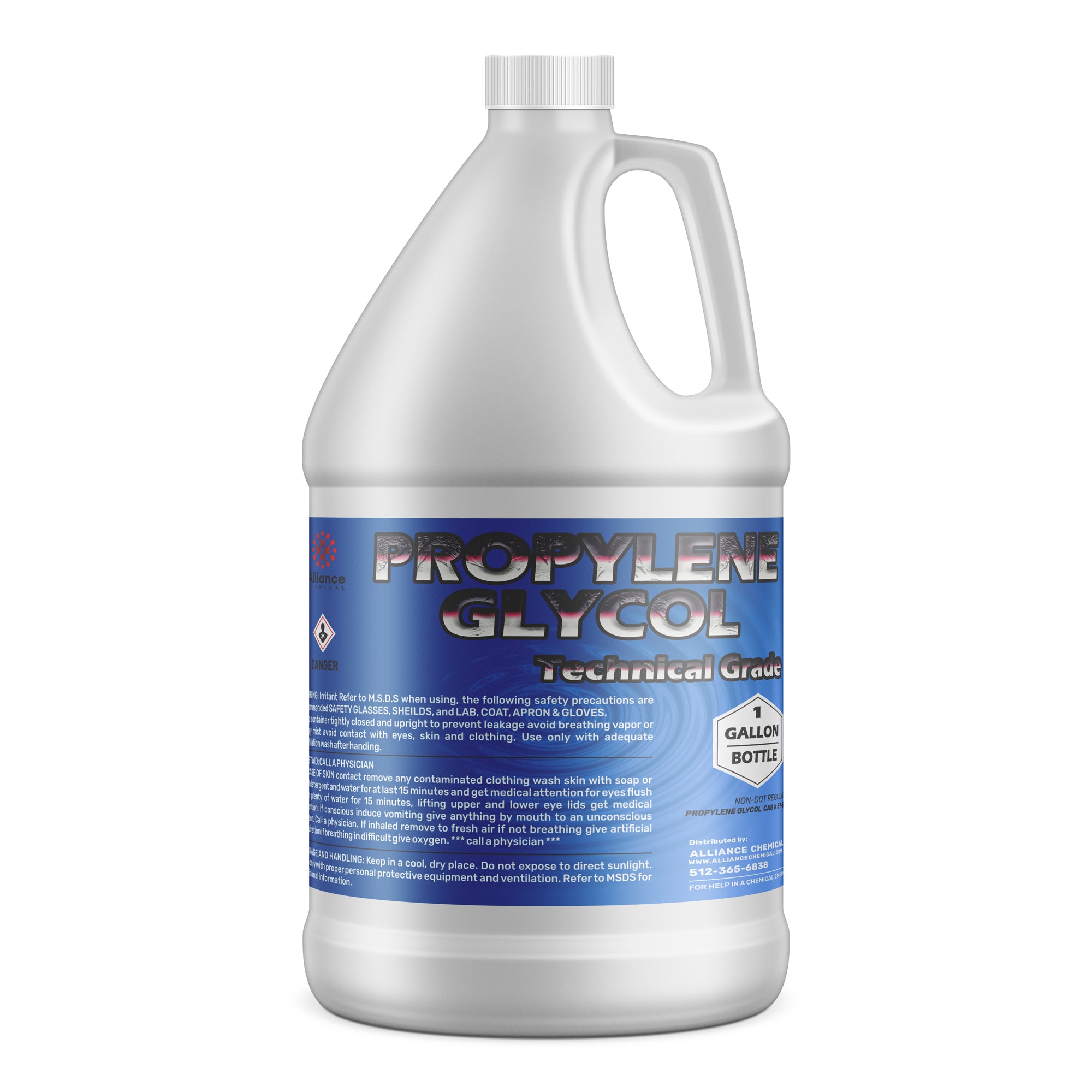
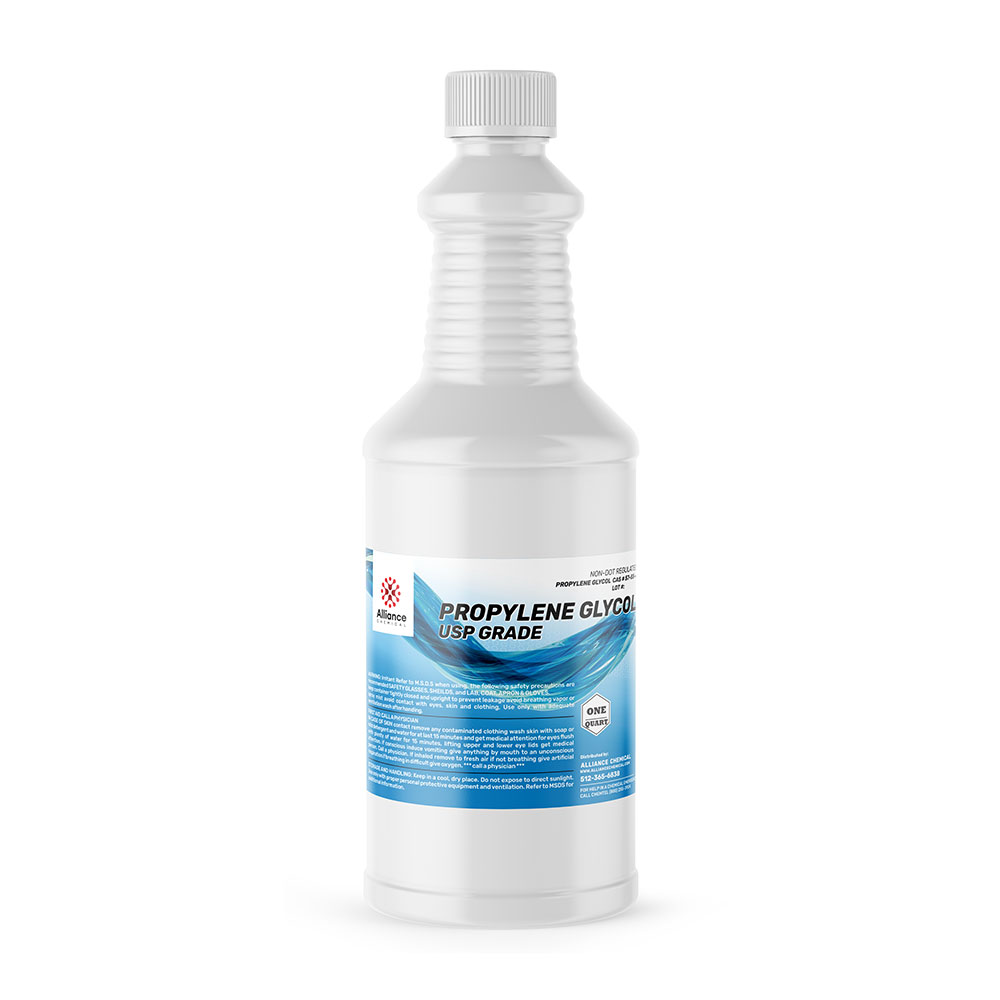
Why Propylene Glycol Technical Grade
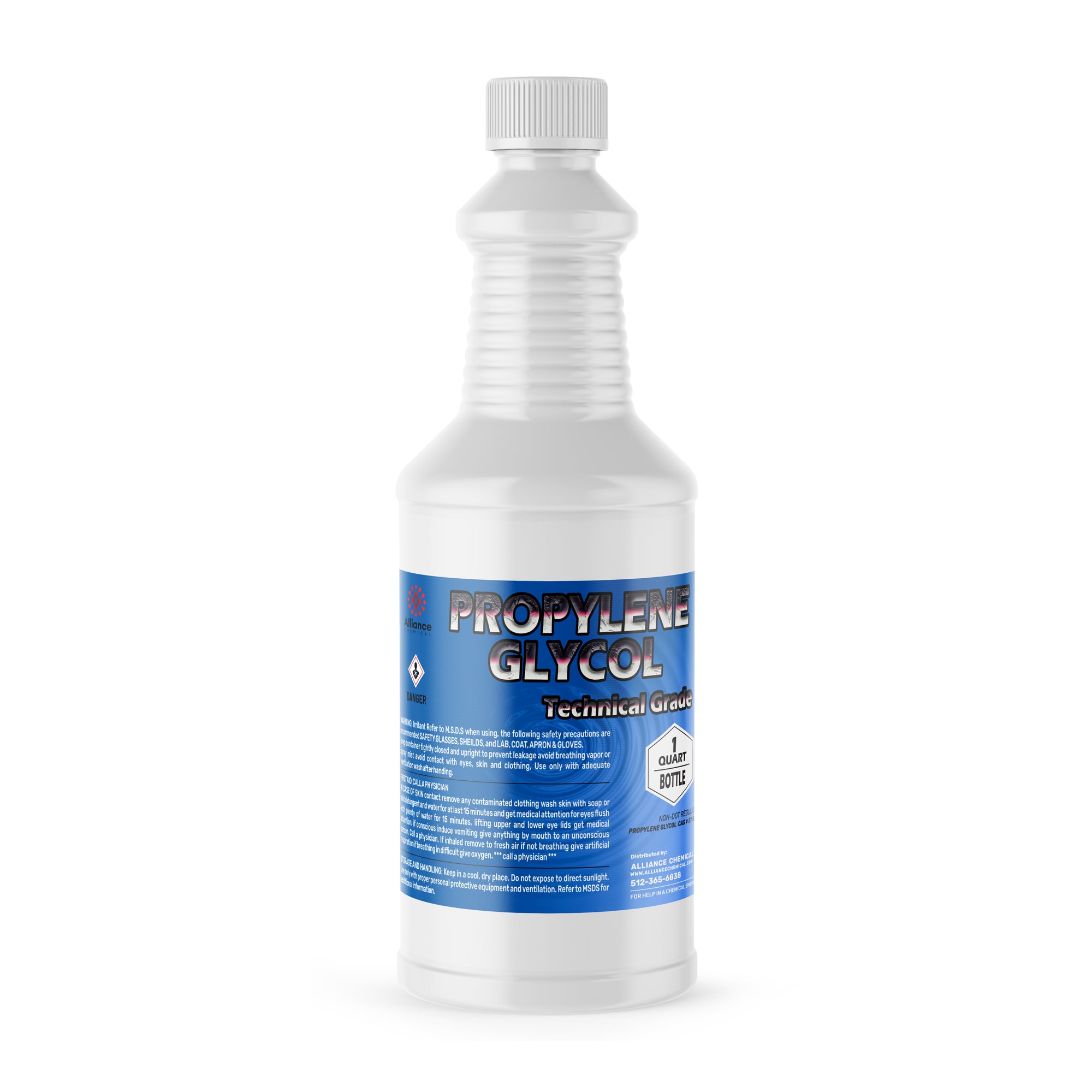
Propylene Glycol Technical Grade provides a 100% concentrated, uninhibited baseline fluid for industrial heat transfer systems and chemical manufacturing operations. Procuring this clear, slightly viscous liquid at full concentration enables facility engineers to precisely formulate custom dilutions, calculating the exact water-to-glycol ratio required to hit specific freeze protection curves for their regional climate. As a highly water-soluble chemical, it readily accepts deionized water to optimize thermal conductivity and heat capacity, which are critical variables in large-scale thermal management. Because this formulation contains no standard corrosion inhibitors, it serves as an exact chemical baseline for materials processing plants that integrate proprietary additive packages. Operators dealing with mixed-metal cooling loops must add an external inhibitor to this technical grade fluid to prevent galvanic corrosion, whereas those with entirely plastic piping systems often utilize this uninhibited formula directly after dilution.
Best Applications for This Grade
- Custom-blended heat transfer fluids, commonly applied in heavy industrial cooling loops where plant engineers must dilute the 100% concentration to match exact volumetric requirements and specific freeze-point targets.
- Chemical manufacturing, acting as a critical intermediate reactant to synthesize unsaturated polyester resins, polyurethanes, and commercial plasticizers, taking advantage of its complete miscibility with organic solvents.
- Industrial antifreeze formulation, serving as the primary freeze-point depressant in heavy-duty industrial antifreeze blends where manufacturers formulate their own final end-user product.
- Deicing fluid formulation, functioning as the foundational active ingredient in runway and heavy equipment deicing solutions before the manufacturer introduces specific performance surfactants.
- Laboratory research and materials processing, operating as a reliable laboratory grade solvent for industrial experiments requiring strictly uninhibited C3H8O2 with a verified flash point of 104 degrees Fahrenheit.
When to Choose a Different Grade
- If engineers require a fully concentrated fluid but need standard corrosion inhibitors already blended into the formula to protect closed-loop metal piping networks, select 100% Propylene Glycol Inhibited.
- If the system demands a ready-to-pump fluid featuring built-in corrosion defense alongside significant freeze protection for severe winter environments, utilize 50% Propylene Glycol Inhibited.
- If operators are working within a moderate climate and require a pre-mixed, inhibited fluid that balances baseline freeze protection with maximum pumpability and heat transfer efficiency, select 30% Propylene Glycol Inhibited.
- If the facility seeks an uninhibited fluid but prefers to avoid the operational variables of on-site dilution by utilizing a factory-blended solution, choose 30% Propylene Glycol Technical Grade.
| Molecular Weight |
76.09 |
| Formula |
C3H8O2 |
| Assay |
99-100.5% |
| Grade |
Laboratory Grade |
| Flash Point |
104°C (219.2°F) |
| Form |
Liquid |
| Solubility |
Miscible with water and many organic solvents |
| Appearance |
Clear, colorless liquid |
| Melting Point |
-59 |
| Boiling Point |
188.2 |
| Specific Gravity |
1.036 |
| Industry |
Analytical Chemistry, Food Industry, Pharmaceutical, Industrial, Cosmetics |