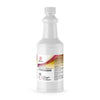
Product Overview
Our Methyl n-Propyl Ketone (MPK), also known as pentan-2-one, is a clear, colorless liquid ketone with a characteristic acetone-like odor similar to fingernail polish. It has a molecular formula of C5H10O and a molecular weight of 86.13. As a medium-boiling solvent, it represents an effective alternative to other ketone solvents like methyl ethyl ketone (MEK) in various industrial processes. MPK exhibits a density of 0.809 at 68 °F (USCG, 1999), meaning it is less dense than water and will float on the surface when mixed. Its physical properties make it a versatile tool for precision extraction, specialized coatings, and synthetic organic chemistry.
Our Methyl n-Propyl Ketone is distributed directly from our Texas-based facility to ensure consistent supply and high purity. Because it has a flash point of 45 °F (NTP, 1992) and a boiling point range of 212 to 214 °F at 760 mmHg (NTP, 1992), it functions exceptionally well in applications requiring moderate evaporation rates and strong solvency. Buyers in the aerospace, automotive, and polymer industries rely on MPK to deliver reliable performance without the fast evaporation characteristics of lighter ketones. Alliance Chemical manages all supply-chain logistics to provide this critical chemical reagent in multiple packaging sizes, from quarts to gallons.
Why This Grade
Selecting the appropriate purity grade of Methyl n-Propyl Ketone is essential for maintaining process control and preventing manufacturing failures. Industrial-grade solvents must meet tight specification limits for moisture and non-volatile residues to prevent unwanted side reactions in chemical synthesis. If a lower-purity solvent with high water content is introduced, it can cause phase separation in solvent-borne coatings or lead to hydrolysis in moisture-sensitive formulations. This particular offering of MPK is carefully managed to guarantee a high degree of purity suitable for critical solvent and cleaning applications.
Using an incorrect grade of MPK can result in significant operational failure modes, including poor adhesion in specialty coatings and reduced efficiency in solvent extraction processes. For instance, trace impurities can contaminate polymer networks, leading to structural weaknesses or discoloration in the finished product. By choosing a verified and analyzed solvent from Alliance Chemical, industrial operators can ensure that their chemical reactions and cleaning procedures proceed without unexpected interference. This rigorous quality control ensures that your processes remain compliant and efficient across all manufacturing batches.
Chemical Profile
- CAS Number
- 107-87-9
- Chemical Formula
- C5H10O
- Molecular Weight
- 86.13 g/mol
- Boiling Point
- 212 to 214 °F at 760 mmHg (NTP, 1992)
- Melting Point
- -108 °F (NTP, 1992)
- Flash Point
- 45 °F (NTP, 1992)
- Specific Gravity
- 0.809 at 68 °F (USCG, 1999) - Less dense than water; will float
- Appearance
- Methyl propyl ketone appears as a clear colorless liquid with the odor of fingernail polish. Flash point 45 °F. Less dense than water and soluble in water. Hence floats on water. Density 0.809 g / cm3. Vapors heavier than air.
- Solubility
- 10 to 50 mg/mL at 72 °F (NTP, 1992)
- UN Number
- UN1249
- Hazard Class
- Class 3
- Packing Group
- II
- Proper Shipping Name
- Methyl propyl ketone
- GHS Signal Word
- Danger
Values sourced from Alliance Chemical's canonical chemistry registry. Certificate of Analysis (COA) per lot.
Industrial Applications
- Precision surface cleaning of metal parts in aerospace and automotive manufacturing, ensuring optimal adhesion for subsequent protective layers.
- Formulation of high-solids solvent-borne coatings and lacquers, where a medium-evaporating solvent is required to achieve a smooth, defect-free surface finish.
- Use as an extraction solvent in the synthesis of organic intermediates, pharmaceutical compounds, and specialty chemical products requiring high solvency.
- Component in polymer polymerization reactions and plastic cement formulations, facilitating proper dissolution and bonding of synthetic resins and elastomers.
- Carrier solvent for agricultural chemical active ingredients and specialized print inks, ensuring uniform dispersion and controlled drying characteristics.
Hazmat & Shipping
Methyl n-Propyl Ketone is classified as a regulated hazardous material due to its flammability and potential health hazards. It is shipped under the proper shipping name Methyl propyl ketone with the identifier UN1249, classified under Hazard Class 3 (Flammable Liquid), and assigned to Packing Group II. The signal word for this product is Danger. It has a flash point of 45 °F (NTP, 1992) and a vapor pressure of 12 mmHg at 68 °F (NTP, 1992), indicating that flammable vapors can accumulate quickly at ambient temperatures. Transporting this material requires strict adherence to Department of Transportation (DOT) regulations and specialized hazmat packaging.
In accordance with the GHS classifications, this chemical is associated with several hazard statements: H225 (31.3%), H302 (92.7%), H319 (91.1%), and H335 (74.6%). No pictograms are specified in the canonical facts, but compliance protocols dictate that handlers must wear appropriate Personal Protective Equipment (PPE) to mitigate these risks. Required safety gear includes chemical-resistant nitrile or butyl gloves, safety goggles to prevent eye irritation, and appropriate respiratory protection when working in poorly ventilated areas. A Safety Data Sheet (SDS) is provided with every order to ensure your facility maintains complete regulatory compliance and safe handling standards.
Handling & Storage
Methyl n-Propyl Ketone must be stored in a cool, dry, well-ventilated location away from direct sunlight, heat, sparks, open flames, and other ignition sources. The storage temperature should ideally be kept below 77 °F to minimize vapor pressure buildup, which is 16 mmHg at 77 °F (NTP, 1992). MPK is compatible with stainless steel, carbon steel, and high-density polyethylene (HDPE) containers, but can degrade certain natural rubbers, plastics, and elastomers. It is highly incompatible with strong oxidizing agents, strong acids, and strong bases, as contact with these substances can cause hazardous exothermic reactions. Ensure all storage drums and transfer lines are properly grounded and bonded to prevent static discharge during transfer operations.
Order & Documentation
Alliance Chemical provides comprehensive technical and regulatory documentation for our entire inventory. A Certificate of Analysis (COA) is available upon request to verify the physical properties and purity of each batch. We also offer a range of sizes, which can be viewed in our Ketones collection. To secure your supply or to receive a volume discount for your facility, please Request a Quote or Download the SDS directly from our site. Our logistics team is prepared to coordinate prompt, compliant transport to your industrial site.
Why Buy from Alliance Chemical
Since 1997, Alliance Chemical has supplied premium industrial chemicals from Taylor, Texas under CAGE Code 1LT50, with a COA and SDS included on every order. For industrial use only.