

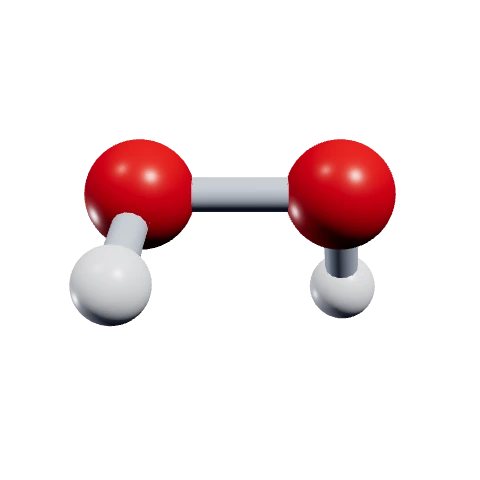


After a multi-million-dollar renovation repainted the Lincoln Memorial Reflecting Pool “American Flag Blue,” a green algae bloom took over within days. Crews were filmed pouring 12% hydrogen peroxide from gallon jugs into the water — and days later the basin still looked green. The episode put one chemistry question in front of a national audience: does hydrogen peroxide actually fix algae, and if so, why didn’t it work here? Alliance Chemical was among the sources USA TODAY cited on the chemistry.
The short answer: hydrogen peroxide really does oxidize and break down algae — it is a legitimate chlorine-free pool treatment. What went wrong at the Reflecting Pool was not the chemistry. It was the dose, the volume, and the method. Pouring jugs of 12% peroxide into a stagnant, sun-baked, 6.75-million-gallon basin is a little like trying to salt an ocean with a shaker.
This guide unpacks the chemistry that made national headlines: how hydrogen peroxide acts on algae, the critical difference between an oxidizer and a residual sanitizer, the dosing math that explains why gallon jugs could not touch a basin that size, what concentration actually does the job (see our complete hydrogen peroxide concentration guide), and how to handle these solutions safely. If you want the full how-to for treating a real pool, our complete guide to hydrogen peroxide pool treatment covers the maintenance program end to end — this article is the “why the Reflecting Pool stayed green” companion to it.
Does hydrogen peroxide break down algae? Here is the chemistry
Hydrogen peroxide does break down algae, because it is a powerful oxidizer that attacks the organic molecules algae are built from. When H2O2 decomposes it releases reactive oxygen that tears apart cell walls, pigments, and the slimy organic film that lets a bloom spread. That same oxidizing action is why peroxide bleaches stains and degrades contaminants — and crucially, when it is done, it leaves behind only water and oxygen.
That clean breakdown is the whole appeal of peroxide as a pool treatment. Unlike chlorine, which produces disinfection byproducts such as trihalomethanes (THMs) and chloramines — the source of red eyes, the “pool smell,” and bleached swimwear — hydrogen peroxide breaks down into just two things: water and oxygen. No chemical smell, no bleached fabric, no chloramine off-gassing. For people sensitive to chlorine, that is a genuine advantage, and it is exactly why hydrogen peroxide is an established chlorine-free option.
CAS: 7722-84-1 • Formula: H2O2 • decomposes to H2O + O2 • strong oxidizer, no chloramine/THM byproducts • fully water-miscible. Properties: PubChem CID 784.
So if the chemistry works, why did a national landmark stay green after crews dosed it with peroxide? Because killing algae in a beaker is not the same as clearing a bloom in millions of gallons of open, stagnant water. Two things separate the lab from the Reflecting Pool: the difference between an oxidizer and a sanitizer, and the dose-to-volume math. Take them in order.
Oxidizer vs. sanitizer: the distinction that explains the Reflecting Pool
Hydrogen peroxide is an excellent oxidizer but a comparatively weak residual sanitizer — and conflating those two jobs is the single biggest misconception in this whole story. Oxidation destroys organic matter and clears the water; sanitizing means holding a measurable, lasting level of a biocide that keeps re-killing organisms as they arrive. Chlorine’s superpower is not that it kills harder — it is that it persists in the water as a residual, hour after hour.
Peroxide is different. Once it has done its oxidizing work, it decomposes — the very property that makes it clean (water + oxygen) also means it does not linger as a protective residual the way chlorine does. In a properly run peroxide pool, that gap is closed by dosing on a schedule and, in the best systems, by pairing peroxide with UV light in an Advanced Oxidation Process (AOP): UV reacts with H2O2 to create hydroxyl radicals, among the most powerful oxidizers known, giving both oxidation and disinfection.
Oxidizer = clears the water once (peroxide excels here). Residual sanitizer = stays in the water and keeps protecting it (chlorine excels here). A one-time pour of peroxide into a basin with no circulation, no filtration, and no follow-up dosing oxidizes what it touches — then the bloom simply grows back from what it missed.
Now layer in the Reflecting Pool’s conditions: a wide, shallow, sun-drenched basin; freshly cleaned and painted surfaces shedding nutrients; warm June water; and little to no real circulation or filtration designed for sanitation. That is a near-perfect algae incubator. Even a correct oxidizer dose gets consumed fast and the bloom rebounds — unless the treatment is sized to the volume and backed by ongoing maintenance. Which brings us to the math.
How much hydrogen peroxide does a 6.75-million-gallon pool actually need?
Far more than a few gallon jugs — by a factor of hundreds. A widely used rule of thumb for a peroxide shock is roughly one gallon of ~27–35% hydrogen peroxide per 10,000 gallons of water. Run that against the Reflecting Pool’s roughly 6.75 million gallons and the scale of the mismatch becomes obvious.
| Concentration used | Approx. shock dose | For ~6.75M gallons |
|---|---|---|
| ~30% (typical shock strength) | ~1 gal per 10,000 gal | ~675 gallons of concentrate |
| 12% (what crews poured) | ~2.5× the volume for the same active oxygen | ~1,600–1,700 gallons of 12% |
| A few gallon jugs | — | a rounding error against the volume |
The 12% row is the key insight. Because 12% solution carries roughly 2.5 times less active oxygen per gallon than 30%, you need about 2.5× the volume to deliver the same oxidizing punch. So the weaker the solution, the more of it a given body of water demands — the opposite of what “pour in a few jugs” assumes. A handful of gallon jugs of 12% against millions of gallons of stagnant water was never going to move the needle.
These figures are order-of-magnitude planning numbers, not a prescription — real dosing depends on bloom severity, water chemistry, circulation, sunlight, and whether you are shocking or maintaining. The point is the scale: clearing a bloom this size with peroxide is a managed program measured in hundreds of gallons plus circulation and maintenance, not a one-time pour. For the actual dosing method on a normal pool, see our guide to shocking a pool without chlorine and the complete pool-treatment guide.
What concentration of hydrogen peroxide is used for pools?
For pool and spa work the practical range runs from about 12% up to roughly 30–35%, and the right pick is a trade-off between handling safety and how much volume you want to move. Lower concentrations are easier and safer to handle but you need much more of them; higher concentrations do more per gallon but demand far more careful handling. Here is how the common strengths line up.
| Concentration | Typical use | Handling note |
|---|---|---|
| 12% | Hot tubs, small spas, light maintenance, smaller pools | Stronger than the 3% from a drugstore — still corrosive; gloves + eye protection |
| 25% | Mid-size pools, regular maintenance dosing | Corrosive; careful measured dosing |
| 30% | Large pools, heavy shock treatment, fast knockdown | Highly corrosive oxidizer; full PPE, slow controlled addition |
The 12% the crews used is a sensible handling choice — it is far less aggressive than 30% — but it is the wrong tool for a fast knockdown of a massive bloom, precisely because of the volume math above. For a body of water that size you would reach for a higher concentration to cut down the sheer number of gallons to move, and you would pair it with circulation and maintenance dosing. For a backyard pool or spa, 12% is often exactly right. Match the concentration to the volume and the job — our pool-treatment guide walks through dosing for each, and our water-treatment chemicals guide covers the broader picture.
Drugstore 3% peroxide works on the same chemistry, but you would need well over 100 gallons of 3% to match a single gallon of 30%. That is why pool and industrial work uses concentrated solutions — the active-oxygen-per-gallon is what you are really buying.
So why did the Reflecting Pool stay green?
It stayed green because clearing an algae bloom is a system problem, and the pour addressed only one part of it. Hydrogen peroxide was a reasonable choice of chemistry — milder than chlorine, no byproducts — but four conditions stacked against a few jugs of 12%:
- Volume vs. dose. A few gallons of 12% against ~6.75 million gallons is orders of magnitude short of a shock dose (see the math above).
- No residual, no maintenance. Peroxide oxidizes once and decomposes; without scheduled re-dosing the surviving algae simply regrow.
- No real circulation or filtration. A reflecting pool is built to look still, not to turn its water over and filter it the way a swimming pool does — so treatment cannot mix in or stay in contact, and dead algae are not removed.
- A perfect growing environment. Warm June water, full sun, shallow depth, and freshly cleaned/painted surfaces shedding nutrients all push the bloom to rebound fast.
None of that is an indictment of hydrogen peroxide. It is a reminder that the chemical is one input into a process. Used at the right concentration, at the right dose for the volume, with circulation and ongoing maintenance, peroxide clears and keeps water clear — which is exactly how a chlorine-free pool program is run. Skip the dose math and the maintenance, and even the best oxidizer loses to a sunny afternoon.
Is concentrated hydrogen peroxide safe to handle?
Concentrated hydrogen peroxide is safe when handled correctly, but the 12% used at the Reflecting Pool — and especially 25–30% — is far more aggressive than the 3% in your medicine cabinet and must be treated as a hazardous oxidizer. It can cause serious skin and eye burns on contact, its mists and vapors irritate the airway, and as a strong oxidizer it can intensify a fire and reacts badly with many incompatible materials.
Strong oxidizer — keep away from organics, metals, and reducing agents. Causes burns; can release oxygen and build pressure in a sealed/contaminated container (always use vented caps and clean equipment). OSHA PEL: 1 ppm (1.4 mg/m3, 8-hr TWA). Wear chemical splash goggles and chemical-resistant gloves, add slowly to water in a ventilated area, and never return unused product to its container. See the NIOSH Pocket Guide for hydrogen peroxide and keep a current Safety Data Sheet at the point of use.
The good news on the environmental side — and a point officials made about the Reflecting Pool — is that hydrogen peroxide breaks down to water and oxygen and does not leave a persistent chemical residue in the way some treatments do. That clean breakdown is real. It just does not change the fact that the concentrate in the jug is corrosive and demands proper PPE and storage until it has reacted and decomposed. Respect the strength going in, and the chemistry takes care of the cleanup.
How to buy hydrogen peroxide for pools and water treatment
Two decisions get the purchase right. First, set the concentration from the job and the water volume: 12% for hot tubs, spas, and smaller or maintenance dosing; 25–30% when you need to move less liquid for a larger pool or a faster knockdown. Second, set the grade — Technical Grade is the economical, correct choice for pool and water treatment, while ACS Grade (tighter specs, ships with a Certificate of Analysis) is for lab, analytical, and residue-sensitive work.
Alliance Chemical stocks hydrogen peroxide from 3% through 30%, in Technical and ACS grades, from quart bottles to 275/330-gallon totes, with the lot Certificate of Analysis on request at no charge and people who pick up the phone to help you match concentration and volume. Tell us the water volume and whether you are shocking or maintaining, and we will help you spec it — so you are not under-dosing a bloom or over-buying strength you do not need.
Need hydrogen peroxide for a pool or water treatment?
In stock from 3% to 30%, Technical and ACS grades, quarts to 330-gallon totes, lot CoA on request at no charge. Not sure on dose? Tell us the volume — we’ll help you size it.
Looking for ACS grade for lab or analytical work? We also stock 12% ACS and 30% ACS. New to dosing concentrated peroxide? Start with the complete pool-treatment guide and our piece on skipping pool-store markups with industrial-grade chemicals.
References & Authoritative Sources
Primary sources consulted for this article. Regulatory and physical-property figures above are drawn from these references.
- Hydrogen Peroxide — thermophysical data — NIST Chemistry WebBook, SRD 69, National Institute of Standards and Technology. Accessed 2026-09-04.
Frequently asked questions
Does hydrogen peroxide kill algae?
Yes. Hydrogen peroxide is a strong oxidizer that breaks down the organic molecules algae are built from, including cell walls and pigments, and it decomposes afterward into just water and oxygen with no chloramine or trihalomethane byproducts. It is an established chlorine-free pool treatment. However, it is an oxidizer rather than a lasting residual sanitizer, so it must be dosed at the right amount for the water volume and backed by circulation and ongoing maintenance to keep a bloom from returning.
Why did the hydrogen peroxide not clear the Lincoln Memorial Reflecting Pool?
Because of dose, volume, and method, not chemistry. Crews poured a few gallon jugs of 12% hydrogen peroxide into a roughly 6.75-million-gallon basin. At a typical shock dose of about one gallon of 30 percent per 10,000 gallons, that pool would need on the order of hundreds of gallons of concentrate, and far more at 12 percent. The basin also had little circulation or filtration, warm sunlit shallow water, and freshly cleaned and painted surfaces shedding nutrients, so any algae the small dose missed simply regrew.
How much hydrogen peroxide does it take to shock a pool?
A common rule of thumb is roughly one gallon of about 27 to 35 percent hydrogen peroxide per 10,000 gallons of water for a shock treatment. Lower concentrations such as 12 percent require proportionally more volume, roughly 2.5 times as much to deliver the same active oxygen as 30 percent. Actual dosing depends on bloom severity, water chemistry, circulation, and sunlight, so treat these as planning numbers and follow a proper pool-treatment program.
What concentration of hydrogen peroxide is used in pools?
Pool and spa work typically uses 12 percent up to about 30 to 35 percent. 12 percent suits hot tubs, small spas, and light maintenance; 25 percent suits mid-size pools and regular dosing; 30 percent is used for large pools and heavy shock treatment. Higher concentrations do more per gallon but are far more corrosive and demand more careful handling. The 3 percent sold in drugstores works on the same chemistry but would require well over 100 gallons to match a single gallon of 30 percent.
Is hydrogen peroxide better than chlorine for pools?
It depends on the goal. Hydrogen peroxide breaks down into only water and oxygen, so it avoids the chloramines and trihalomethanes that cause the pool smell, eye irritation, and bleached swimwear associated with chlorine, which is a real advantage for chlorine-sensitive swimmers. The trade-off is that peroxide is an oxidizer without a lasting residual, so it needs scheduled dosing and often a UV-paired Advanced Oxidation Process to also disinfect, whereas chlorine persists in the water as a residual sanitizer on its own.
Is 12 percent hydrogen peroxide dangerous?
12 percent hydrogen peroxide is far more aggressive than the 3 percent in a medicine cabinet and must be handled as a hazardous oxidizer. It can cause serious skin and eye burns, its mist and vapor irritate the airways, and as a strong oxidizer it can intensify a fire and react with incompatible materials. Wear chemical splash goggles and chemical-resistant gloves, add it slowly to water in a ventilated area, use clean vented containers, and keep a Safety Data Sheet at the point of use. OSHA sets a permissible exposure limit of 1 ppm as an 8-hour average.
Is hydrogen peroxide safe for the environment in water?
Hydrogen peroxide decomposes into water and oxygen and does not leave a persistent chemical residue, which is why it is considered an environmentally friendly water-treatment oxidizer and why officials noted it as a milder option than chlorine for the Reflecting Pool. That clean breakdown is genuine, but the concentrate before it reacts is still corrosive and must be handled with proper protective equipment and storage until it has decomposed.
Can you use hydrogen peroxide instead of chlorine in a swimming pool?
Yes. Hydrogen peroxide is a recognized chlorine-free pool treatment, typically used at 12 to 35 percent and often paired with a UV Advanced Oxidation Process for disinfection. Success depends on dosing to the water volume, maintaining circulation and filtration, and re-dosing on a schedule, because peroxide oxidizes once and decomposes rather than holding a residual. For a full program, see Alliance Chemical guide to hydrogen peroxide pool treatment.
Related Chemical Collections
About the author
Andre Taki
This article is for informational purposes only.


