Product Overview
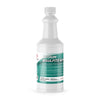
Sodium Bisulfite 40% is an aqueous solution widely utilized across various industrial sectors for its reliable reduction and dechlorination capabilities — representing a vital industrial reagent. Chemically identified as sodium hydrogen sulfite with the molecular formula HNaO3S and a molecular weight of 104.06, this high-performance liquid solution offers a stable and convenient method for introducing active bisulfite ions into complex chemical processes. Alliance Chemical proudly distributes this chemical solution to meet the rigorous operational demands of industrial facilities nationwide, ensuring consistent performance in environmental and manufacturing applications that require precise stoichiometric chemical addition.
Operating as a trusted Texas chemical supplier and distributor since 1997, Alliance Chemical ensures that our Sodium Bisulfite 40% liquid consistently meets strict technical specifications. This clear to pale yellow solution features a specific gravity of approximately 1.48 and exhibits a characteristic slight sulfurous odor that must be managed with proper ventilation systems. By opting for this pre-formulated liquid concentration within our salts collection, operators eliminate the severe dust hazards, handling risks, and mixing times associated with dry crystalline powders, thereby improving overall facility efficiency and employee safety.
Why This Grade
While a formal analytical grade is not applicable for this standard commercial formulation, maintaining a precise 40% concentration is critical for process stability and automated volumetric dosing calculations. Selecting a 40% aqueous solution ensures that the chemical remains completely dissolved at standard operating temperatures, preventing crystallization and subsequent blockages in dosing pumps, lines, and injection nozzles. Facilities designed for liquid sodium bisulfite rely on this standard concentration to avoid the operational downtime and equipment damage caused by erratic concentration levels.
Utilizing an incorrect concentration or an inconsistent grade can lead to severe process failure modes. If the concentration drifts below 40%, the dosage rates become insufficient, leading to incomplete dechlorination or inadequate chemical reduction in industrial waste streams. Conversely, higher concentrations risk crystallization in cold weather, which clogs pipes and fouls monitoring instruments. By utilizing our consistent Sodium Bisulfite 40% solution, industrial facilities can maintain precise control over their chemical reactions, protecting downstream equipment in industrial water processing.
Chemical Profile
- CAS Number
- 7631-90-5
- Chemical Formula
- HNaO3S
- Molecular Weight
- 104.06 g/mol
- Boiling Point
- Decomposes (NIOSH, 2024) °C
- Melting Point
- Decomposes (NIOSH, 2024) °C
- Specific Gravity
- 1.48 at 68 °F (USCG, 1999) - Denser than water; will sink
- Appearance
- Sodium bisulfite appears as white crystals or crystalline powder. Slight sulfurous odor. Specific gravity 1.48. Strong irritant to skin and tissue.
- Solubility
- 29 % (NIOSH, 2024)
- UN Number
- UN2693
- Hazard Class
- Class 8
- Packing Group
- III
- Proper Shipping Name
- Bisulfites, aqueous solutions, n.o.s. (Sodium bisulfite)
- GHS Signal Word
- Danger
Values sourced from Alliance Chemical's canonical chemistry registry. Certificate of Analysis (COA) per lot.
Industrial Applications
- Industrial Dechlorination: This solution is commonly used to neutralize residual chlorine in industrial wastewater streams before discharge to protect local aquatic ecosystems and downstream infrastructure.
- Pulp and Paper Processing: It serves as an essential chemical reduction and bleaching agent in the pulp bleaching process to improve overall paper brightness and quality.
- Hexavalent Chromium Reduction: It is widely employed in metal finishing and electroplating facilities to reduce toxic hexavalent chromium to its less hazardous trivalent state.
- Textile Dyeing and Bleaching: It is utilized in the textile manufacturing sector to remove excess chlorine and sulfur dyes from fabrics during the finishing process.
- Oxygen Scavenging in Boilers: It acts as an effective oxygen scavenger in high-pressure industrial boiler systems to prevent oxidative corrosion on critical internal metal surfaces.
Hazmat & Shipping
Sodium Bisulfite 40% is classified as a hazardous material for transport. It is regulated as UN2693, Hazard Class 8, Packing Group III. The Proper Shipping Name is Bisulfites, aqueous solutions, n.o.s. (Sodium bisulfite). The applicable Signal Word is Danger. As a regulated substance, shipments must be handled in accordance with all applicable Department of Transportation (DOT) regulations. This solution is corrosive to metals and human tissue, which necessitates specialized handling protocols and robust containment to ensure safe transit from our facility to your destination.
The GHS hazards for this product include the hazard statement H302, which indicates that the substance is harmful if swallowed. Proper personal protective equipment (PPE) is mandatory when handling this chemical. Operators must wear chemical-resistant gloves, protective aprons, and splash-resistant eye protection to avoid direct contact. In the event of exposure, operators must follow the emergency procedures detailed in the Safety Data Sheet (SDS) provided with every order. Our logistics team coordinates with certified hazmat carriers to guarantee compliant delivery of this regulated material.
Handling & Storage
Store Sodium Bisulfite 40% in a cool, dry, well-ventilated area, maintaining temperatures between 50°F and 85°F to prevent crystallization in cold weather or thermal decomposition at elevated temperatures. Compatible container materials include high-density polyethylene (HDPE), polypropylene, and fiberglass-reinforced plastic (FRP). Avoid contact with incompatible materials such as strong acids, strong oxidizers, and metals like brass, copper, or mild steel, which can trigger the release of hazardous sulfur dioxide gas. Secondary containment is highly recommended to manage potential spills and leaks.
Order & Documentation
Alliance Chemical provides complete documentation to support your regulatory compliance and quality assurance programs. A Certificate of Analysis (COA) is available upon request for every batch of Sodium Bisulfite 40%, and a Safety Data Sheet (SDS) is provided with every order. To secure your chemical supply or discuss bulk logistics, please Request a Quote or Download the SDS.
Why Buy from Alliance Chemical
Since 1997, Alliance Chemical has supplied premium industrial chemicals from Taylor, Texas under CAGE Code 1LT50, with a COA and SDS included on every order. For industrial use only.