Product Overview
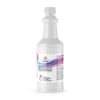
Methanol ACS Reagent Grade is a highly purified, colorless, volatile liquid essential for precise laboratory and industrial operations. Known systematically as methanol, it features the chemical formula CH4O and a molecular weight of 32.042. As a critical reagent distributed by Alliance Chemical, this compound acts as a versatile solvent, chemical intermediate, and extraction agent across various manufacturing and scientific sectors. This high-purity product is designed to meet the rigorous specifications established by the American Chemical Society, ensuring consistent performance and chemical reliability in sensitive reactions.
The physical properties of our methanol (CAS number 67-56-1) make it indispensable for demanding industrial workflows. It appears as a clear, colorless liquid with a faintly sweet, pungent odor that is highly characteristic of short-chain alcohols. Because it completely mixes with water, it serves as an excellent solvent for paints, varnishes, plastics, and resins. It is also used to remove water from automotive and aviation fuel lines, preventing ice formation and ensuring system integrity. Alliance Chemical delivers this product in various packaging configurations, ranging from individual quarts to bulk drums, to support diverse operational scales.
Why This Grade
ACS Reagent grade is the benchmark standard for analytical laboratories and precision industrial manufacturing where trace impurities can compromise results. Unlike technical or commercial grades, this material undergoes stringent purification and testing to limit impurities such as water, acetone, aldehydes, and heavy metals to negligible levels. In analytical chemistry, using a lesser grade can lead to background noise in chromatographic assays, erratic calibration curves, or outright failure of sensitive spectrophotometric analyses. Most lab-bench and analytical workflows in laboratory environments depend on those tolerances.
If a system utilizes a grade with higher water content or trace organic contaminants, severe failure modes can occur. In chemical synthesis, unwanted side reactions can produce hazardous byproducts or significantly reduce yield, driving up operational costs. In solvent extraction processes, non-volatile residues left behind by lower-purity solvents can contaminate final product batches, leading to quality control rejections and expensive disposal protocols. Purchasing our ACS Reagent Grade Methanol guarantees compliance with strict specifications, protecting high-value equipment and maintaining process integrity throughout your operations.
Chemical Profile
- CAS Number
- 67-56-1
- Chemical Formula
- CH4O
- Molecular Weight
- 32.042 g/mol
- Boiling Point
- 148.3 °F at 760 mmHg (NTP, 1992)
- Melting Point
- -144 °F (NTP, 1992)
- Flash Point
- 52 °F (NTP, 1992)
- Specific Gravity
- 0.792 at 68 °F (USCG, 1999) - Less dense than water; will float
- Appearance
- Methanol appears as a colorless fairly volatile liquid with a faintly sweet pungent odor like that of ethyl alcohol. Completely mixes with water. The vapors are slightly heavier than air and may travel some distance to a source of ignition and flash back. Any accumulation of vapors in confined spaces, such as buildings or sewers, may explode if ignited. Used to make chemicals, to remove water from automotive and aviation fuels, as a solvent for paints and plastics, and as an ingredient in a wide variety of products.
- Solubility
- greater than or equal to 100 mg/mL at 70 °F (NTP, 1992)
- UN Number
- UN1230
- Hazard Class
- Class 3
- Packing Group
- II
- Proper Shipping Name
- Methanol
- GHS Signal Word
- DANGER
Values sourced from Alliance Chemical's canonical chemistry registry. Certificate of Analysis (COA) per lot.
Industrial Applications
- Analytical Laboratory Solvent: Used as a mobile phase in high-performance liquid chromatography and spectrophotometry to ensure precise baseline resolutions without interference from trace impurities.
- Chemical Synthesis Intermediate: Acts as a primary methylating agent and feedstock in the synthesis of formaldehyde, methyl esters, and other high-value organic compounds.
- Moisture Dehydration Agent: Formulated into specialized aviation and automotive fuel lines to absorb and remove water, preventing system freezing and rust.
- Industrial Solvent and Extraction: Serves as a highly effective carrier solvent for manufacturing paints, resins, plastics, and extracting essential natural compounds in controlled settings.
- Solvent for Coatings and Varnishes: Utilized in the formulation of high-performance coatings, where its rapid evaporation rate and solvency ensure uniform application and finish.
Hazmat & Shipping
Methanol is a regulated material that requires strict adherence to safety and transport compliance protocols. It is classified under United States Department of Transportation regulations as UN1230, Hazard Class 3, Packing Group II, with the proper shipping name Methanol. The authoritative Signal Word for this chemical is DANGER. The hazards associated with this material are represented by its GHS hazard statements, including H225, H301, H311, H331, and H370. This material possesses a flash point of 52 °F (NTP, 1992), and its vapors are heavier than air, posing a significant risk of ignition and flashback if not properly managed.
Due to these severe toxicological and flammability hazards, personnel must wear comprehensive personal protective equipment (PPE) when handling this compound. Required PPE includes chemical-resistant nitrile or butyl gloves, safety goggles, face shields, and flame-retardant laboratory coats or protective suits. In areas with inadequate ventilation, a NIOSH-approved respirator equipped with organic vapor cartridges must be utilized to prevent inhalation of toxic vapors. A comprehensive Safety Data Sheet (SDS) is provided with every order to ensure all handlers are fully aware of emergency procedures, first aid protocols, and regulatory requirements.
Handling & Storage
Storage of Methanol ACS Reagent Grade must occur in a cool, well-ventilated location away from direct sunlight, open flames, sparks, and all other ignition sources. Keep containers tightly closed when not in use. This chemical is highly incompatible with strong oxidizing agents, strong acids, acid chlorides, alkali metals, and reducing agents. Ensure storage facilities maintain temperatures within a safe ambient range, ideally below 77 °F (25 °C), to minimize vapor pressure buildup. Utilize only compatible materials for storage, such as high-density polyethylene (HDPE), stainless steel, or glass, and ensure all transferring equipment is properly grounded and bonded to prevent static discharge.
Order & Documentation
Alliance Chemical provides full transparency and documentation for our complete inventory. A Certificate of Analysis (COA) is available upon request for every batch of methanol we distribute, enabling you to verify purity levels before integration into your systems. You can browse our online catalog to Shop our Alcohol Collection or view our high-purity chemical offerings. To discuss bulk pricing or custom packaging solutions, please Request a Quote from our technical sales team, or Download the SDS directly for your safety compliance files.
Why Buy from Alliance Chemical
Since 1997, Alliance Chemical has supplied premium industrial chemicals from Taylor, Texas under CAGE Code 1LT50, with a COA and SDS included on every order. For industrial use only.