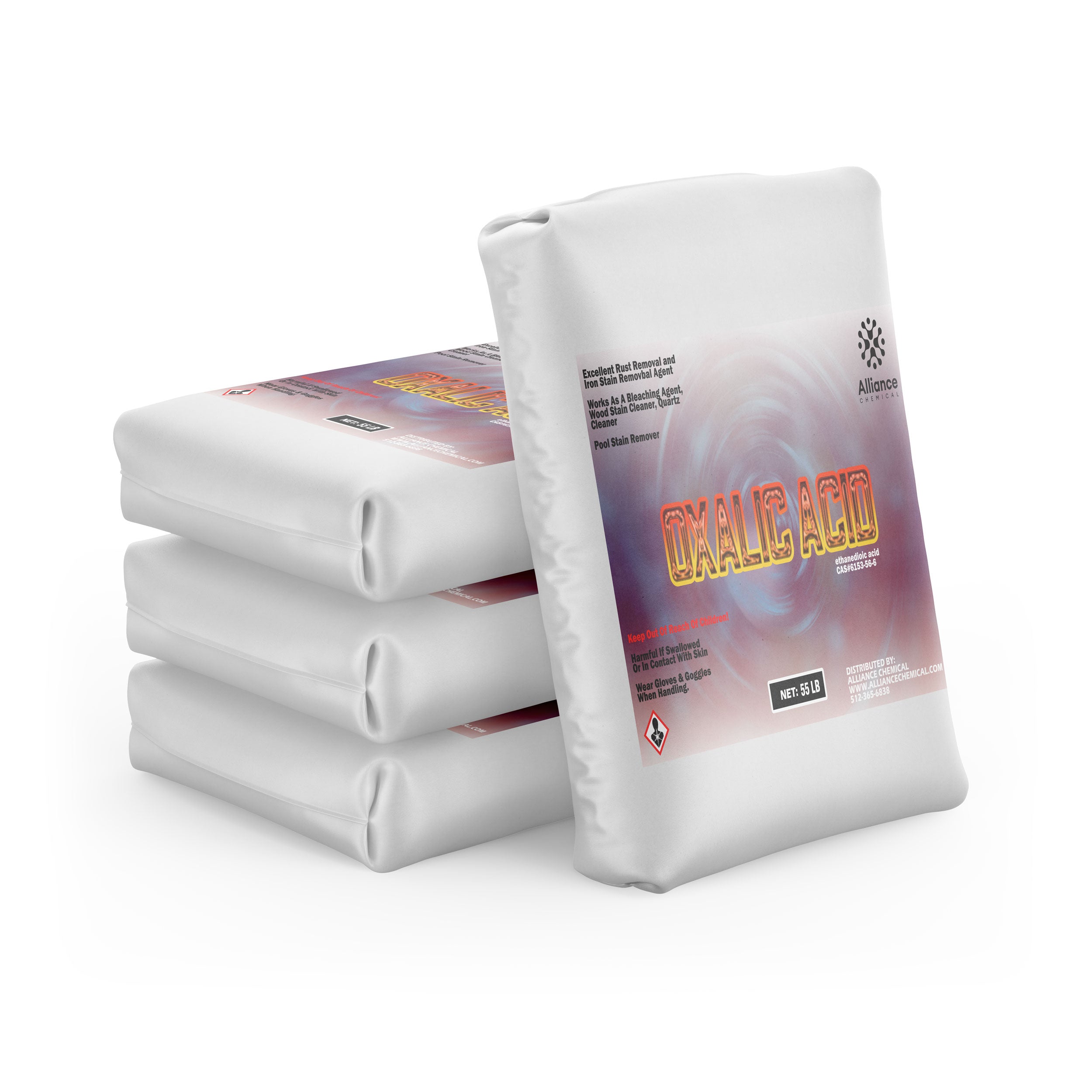
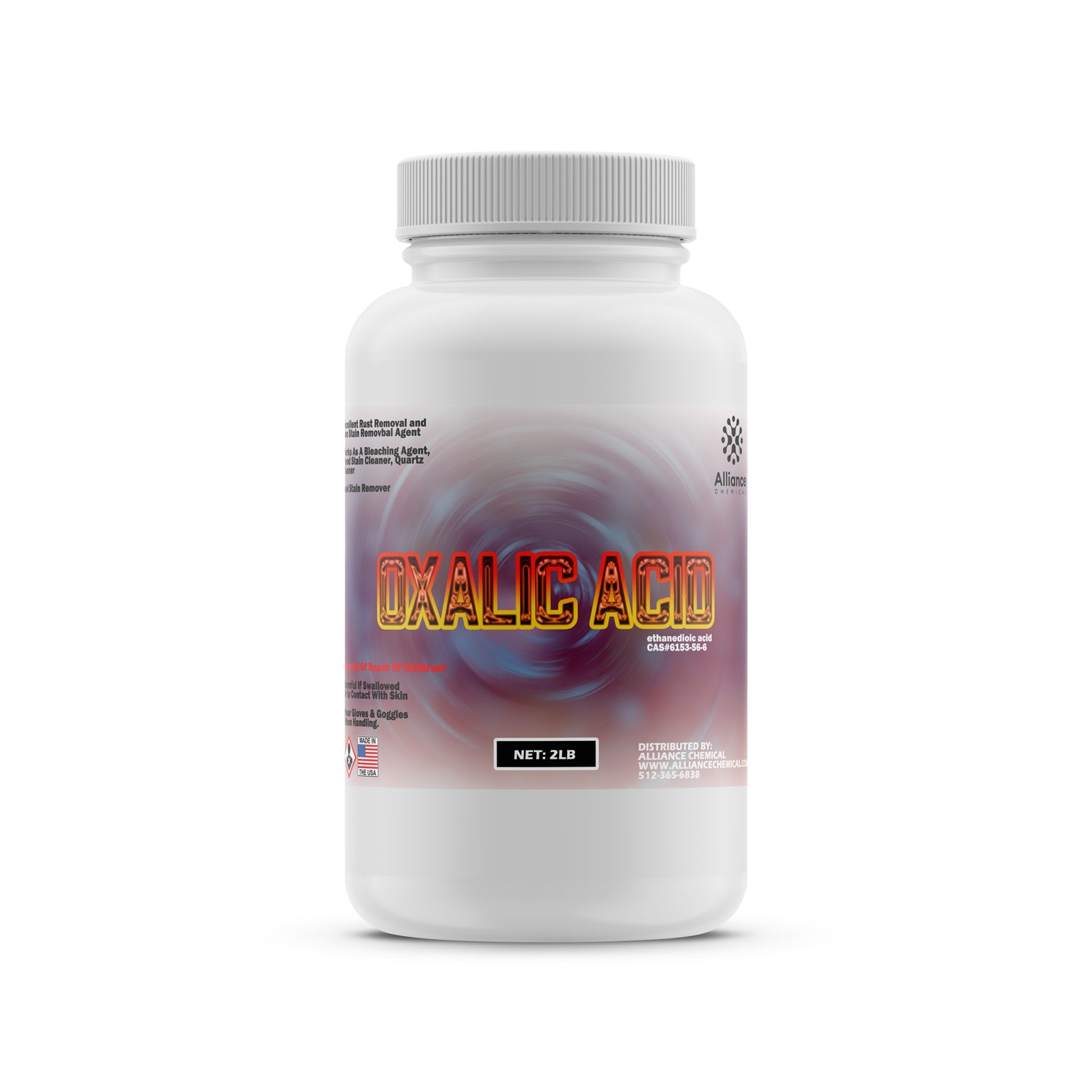
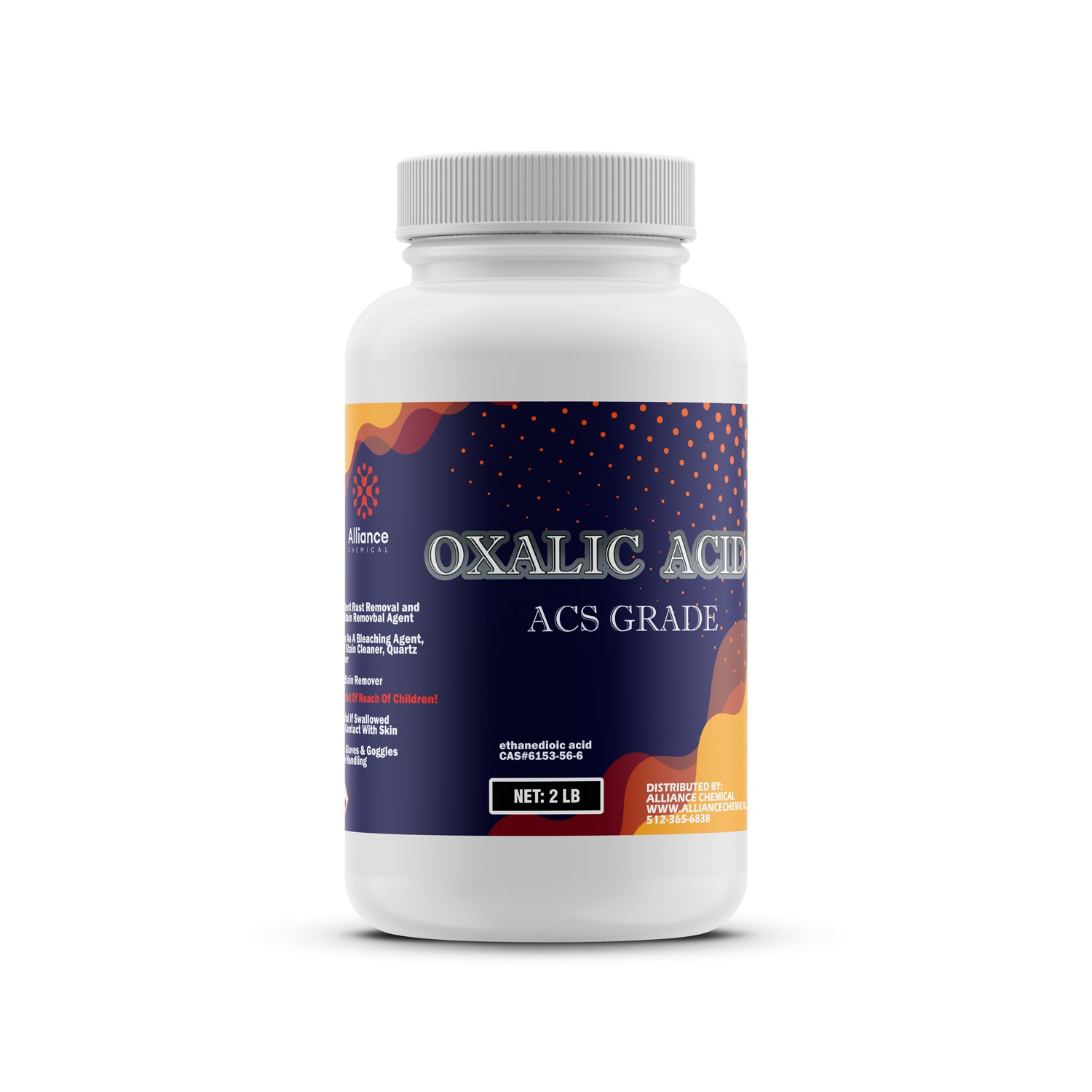
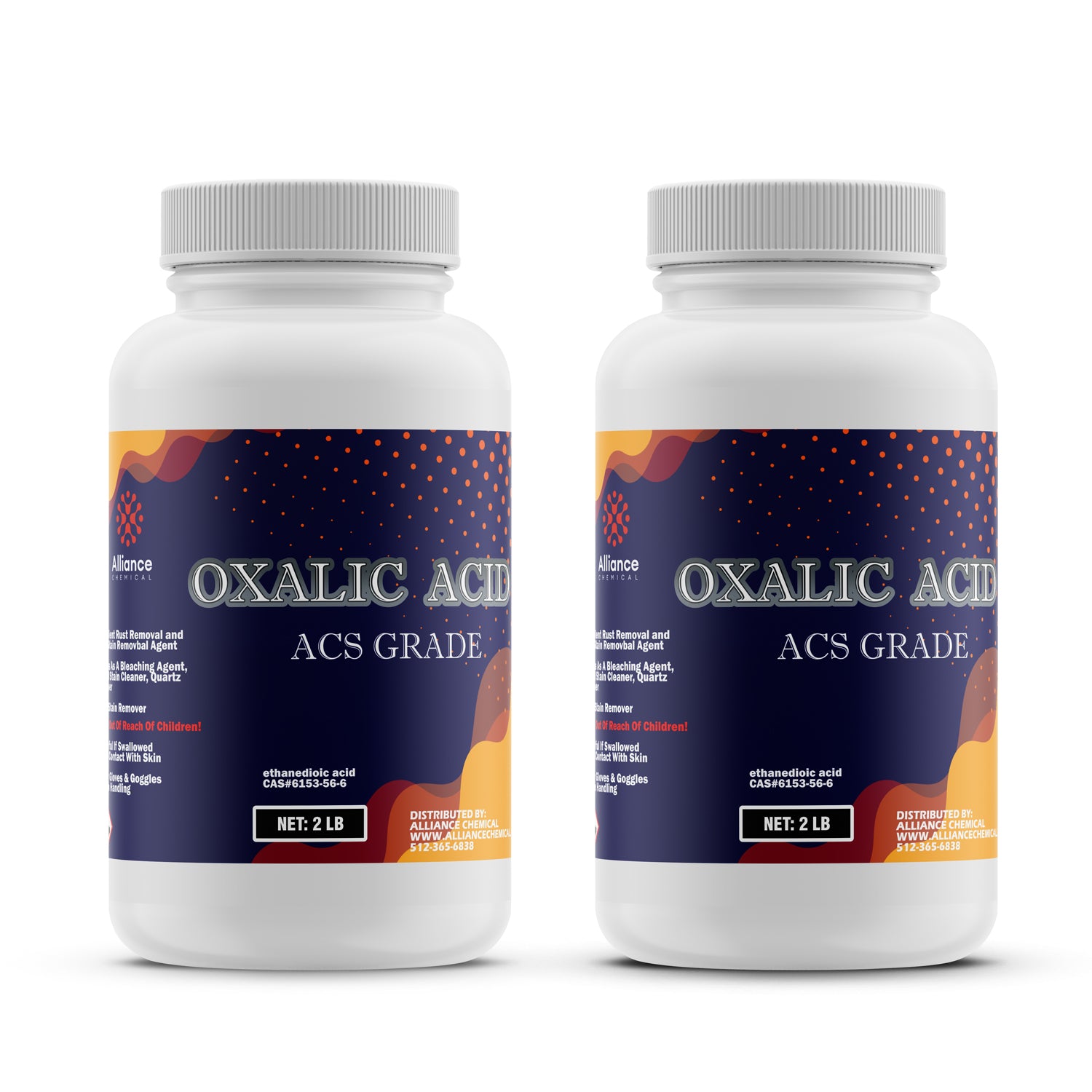
Why Oxalic Acid, Dihydrate - Ethanedioic Acid
Buyers specify Oxalic Acid, Dihydrate - Ethanedioic Acid (CAS 6153-56-6) in the ACS grade when their operations demand rigorous chemical purity and strict adherence to American Chemical Society standards. As a solid reagent presenting as distinct colorless crystals, this dihydrate formulation (C2H2O42H2O) provides a stable, highly quantifiable molecular weight that is critical for precise analytical testing and quantitative laboratory methodologies. Unlike standard industrial-grade acids that may contain varying levels of trace metals or insoluble matter, this ACS grade reagent guarantees an exacting purity profile. This ensures it will not introduce unwanted contaminants into sensitive precipitation reactions, complex organic syntheses, or standardization protocols. Because this acid demonstrates proven solubility in water, alcohol, and ether, it integrates reliably into diverse solvent matrices across specialized analytical, industrial, and institutional research settings.
Best Applications for This Grade
-
Quantitative Analysis and Titration: Commonly applied in chemical testing laboratories as a primary standard for standardizing alkaline reagents and potassium permanganate solutions. The highly stable dihydrate structure provides the exact stoichiometric reliability necessary for reproducible analytical methods.
-
Precision Metal Etching and Surface Preparation: Commonly applied in advanced industrial metal finishing facilities where baseline chemical purity must be strictly controlled. The ACS certification ensures that unexpected trace heavy metals, sulfates, or chlorides do not interfere with the pickling, etching, or surface activation of highly sensitive metal components.
-
Rare Earth Element Precipitation and Extraction: Commonly applied in metallurgical research and specialized inorganic extractions to effectively isolate lanthanides and actinides. The defined purity profile prevents the accidental co-precipitation of unwanted trace minerals, ensuring clean isolation during complex extraction processes.
-
Scientific Research and Chemical Synthesis: Commonly applied in laboratory environments requiring a highly soluble, highly characterized organic acid. Its confirmed solubility across water, alcohol, and ether allows research chemists to utilize the compound across a wide variety of both aqueous and non-aqueous reaction conditions without adjusting for base impurities.
When to Choose a Different Grade
- If your laboratory methodology specifically requires a strictly anhydrous or non-hydrated ethanedioic acid reagent for moisture-sensitive organic syntheses or alternative standardizations, select Oxalic Acid ACS Grade.
- If your facility is conducting bulk industrial wastewater pH adjustment, heavy commercial rust removal, or large-scale wood bleaching where strict laboratory-grade trace impurity thresholds are unnecessary, transition to a standard technical grade oxalic acid to better align with baseline operational requirements.
| Molecular Weight |
126.07 |
| Formula |
C2H2O42H2O |
| Assay |
99-100.5% |
| Grade |
Reagent |
| Form |
Solid |
| Solubility |
Soluble in water, slightly soluble in alcohol |
| Appearance |
White crystalline solid |
| Melting Point |
101 |
| Specific Gravity |
1.65 |
| Industry |
Industrial, Analytical Chemistry, Chemical Manufacturing, Water Treatment, Textile |