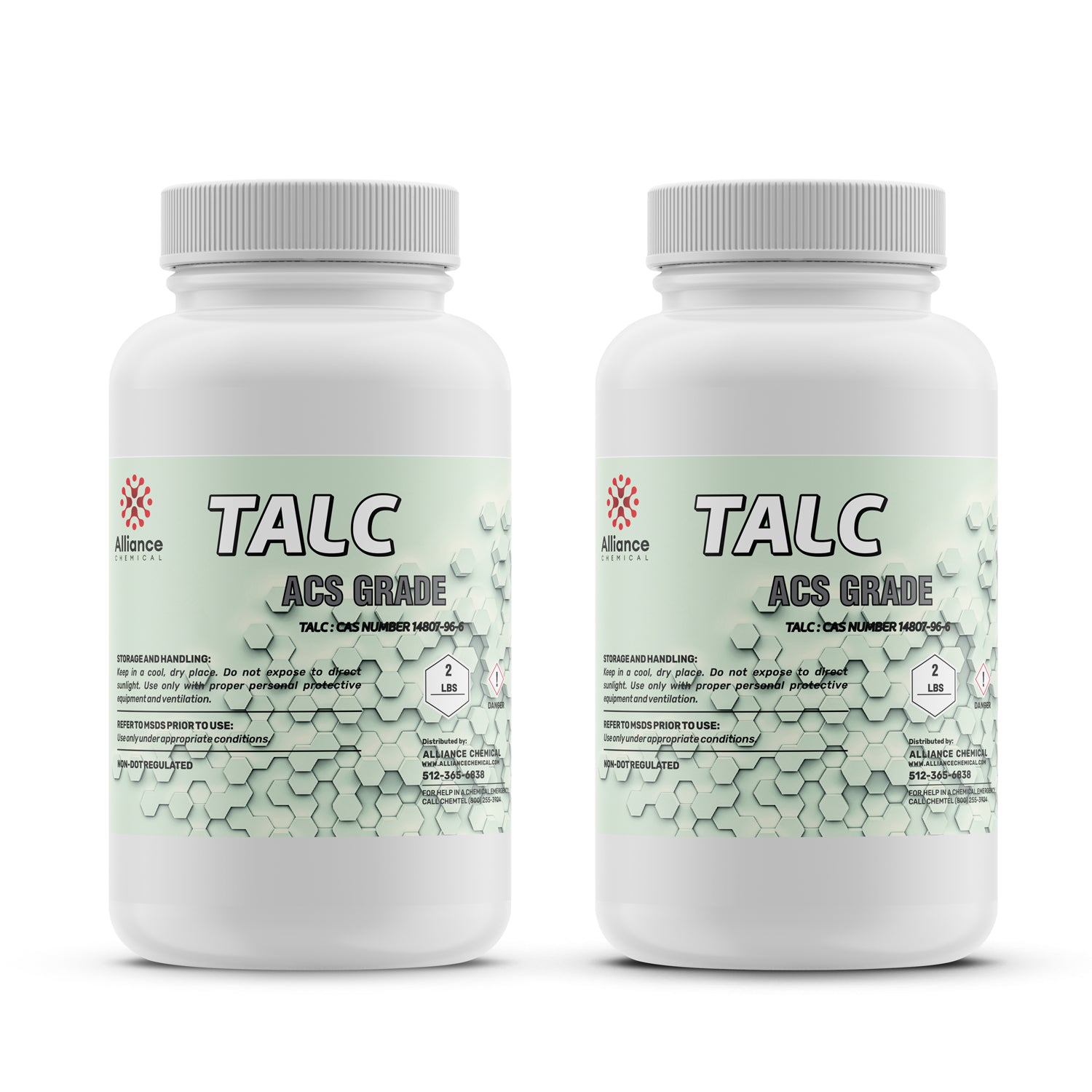
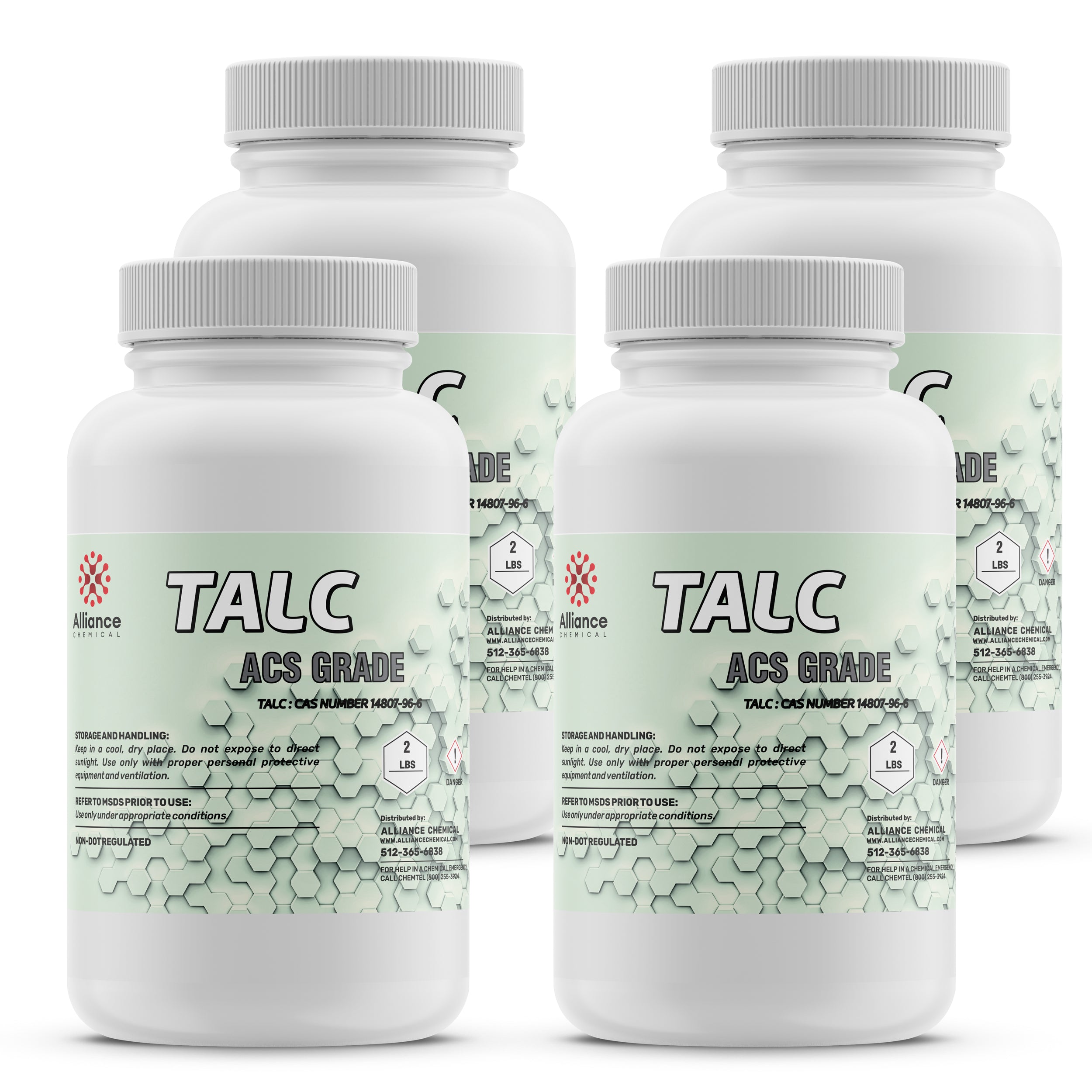
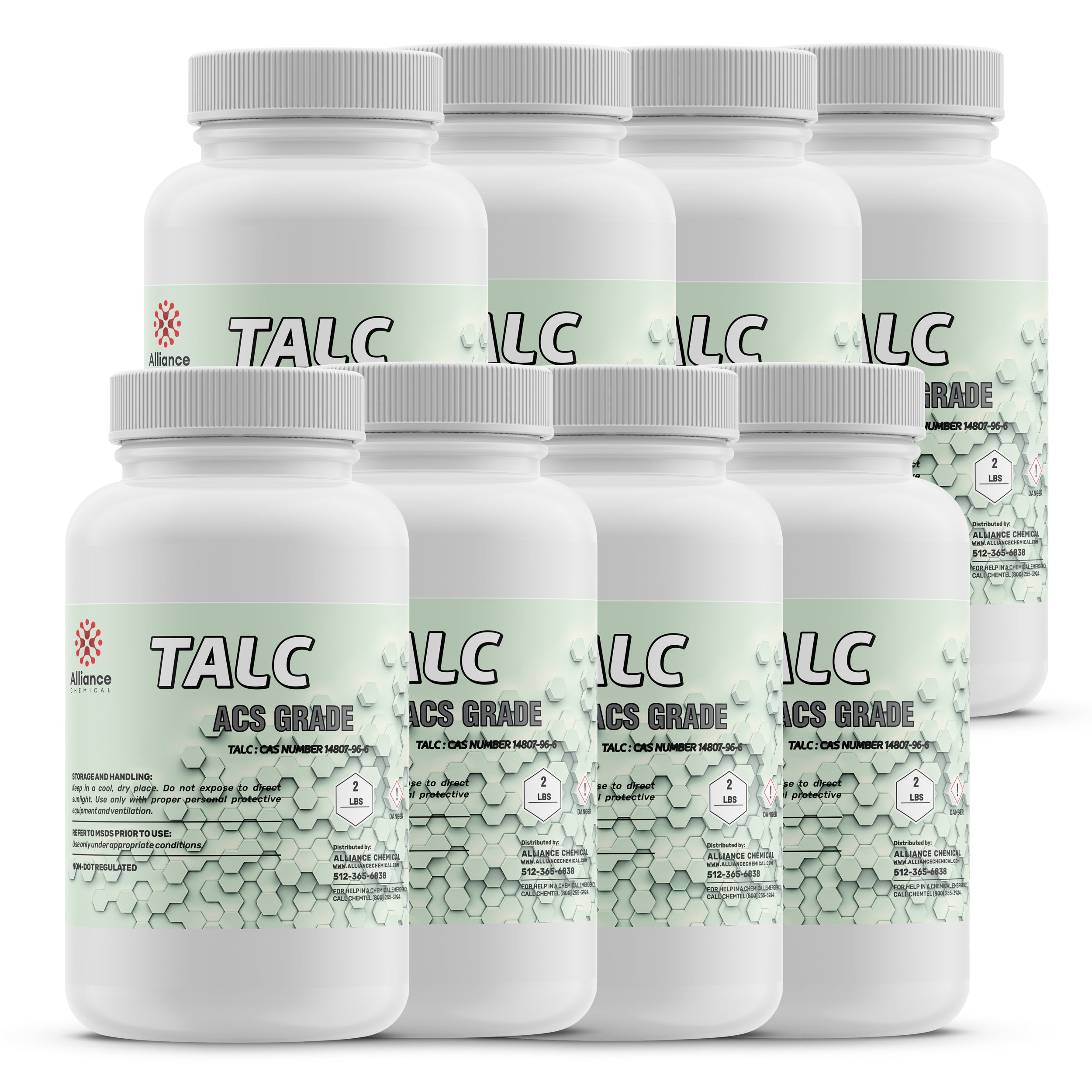
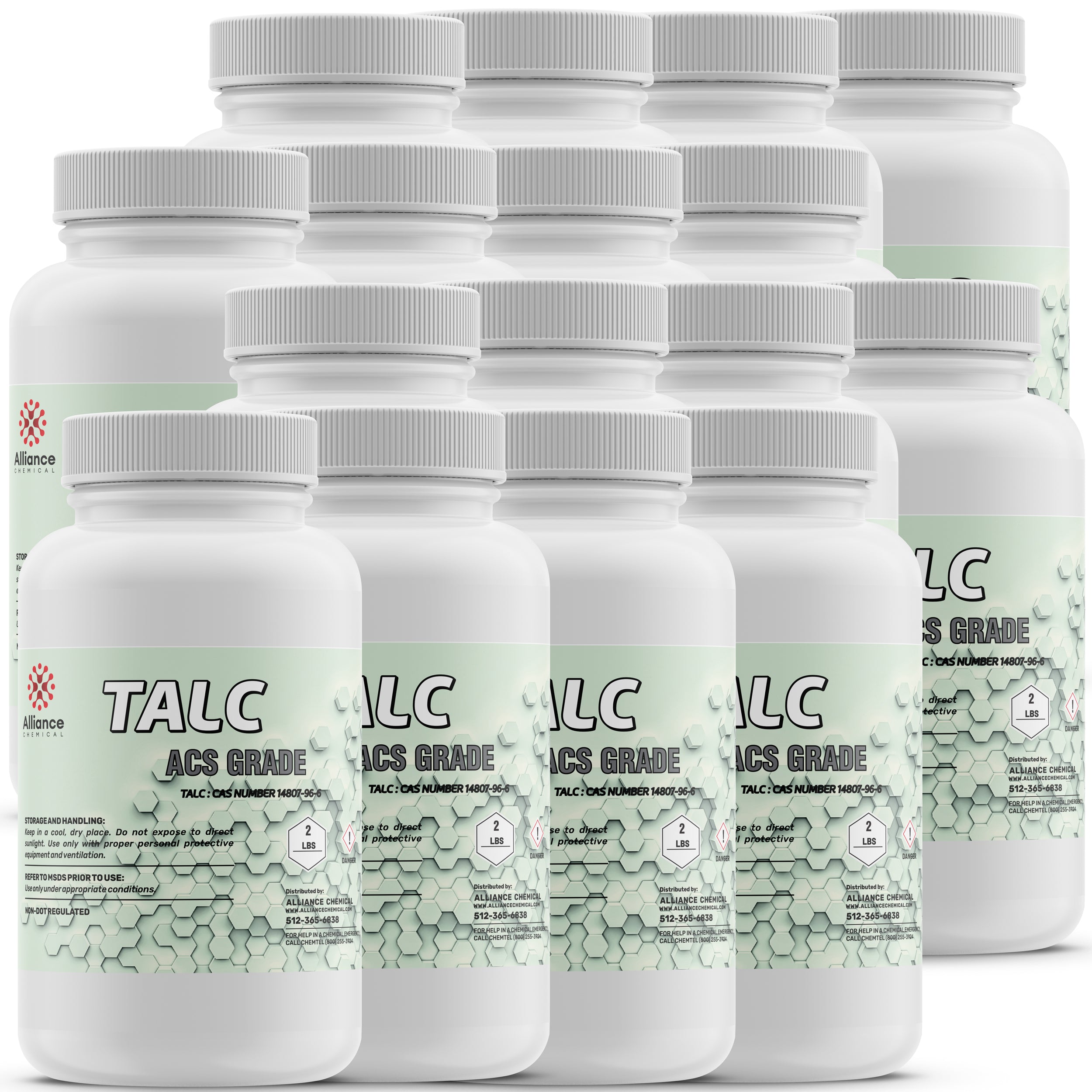
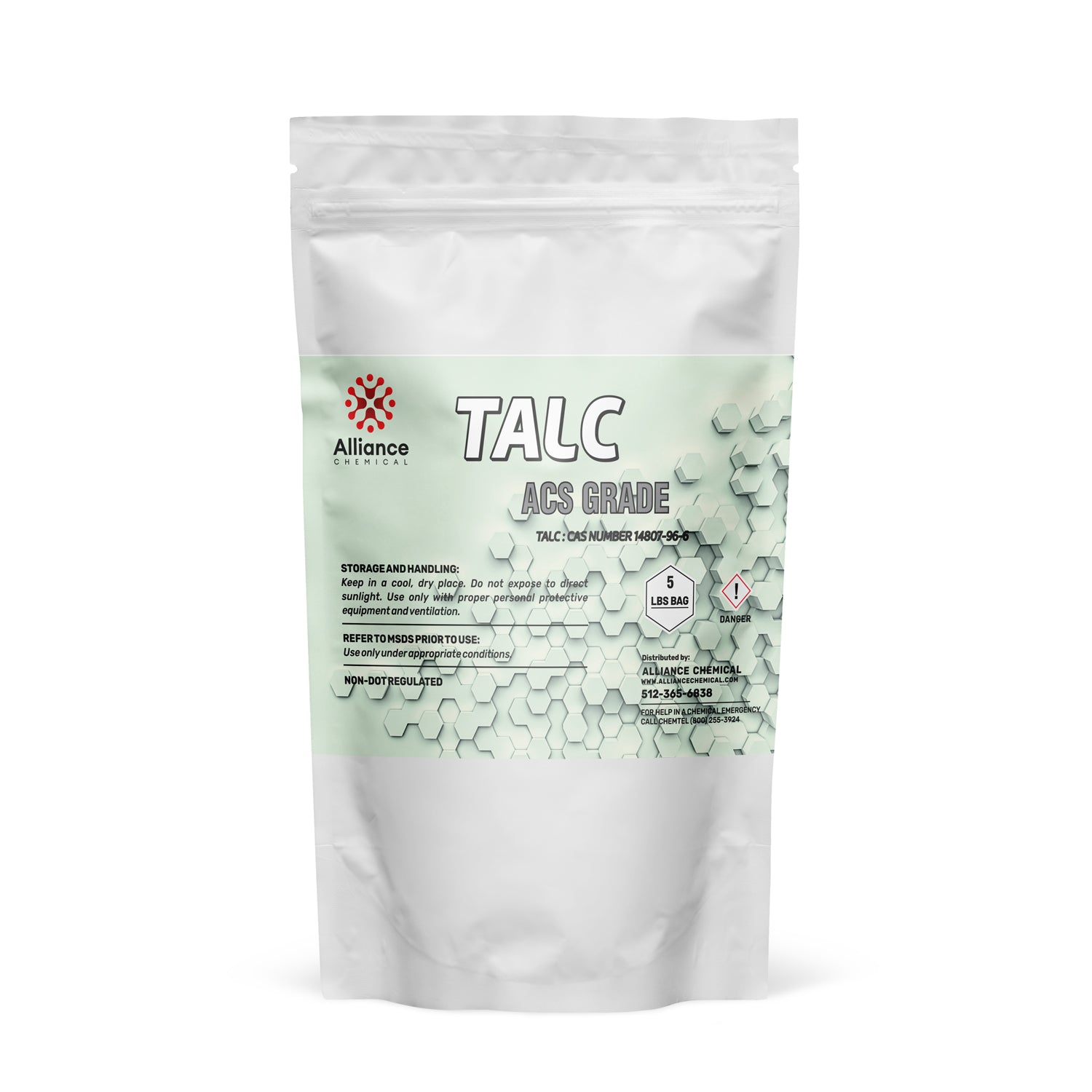
Why Talc Powder ACS
Talc Powder ACS is a strictly controlled, laboratory-grade magnesium silicate hydrate, defined by the chemical formula Mg3Si4O10(OH)2, manufactured to guarantee reliable chemical baselines for complex scientific environments. Chemical buyers and research managers select this specific ACS designation when operations demand exact purity profiles, tightly controlled particle sizes, and strict adherence to trace moisture limits. The structural properties of this fine, soft powder make it critical for precision testing and formulation, as the material remains completely insoluble in water and exhibits no flash point. Inorganic chemical buyers must consistently evaluate dissolution rates and physical handling metrics; this specific product delivers consistent physical flowability while entirely eliminating the combustion risks associated with organic particulate alternatives. Because demanding analytical workflows and materials science applications require exact predictability, utilizing a defined laboratory-grade talc ensures that the variable trace impurities often found in lower commercial tiers will not skew instrumental data or disrupt sensitive laboratory reactions.
Best Applications for This Grade
- Analytical research and laboratory standardization commonly applied in rigorous materials science evaluations, where an exact ACS purity level establishes a reliable baseline and guarantees consistency across repeated experimental outcomes.
- Development of specialized inert testing matrices, utilizing the uniform fine, soft powder structure of Mg3Si4O10(OH)2 to achieve precise physical dispersion within complex chemical mixtures without introducing reactive elements.
- Industrial chemical manufacturing pilot processes requiring a chemically stable, non-combustible solid additive, where the absolute lack of a flash point provides vital operational stability during high-friction testing environments.
- Rheology modification and boundary lubrication studies commonly applied in the engineering of industrial coatings, directly leveraging the inherent physical softness of this laboratory-grade particulate.
- Controlled aqueous system evaluations where the absolute water insolubility of the talc acts as a reliable physical barrier, enabling the precise study of solid-liquid interactions and phase separation.
When to Choose a Different Grade
- If the industrial operation requires a standard bulk filler material for high-volume general manufacturing and does not demand the strict analytical laboratory validation of an ACS reagent, source Talc Powder - White Colored.
- If compounding basic commercial plastics, rubber components, or standard industrial coatings where the extreme control of trace elemental impurities is unnecessary for the final product performance, specify Talc Powder - White Colored.
- If the precise purchasing requirement dictates a rapid dissolution rate, a highly soluble inorganic compound, or an alternative physical state such as a liquid solution, buyers must select an entirely different chemical family, as all talc variations inherently function as insoluble solid powders.
| Molecular Weight |
62.39 |
| Formula |
Mg3Si4O10(OH)2 |
| Assay |
99-100.5% |
| Grade |
ACS Grade |
| Flash Point |
Not applicable |
| Form |
Powder |
| Solubility |
Insoluble in water |
| Appearance |
White to off-white powder |
| Melting Point |
900 |
| Boiling Point |
1800°C |
| Specific Gravity |
2.58 |
| Industry |
Industrial, Pharmaceutical, Manufacturing, Agriculture, Analytical Chemistry |