Hydrochloric

HCl 5% to 37% — ACS and technical grade

8 Products
Sort by:: Best Selling
Sort by: Best Selling

FILTERS

Chemical name
  • (8)
Grade
  • (1)
  • (7)
Percentage
  • (1)
  • (1)
  • (1)
  • (1)
  • (1)
  • (1)
  • (2)
Form
  • (8)
Industry
  • (6)
  • (8)
  • (3)
  • (4)

About Hydrochloric

Buy hydrochloric acid (HCl, CAS 7647-01-0) in 5%, 31%, and 37% concentrations from Alliance Chemical. Available in ACS Reagent Grade and Technical Grade, with container sizes from 1-quart bottles to 330-gallon IBC totes for laboratory and industrial use.

Products In This Collection

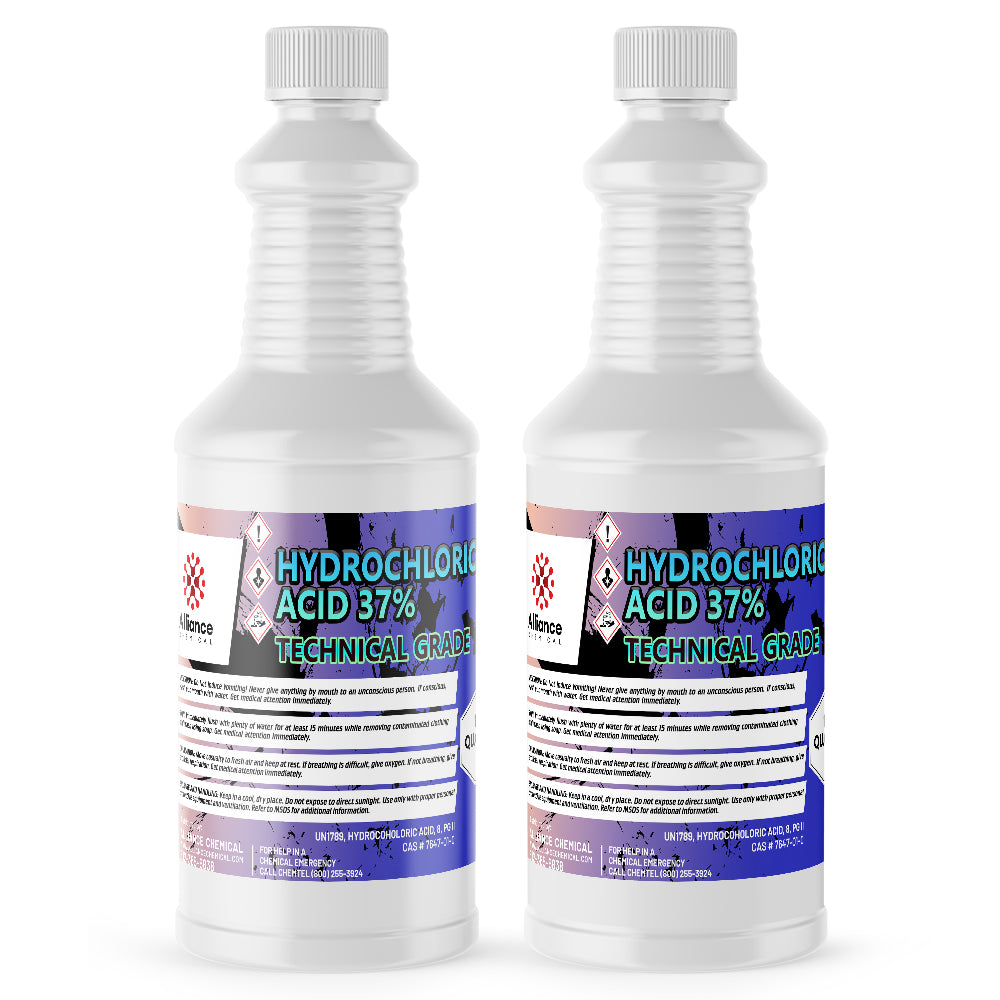
This collection includes hydrochloric acid 37% ACS Reagent Grade, hydrochloric acid 37% Technical Grade, hydrochloric acid 31% Technical Grade, and hydrochloric acid 5% Technical Grade. The 37% ACS grade features strict impurity controls with density of approximately 1.19 g/mL at 25°C, suitable for analytical and research applications.

Common Applications

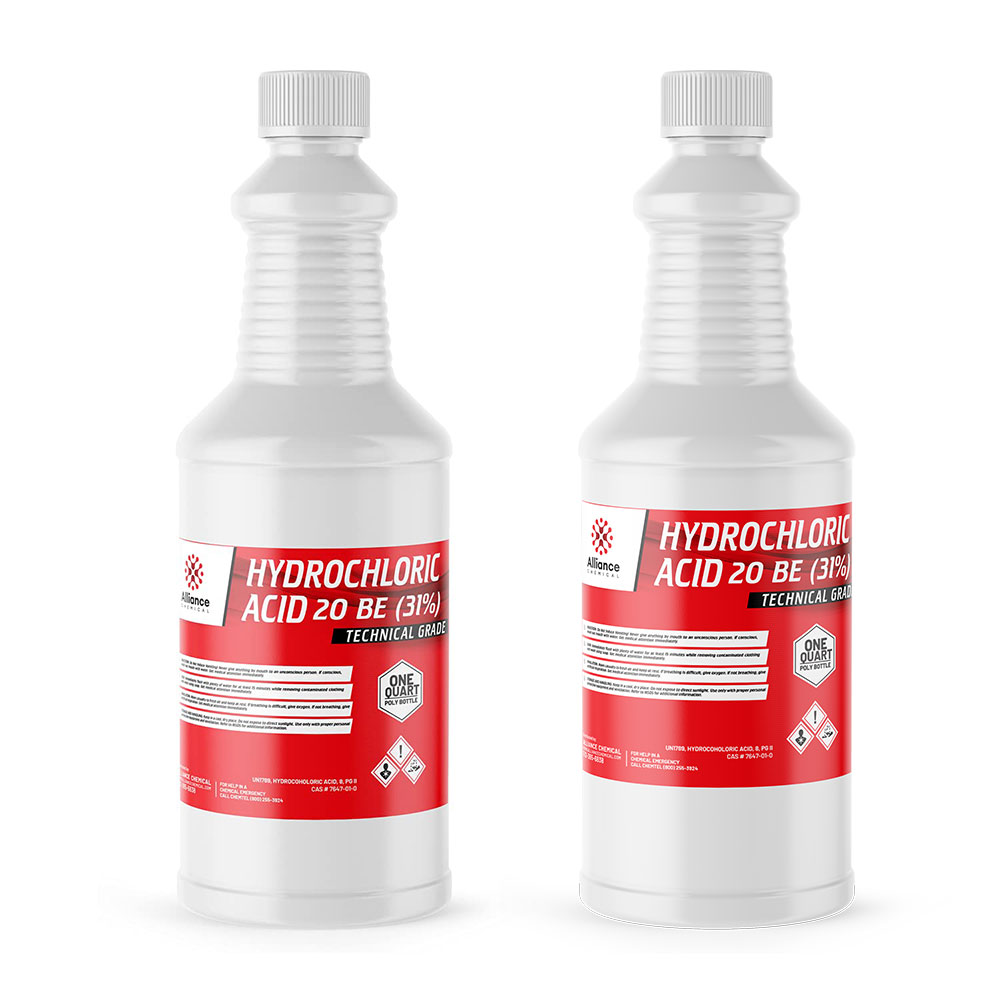
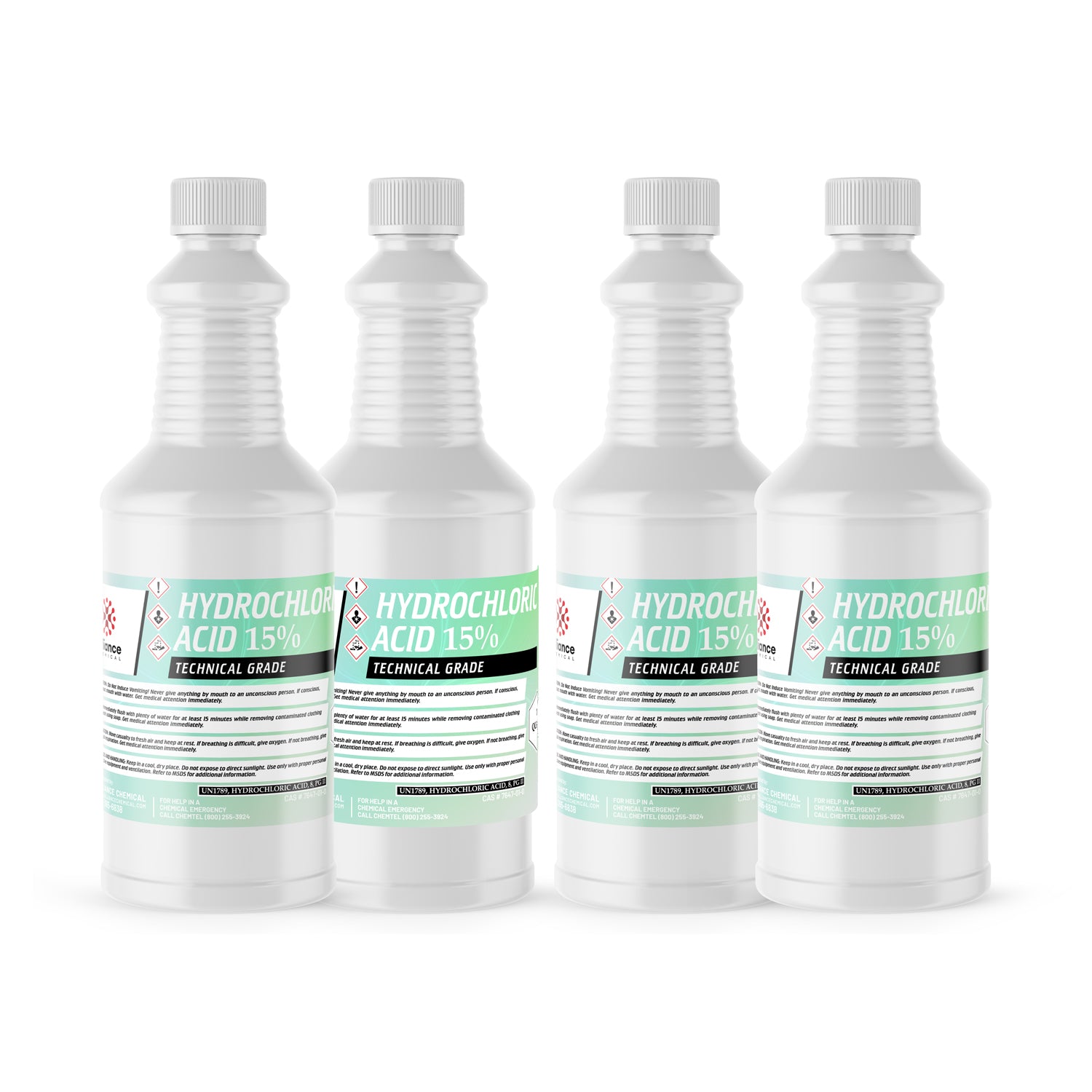
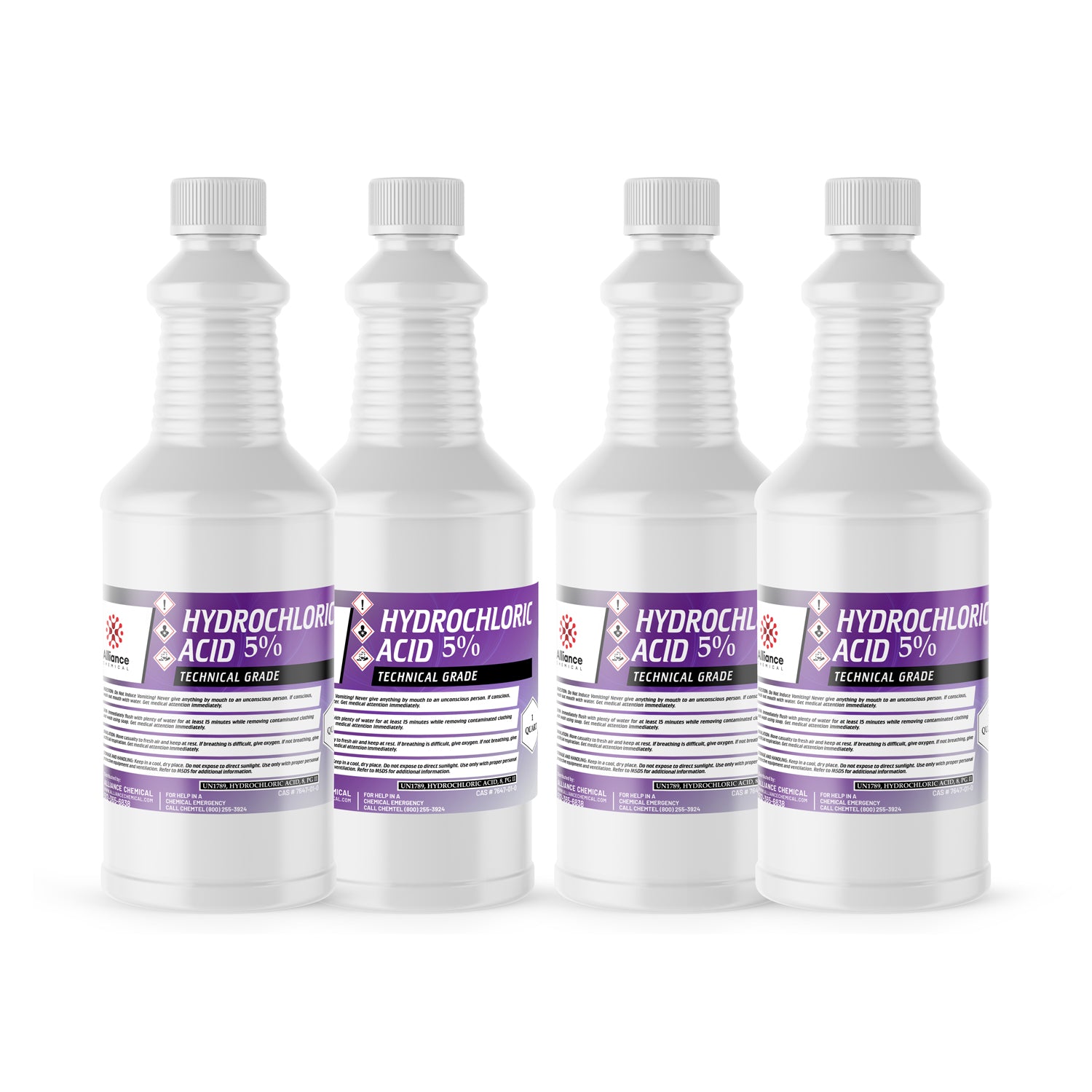
Hydrochloric acid 37% ACS Reagent Grade is used for laboratory sample digestion, pH adjustment in analytical chemistry, and chemical synthesis where high purity is required. The 37% Technical Grade serves industrial metal surface treatment, oil well acidizing, ore processing, and large-scale pH control in water treatment. Hydrochloric acid 31% is preferred for steel processing where reduced fume generation improves workplace safety. The 5% dilute solution provides controlled acidity for pH adjustment, cleaning, and neutralization.

Why Buy From Alliance Chemical

All hydrochloric acid products include Safety Data Sheets (SDS) and lot-specific Certificates of Analysis (COA). Alliance Chemical ships same-day on in-stock orders with proper DOT-compliant packaging for this Class 8 corrosive liquid. No minimum order quantity.

Related: See the Acids and Mineral Acids collections. Blog: “ACS Reagent vs Technical Grade.”

Frequently Asked Questions

What is the difference between muriatic acid and hydrochloric acid?
Muriatic acid is a less-pure, industrial version of hydrochloric acid, typically containing iron impurities that give it a yellow tint. While both share the same chemical formula (HCl), 'Hydrochloric Acid' usually refers to higher purity Technical or ACS grades used in lab work and precise manufacturing, whereas muriatic acid is used for masonry and pool care. Alliance Chemical provides technical specifications for both to ensure compatibility with your specific process.
What concentration of hydrochloric acid is needed for concrete etching?
For most concrete etching applications, a concentration between 10% and 15% is standard. This is achieved by diluting 31.45% (20° Baume) technical grade acid with water at a ratio of approximately 1 part acid to 2 or 3 parts water. Always add acid to water (never water to acid) to prevent exothermic splashing, as per standard safety protocols.
How should hydrochloric acid be stored according to NFPA 400?
According to NFPA 400, hydrochloric acid must be stored in a cool, dry, well-ventilated area in corrosion-resistant containers, such as those made of high-density polyethylene (HDPE). It must be physically separated from incompatible materials, specifically strong bases (Sodium Hydroxide) and strong oxidizers, to prevent dangerous chemical reactions. Containers should be kept tightly closed and stored in secondary containment capable of holding the entire volume of the largest container.
Is 37% hydrochloric acid considered a hazardous material for shipping?
Yes, 37% hydrochloric acid is regulated by the DOT under 49 CFR 172.101 as a Class 8 Corrosive material. It carries the UN number UN1789 and belongs to Packing Group II. Shipping requires specific hazmat labeling, authorized packaging, and documented dangerous goods manifests to comply with federal transportation safety regulations.
How do I safely neutralize a hydrochloric acid spill?
Neutralization should be performed using a weak base such as sodium bicarbonate (baking soda) or soda ash, applied slowly from the perimeter of the spill inward. According to OSHA safety standards, the neutralization process should continue until bubbling ceases and the pH reaches a neutral range (pH 6-8). Large industrial spills should be managed according to your facility's Spill Prevention, Control, and Countermeasure (SPCC) plan.
What is the shelf life of 31% technical grade HCl?
Hydrochloric acid is a stable mineral acid with an indefinite shelf life if stored in an airtight, UV-resistant container at temperatures between 15°C and 25°C. However, concentrated solutions (above 30%) will 'fume' when opened, losing hydrogen chloride gas to the atmosphere and slightly decreasing in concentration over time. We recommend re-testing the concentration via titration for high-precision applications if the product has been stored for more than two years.
Can I use hydrochloric acid to lower the pH of a swimming pool?
Hydrochloric acid, often sold as muriatic acid for this purpose, is highly effective for lowering both pH and total alkalinity in pool water. A concentration of 15% to 31% is typically used, with dosages calculated based on the total gallonage and current saturation index. Users must follow the guidelines in our Pool Chemistry 101 guide to avoid damaging equipment or irritating swimmers' eyes and skin.
What PPE is required by OSHA for handling concentrated HCl?
OSHA 29 CFR 1910.132 requires an employer assessment to determine specific PPE, but for concentrated 37% HCl, it generally mandates chemical splash goggles, a face shield, and acid-resistant gloves such as those made of Nitrile or Butyl rubber. A chemical-resistant apron and closed-toe safety boots are also required to protect against accidental splashes. If local ventilation is insufficient to keep vapor levels below the Ceiling Limit of 5 ppm, a NIOSH-approved respirator with acid gas cartridges must be used.