Acids

Sulfuric, Hydrochloric, Nitric & more — ACS to technical grade

78 Products
Sort by:: Best Selling
Sort by: Best Selling

FILTERS

Chemical name
  • (9)
  • (2)
  • (6)
  • (1)
  • (11)
  • (2)
  • (7)
  • (2)
  • (26)
  • (7)
  • (5)
Grade
  • (23)
  • (1)
  • (15)
  • (3)
  • (34)
  • (2)
Percentage
  • (6)
  • (7)
  • (4)
  • (7)
  • (2)
  • (4)
  • (4)
  • (1)
  • (3)
  • (1)
  • (3)
  • (7)
  • (1)
  • (1)
  • (2)
  • (6)
  • (4)
  • (1)
  • (1)
  • (1)
  • (1)
  • (1)
  • (5)
Form
  • (4)
  • (41)
  • (4)
Industry
  • (21)
  • (2)
  • (2)
  • (10)
  • (9)
  • (2)
  • (47)
  • (12)
  • (2)
  • (28)

About Acids

Buy sulfuric acid, nitric acid, hydrochloric acid, and phosphoric acid from Alliance Chemical in ACS Reagent, USP, Food Grade, and Technical purity levels. Available in quarts, gallons, pails, drums, and 330-gallon totes for laboratories, manufacturers, and industrial operations.

Products In This Collection

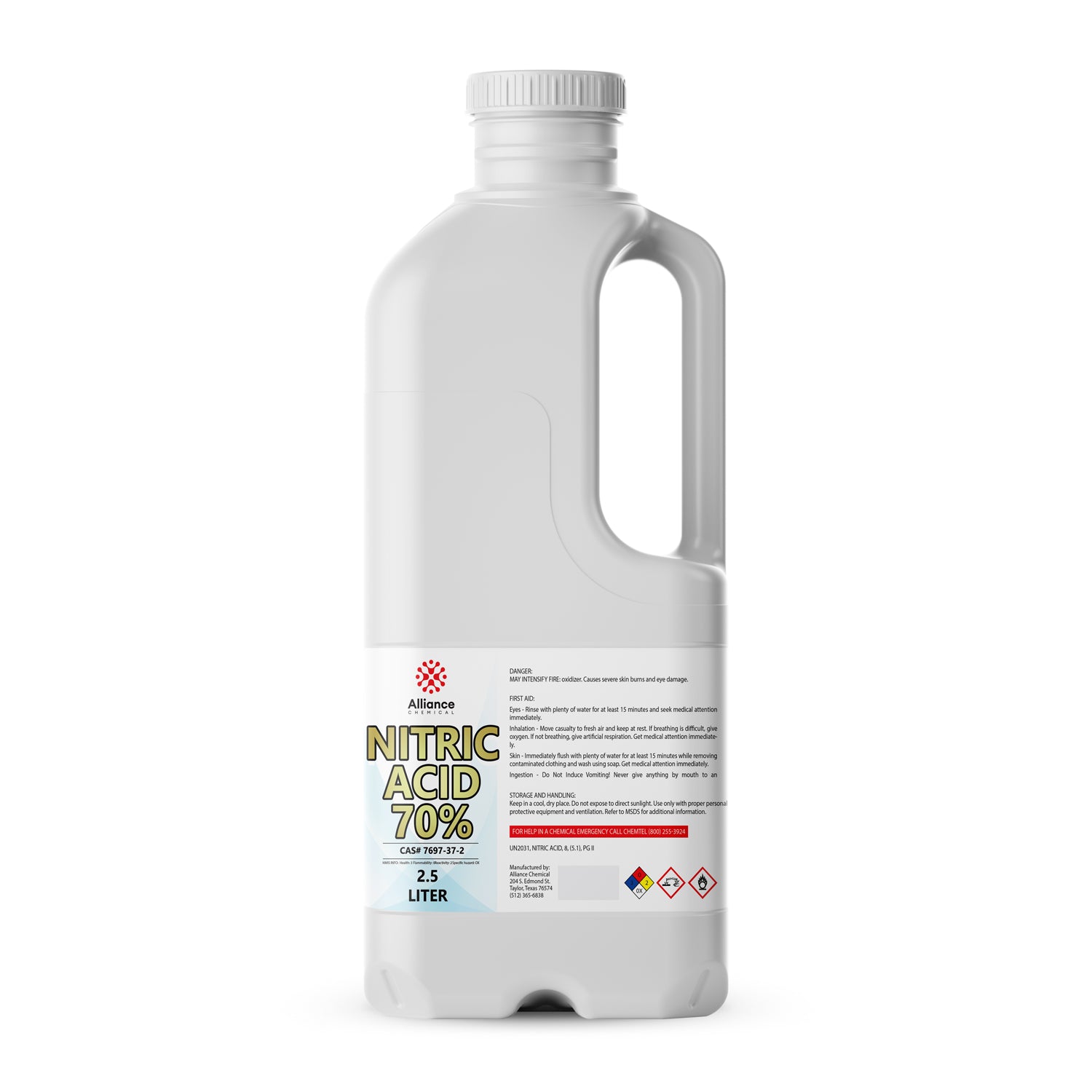
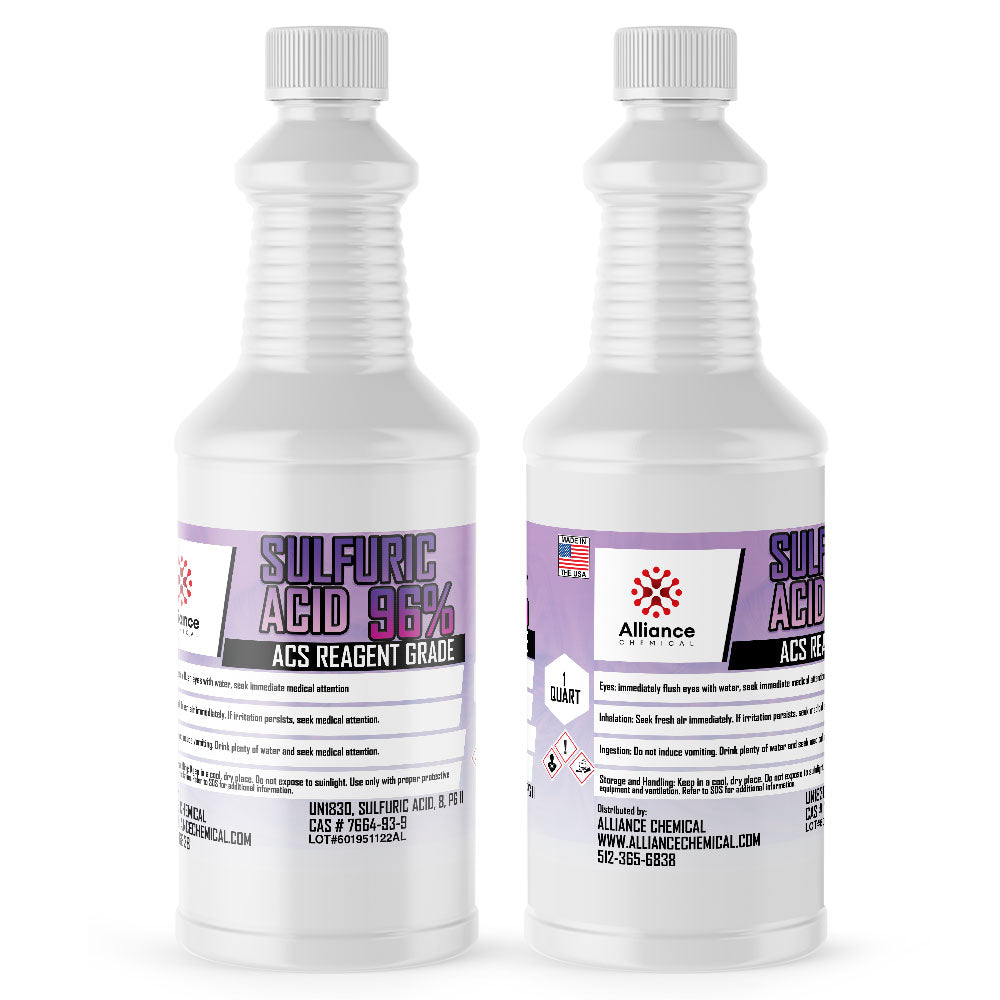
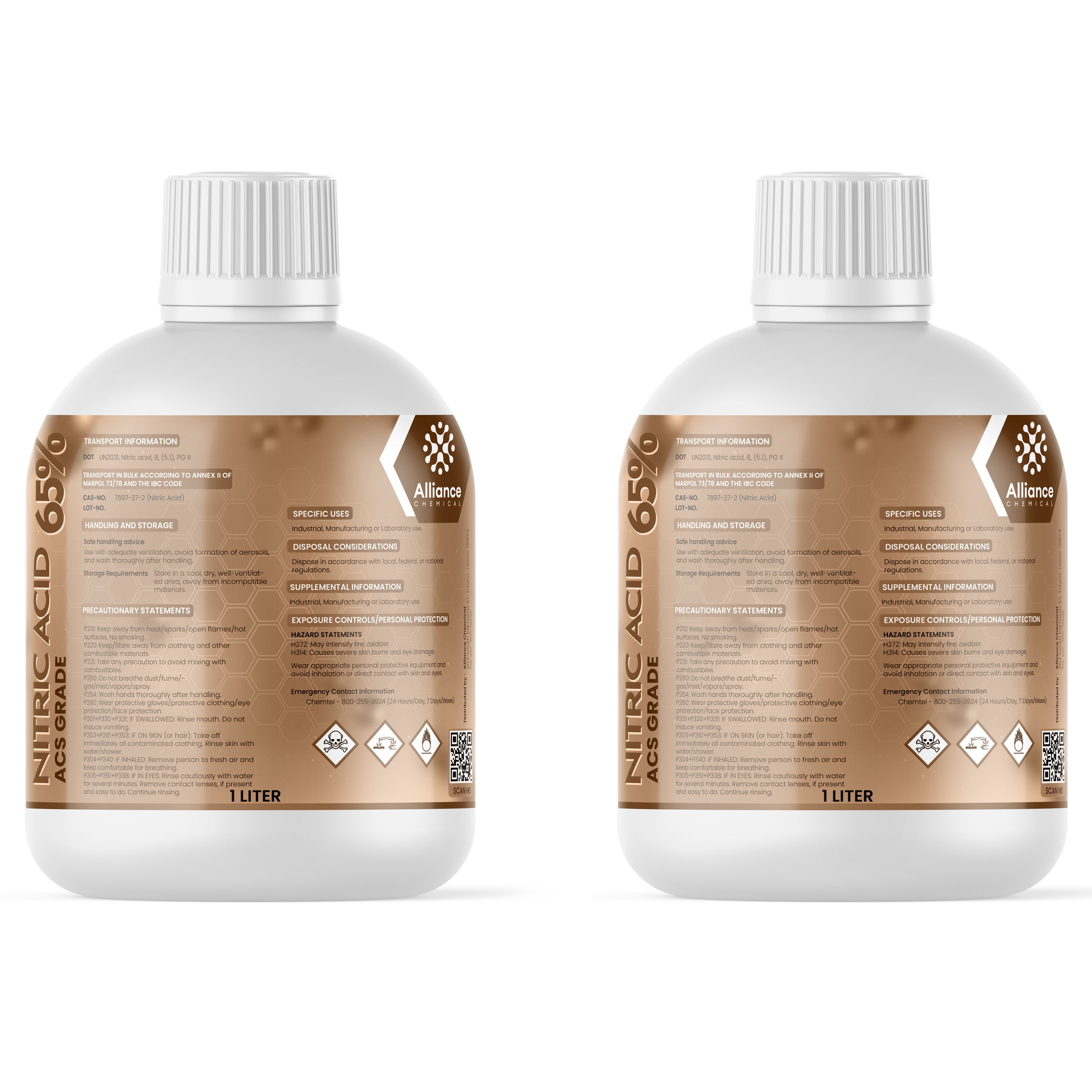
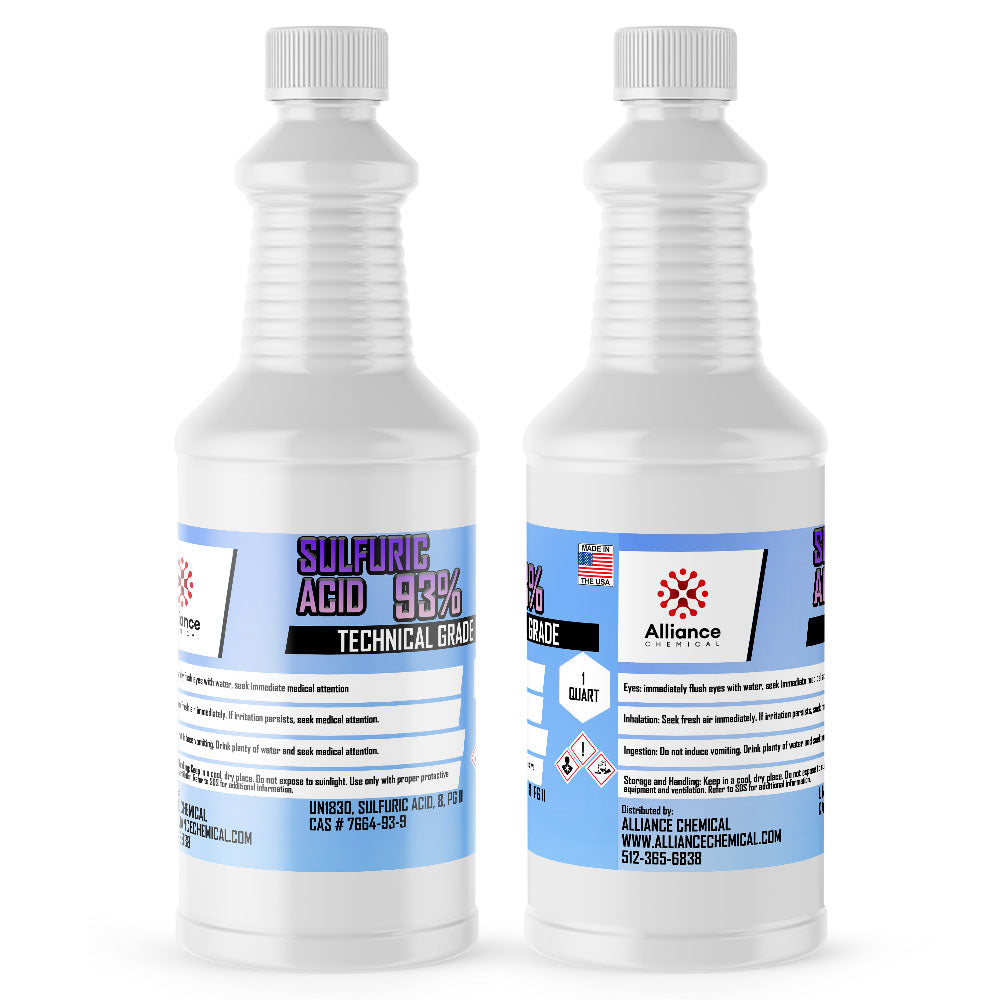
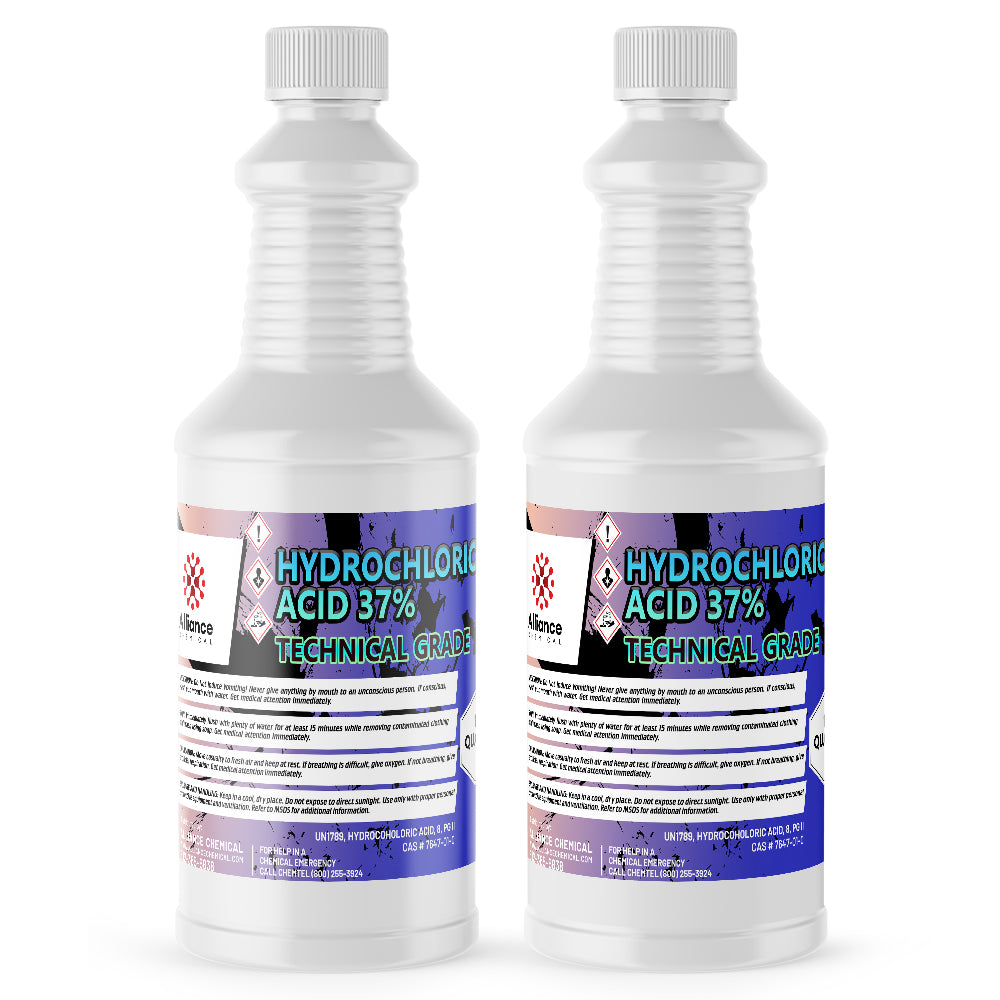
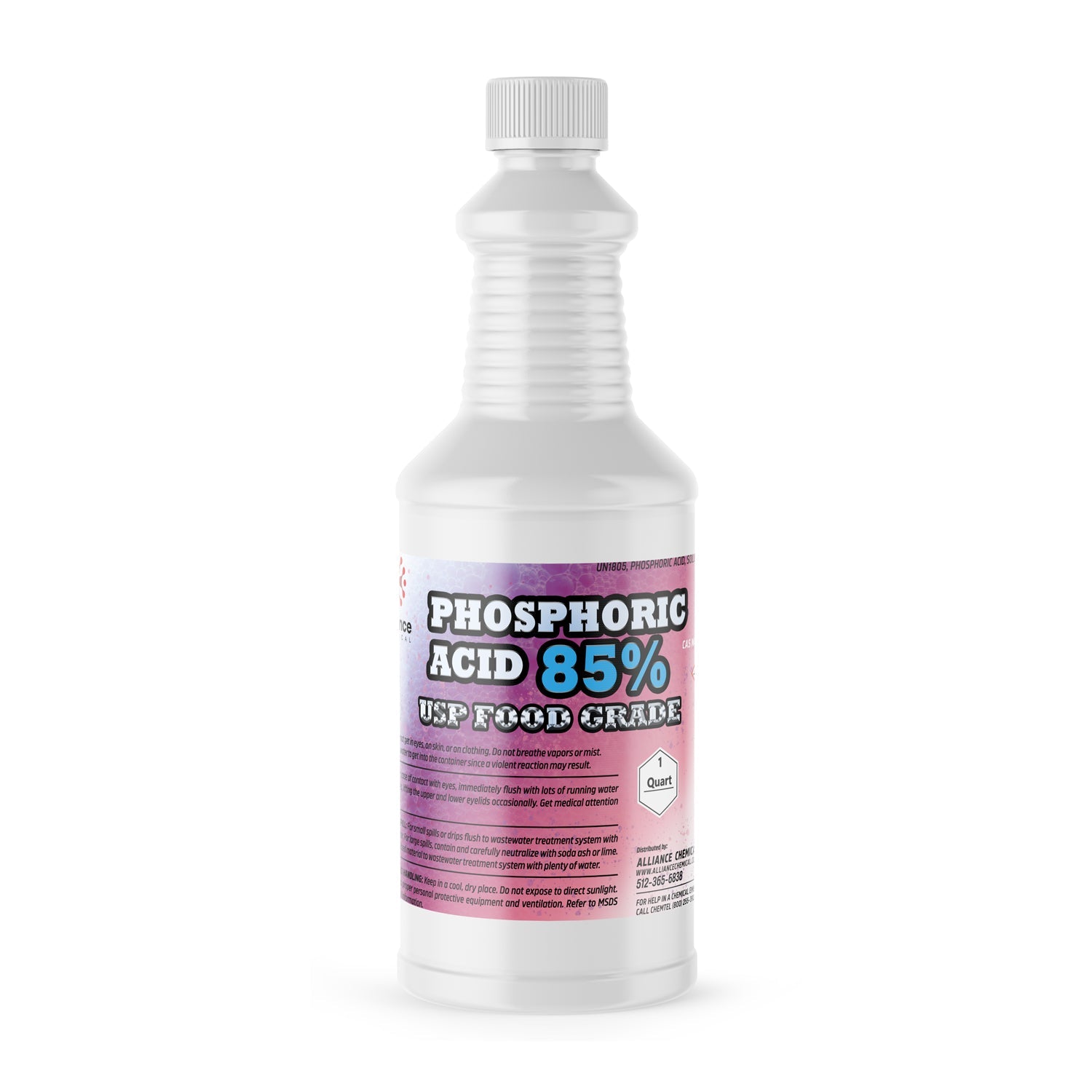
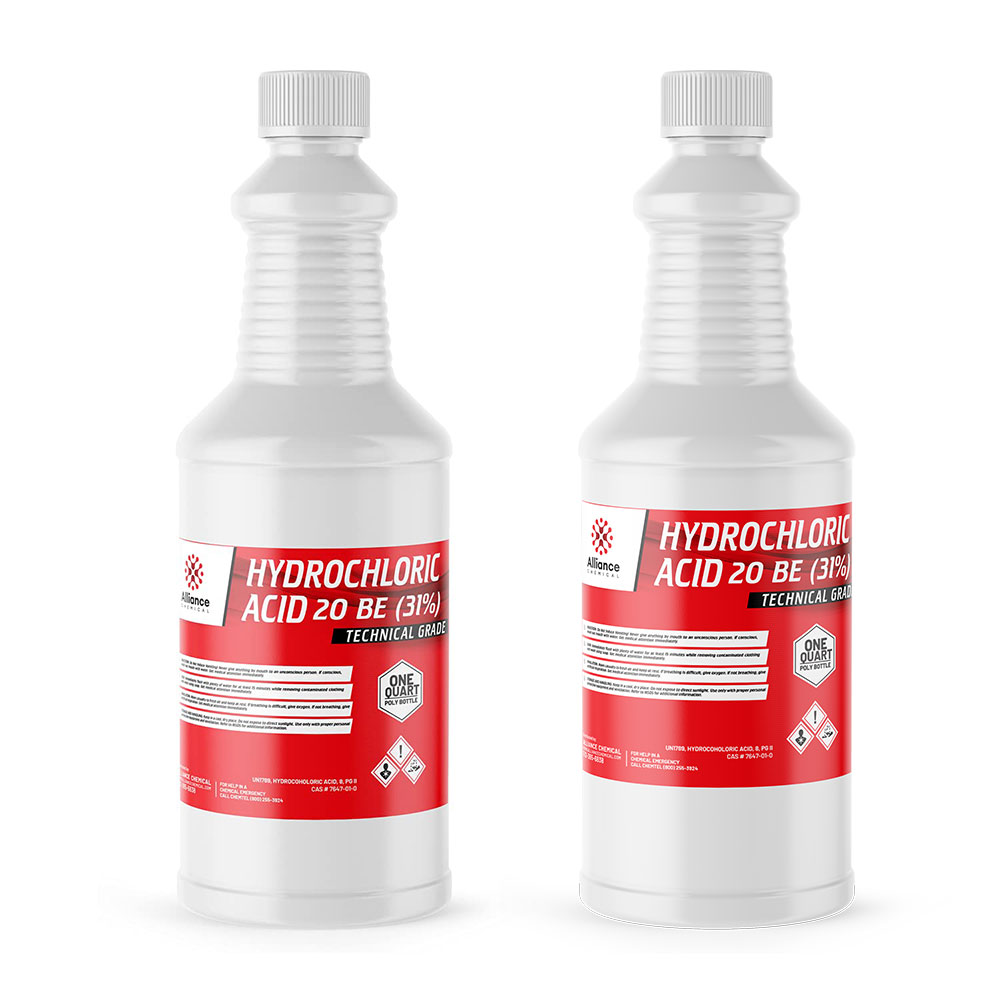
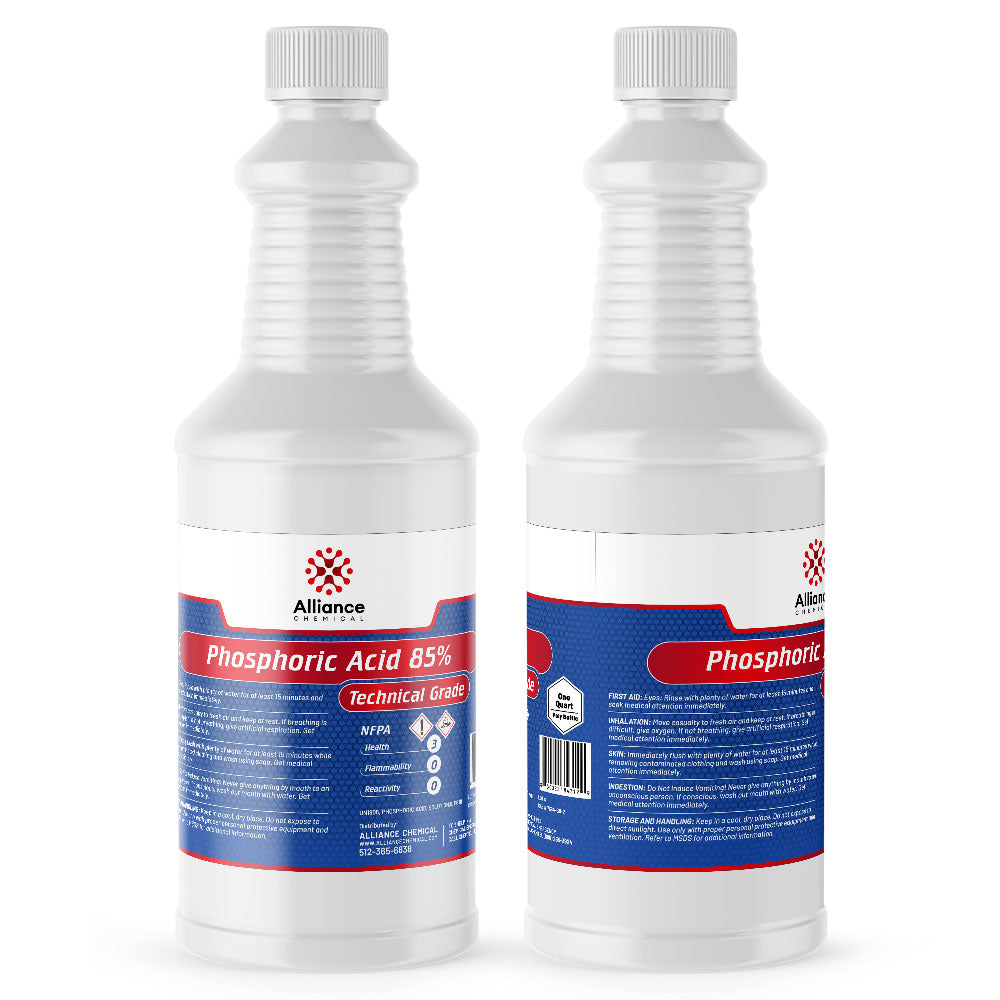
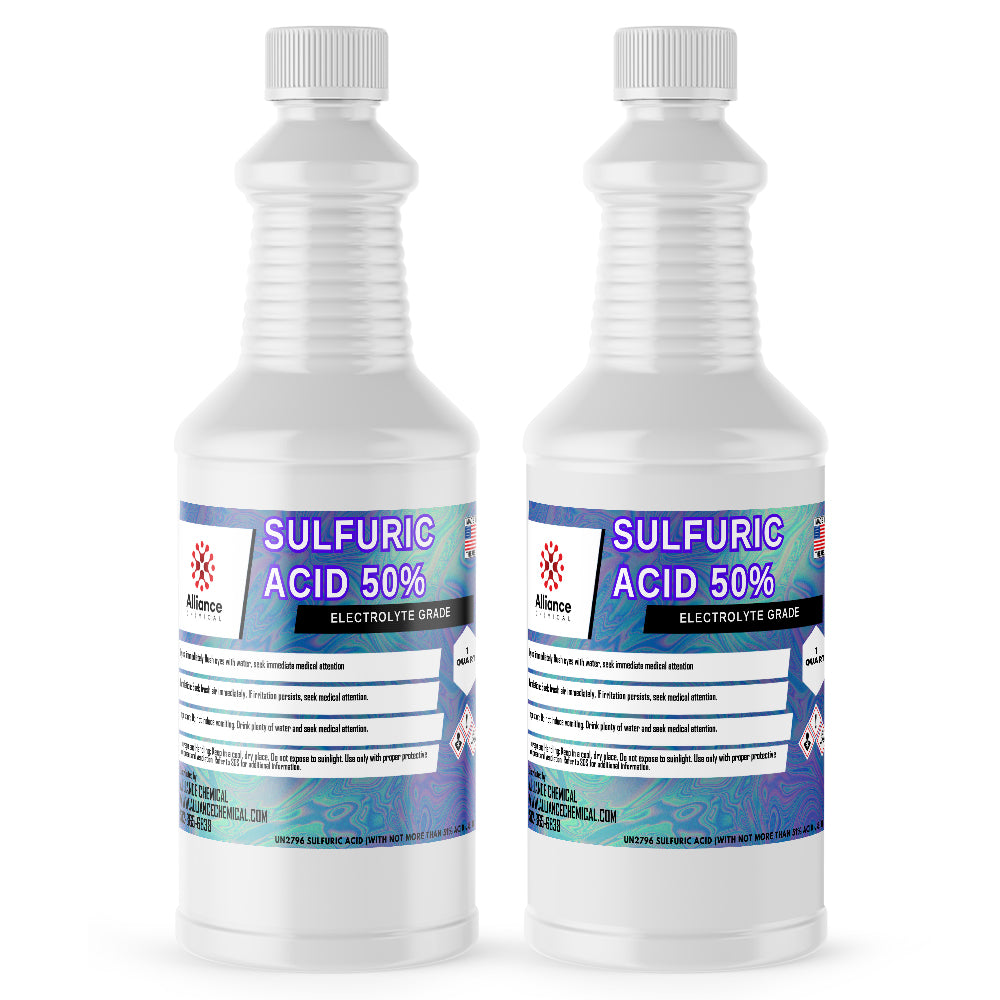
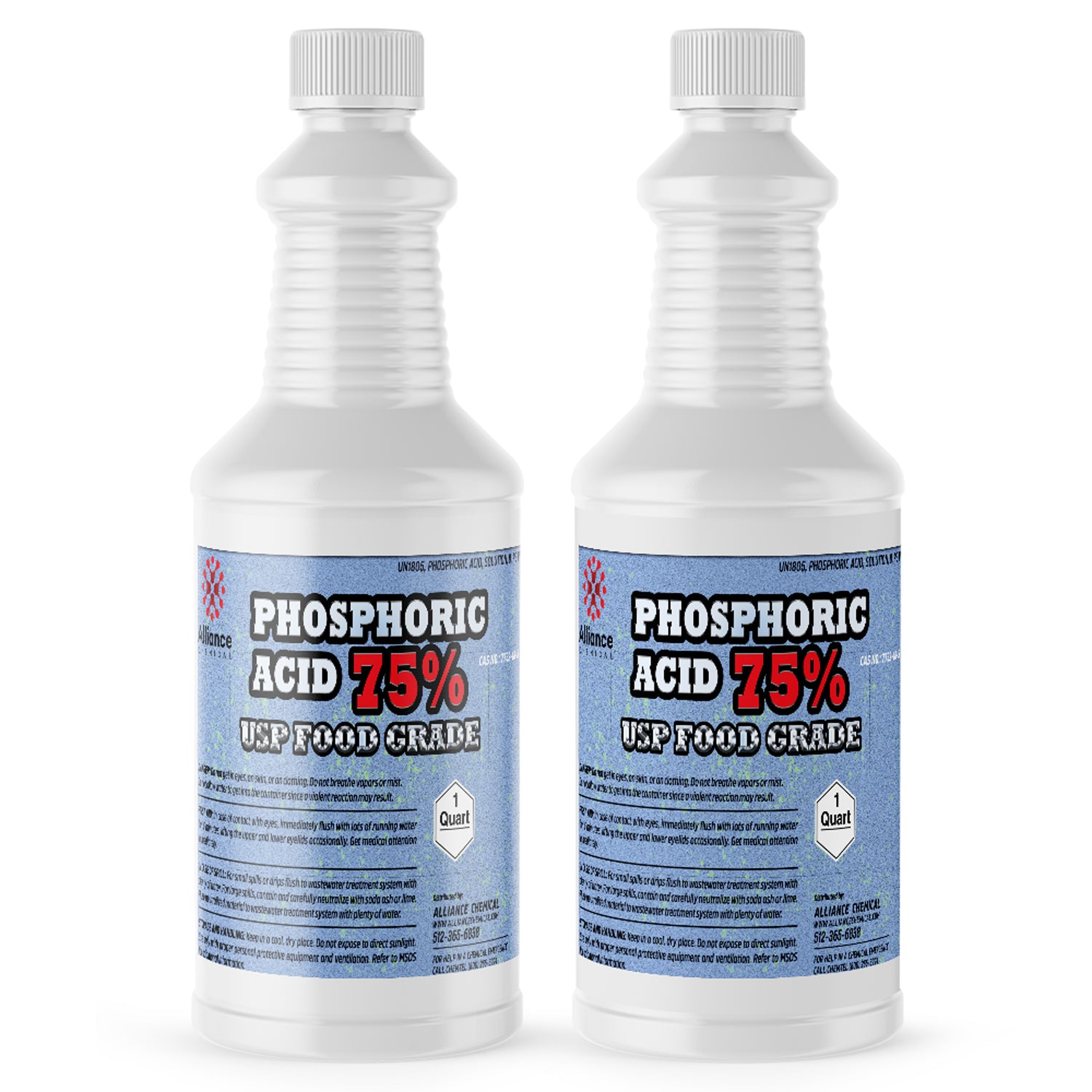
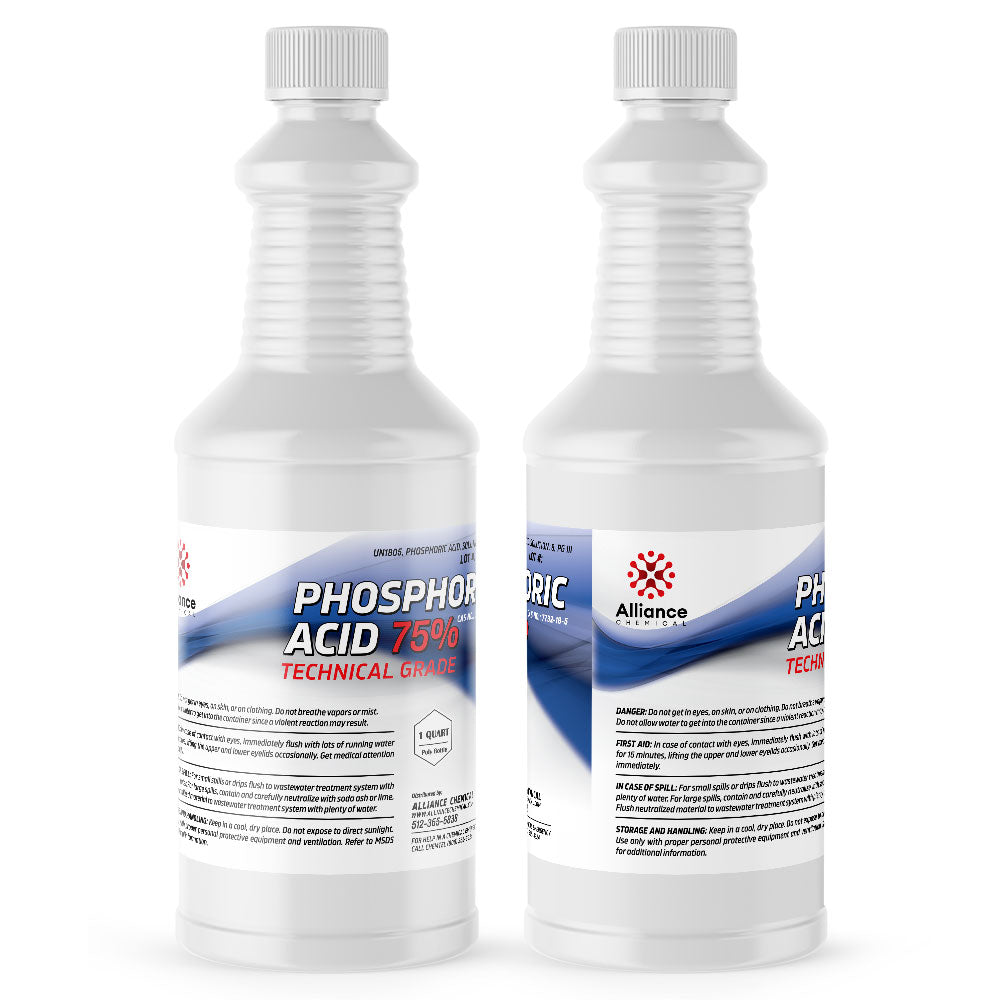
This collection includes sulfuric acid 96% ACS Grade (CAS 7664-93-9), sulfuric acid 93% Technical Grade, sulfuric acid 37% battery acid, nitric acid 70% ACS Low Particle (CAS 7697-37-2), nitric acid 65% ACS Grade, hydrochloric acid 37% ACS and Technical Grade (CAS 7647-01-0), phosphoric acid 85% Food Grade and Technical Grade (CAS 7664-38-2), and additional concentrations across all acid types.

Common Applications

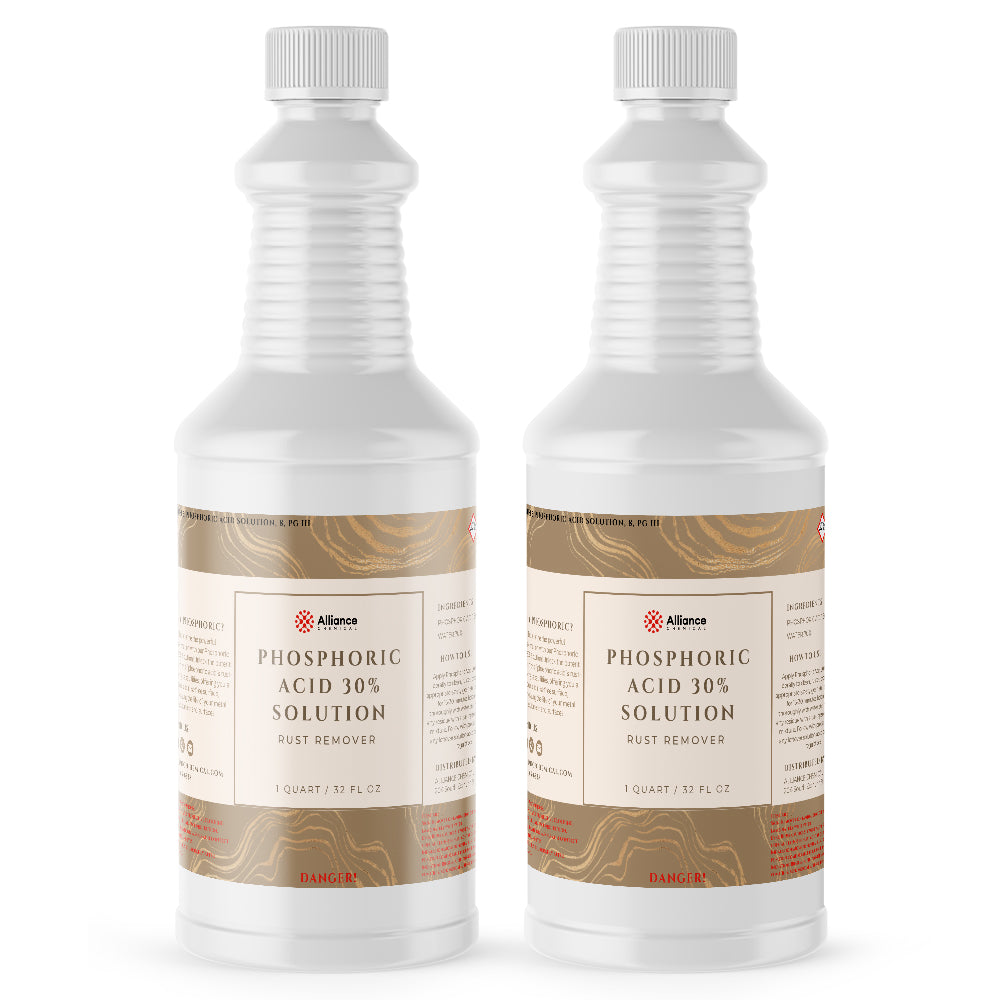
Sulfuric acid is used in metal treatment, battery manufacturing, wastewater pH adjustment, and chemical synthesis across concentrations from 37% to 96%. Nitric acid serves metal passivation, semiconductor etching, gold refining, and laboratory sample digestion—the 70% ACS Low Particle grade is specifically designed for HPLC and trace-metal analysis where particulate contamination must be minimized. Hydrochloric acid 37% is standard for pH adjustment, oil well acidizing, metal cleaning, and ore processing. Phosphoric acid 85% is used in food and beverage acidulation, rust conversion, metal surface treatment, and CIP cleaning in food processing facilities.

Why Buy From Alliance Chemical

Every acid ships with a Safety Data Sheet (SDS) and Certificate of Analysis (COA). Alliance Chemical offers same-day shipping on in-stock items, no minimum orders, and DOT-compliant hazmat packaging from a single quart to full tote quantities. All acids are classified and labeled per GHS Revision 7.

Related: See our Nitric Acid, Hydrochloric Acid, Sulfuric Acid, and Phosphoric Acid collections. Blog: “Understanding Sulfuric Acid Concentrations.”

Frequently Asked Questions

What concentration of sulfuric acid is required for industrial pH adjustment?
Sulfuric Acid 93% (Technical Grade) is the industry standard for large-scale pH adjustment in wastewater treatment. Its high density and concentration allow for precise dosing with lower volume requirements compared to 30% or 50% solutions. For laboratory settings requiring higher purity, 96% ACS Reagent grade is preferred.
How should acids be stored according to OSHA and NFPA standards?
In accordance with OSHA 29 CFR 1910.106 and NFPA 400, acids must be stored in dedicated, corrosion-resistant cabinets or secondary containment areas. They must be physically separated from incompatible materials such as bases, oxidizers, and flammables. Proper GHS labeling, including the GHS05 Corrosive pictogram, must be visible on all primary and secondary containers.
What is the difference between ACS Reagent Grade and Technical Grade acids?
ACS Reagent Grade acids meet or exceed the purity standards established by the American Chemical Society, making them suitable for analytical research and pharmaceutical applications. Technical Grade acids are intended for industrial purposes where trace impurities (parts per million) do not interfere with the overall process, such as bulk etching or neutralization.
What is the proper DOT shipping classification for concentrated acids?
Most industrial acids are classified under DOT 49 CFR as Class 8 Corrosive substances. For example, Sulfuric Acid concentrations over 51% are assigned UN1830, Packing Group II. Shipping requires compliant hazardous material packaging, specific labeling, and a detailed Bill of Lading (BOL) as mandated by the Pipeline and Hazardous Materials Safety Administration (PHMSA).
How do I safely neutralize a small sulfuric acid spill in a facility?
Spills should be neutralized using a buffering agent such as sodium bicarbonate (baking soda) or a dedicated industrial acid neutralizer until the pH reaches 6.0-9.0. Refer to OSHA 1910.120 for HAZWOPER guidelines during response. Always wear a face shield and chemical-resistant apron, as neutralization is an exothermic reaction that generates significant heat.
Can nitric acid be used for passivating all types of stainless steel?
Nitric acid (concentrations of 20% to 50% per ASTM A967) is effective for 300 and 400 series stainless steel passivation. However, for sensitive alloys or certain 400 series grades, Citric Acid is often substituted to reduce environmental impact and prevent etching. The choice depends on the specific alloy and the required salt spray resistance standards.
What are the EPA RCRA requirements for disposing of spent acids?
Under EPA RCRA regulations (40 CFR Part 261), spent acids with a pH less than or equal to 2.0 are classified as D002 Characteristic Hazardous Waste. Facilities must manifest these wastes and utilize a licensed TSDF (Treatment, Storage, and Disposal Facility) for neutralization and disposal unless an on-site wastewater permit allows for neutralized discharge.
What concentration of vinegar is needed for industrial vegetation control?
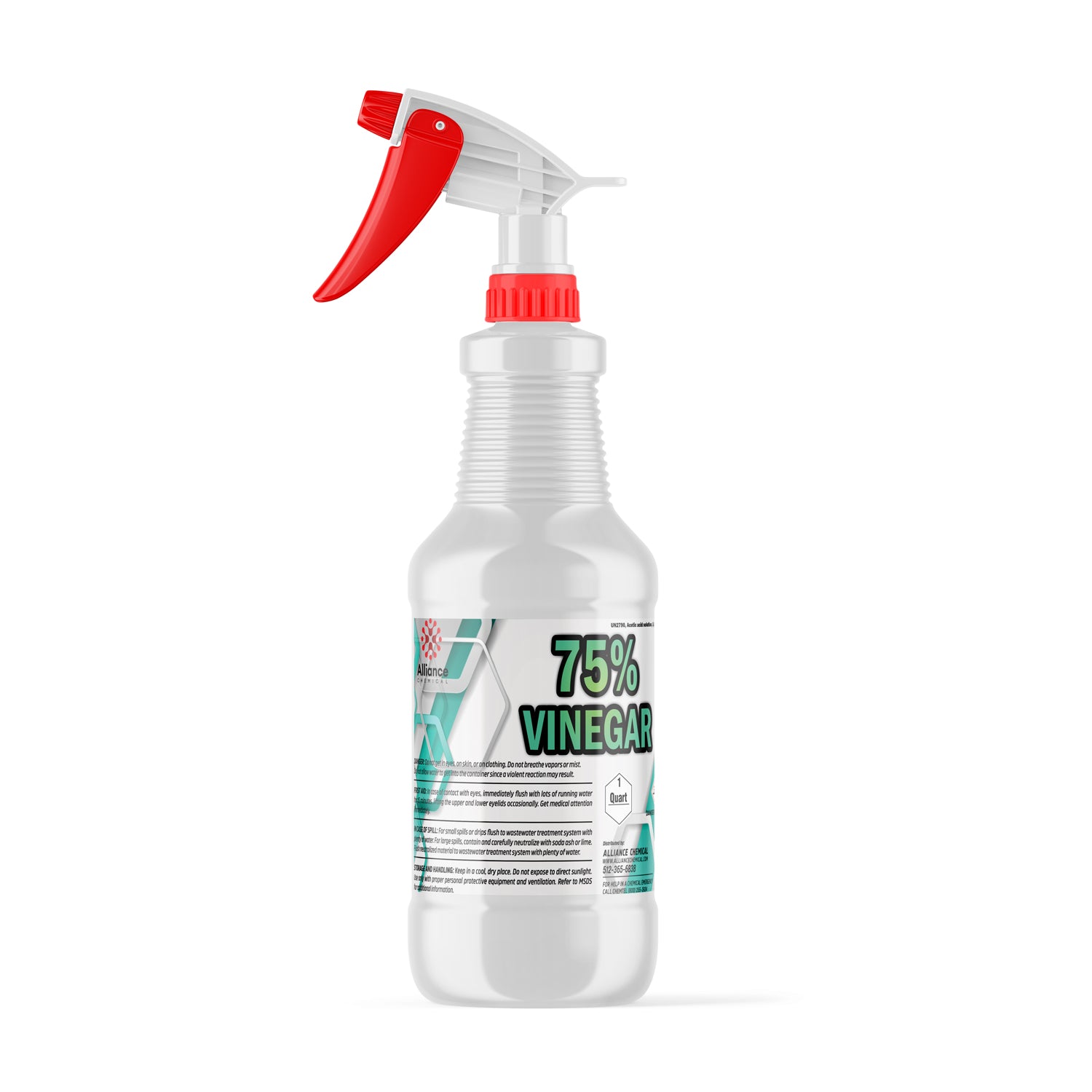
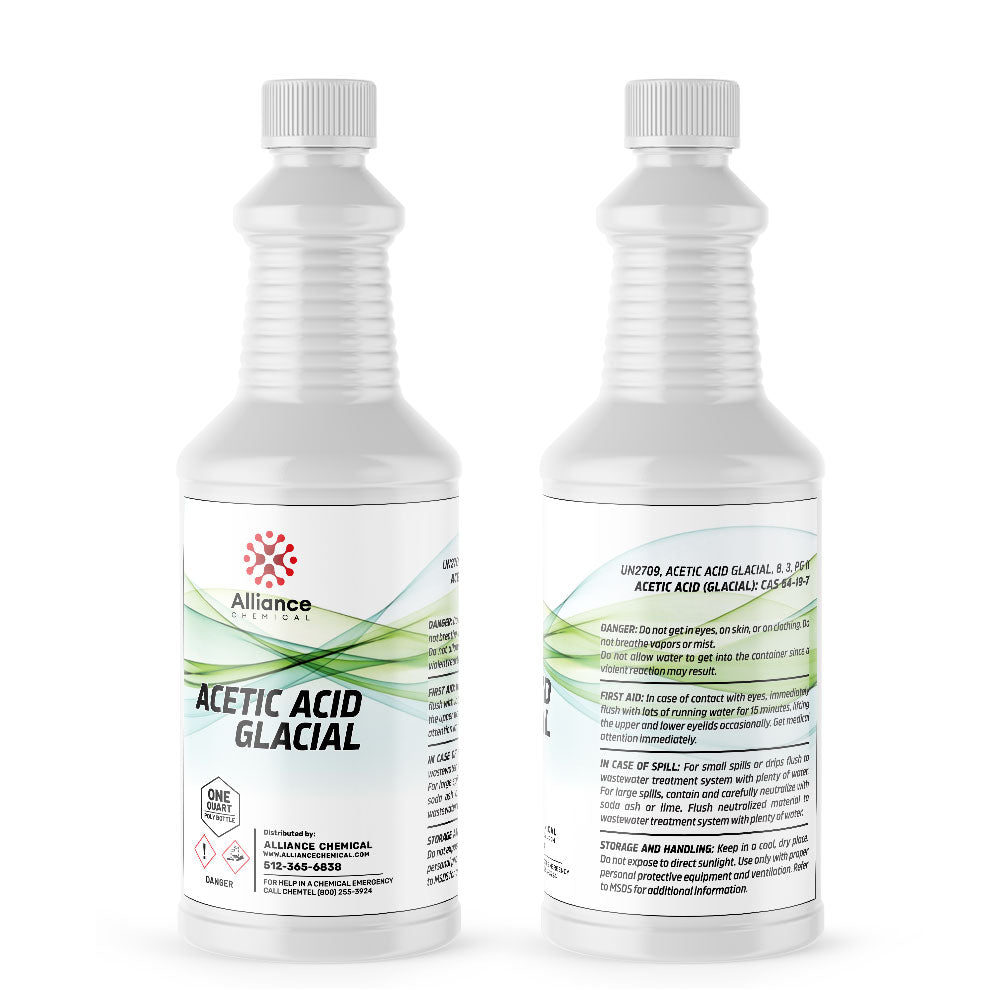
Industrial horticultural vinegar typically requires a minimum concentration of 20% to 30% acetic acid to be effective. Alliance Chemical offers concentrations up to 75% for heavy-duty applications. Unlike consumer-grade white vinegar (5%), these industrial strengths are highly corrosive and require full skin and eye protection during application.