

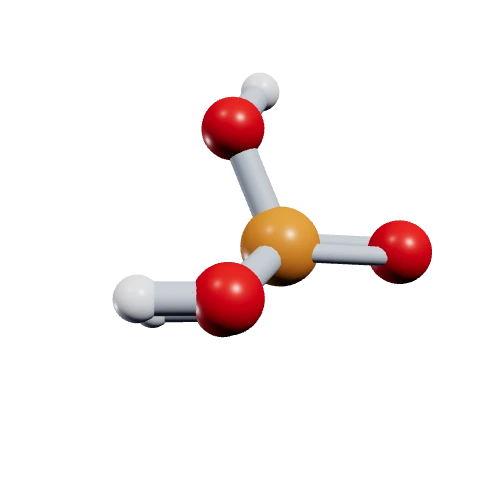



Photo by Edward Jenner on Pexels
Scientists cooled a phosphoric acid dimer to near absolute zero and found one stable structure, helping explain fast proton movement in biology and energy devices.
Key Facts
- Researchers studied the deprotonated dimer H3PO4·H2PO4-.
- The molecule was cooled to 0.37 degrees above absolute zero using a helium nanodroplet.
- Infrared spectroscopy was used to analyze the structure at very high precision.
- The study says the dimer forms one stable structure, contrary to earlier predictions.
- The work helps explain proton-shuttling in phosphoric acid systems used in batteries and fuel cells.
What Happened
Researchers from the Department of Molecular Physics at the Fritz Haber Institute, with collaborators from Leipzig and the United States, examined a key phosphoric acid-based molecular pair tied to proton transport.
The study focused on the deprotonated dimer H3PO4·H2PO4-, which previous research had suggested could help initiate proton-shuttling. To isolate its behavior, the team created the molecule in the lab and cooled it inside a helium nanodroplet to 0.37 degrees above absolute zero.
Why It Matters
Phosphoric acid and related compounds are central to proton movement in biology and are also widely used in batteries and fuel cells. The report said these materials conduct protons exceptionally well, but the earliest steps of the transfer process had not been clearly understood.
By showing that the dimer adopts one stable structure rather than multiple expected forms, the work sharpens the molecular picture behind fast charge transport. That matters for anyone evaluating phosphate-containing materials for energy devices, analytical work, or process design.
Key Details
The researchers used extremely low temperatures to strip away unwanted disturbances and then applied infrared spectroscopy to resolve the structure.
- Target system: deprotonated dimer H3PO4·H2PO4-.
- Cooling method: helium nanodroplet.
- Temperature: 0.37 degrees above absolute zero.
- Tool used: infrared spectroscopy.
- Core finding: a single stable structure linked to a specific hydrogen-bond network.
The report said that hydrogen bonds act as pathways for protons, enabling the hopping behavior known as proton-shuttling.
What To Watch Next
The study suggests the hydrogen-bond arrangement may be universal in similar systems, which could guide future research on proton-conducting materials.
For industrial users, the practical question is whether this molecular insight can translate into improved energy materials with better proton conduction and performance consistency.
Alliance's Take
For buyers and operators working with phosphate-containing materials, this research reinforces why proton conductivity can vary with molecular structure and hydrogen-bonding behavior. That may matter when evaluating materials for batteries, fuel cells, or other energy applications.
For lab and EHS teams, the main takeaway is strategic: better structural understanding can support more targeted screening, but the study itself is fundamental and does not change handling or safety requirements on its own.
Related Products
Frequently asked questions
What did the researchers discover about the phosphoric acid dimer?
They found it forms one stable structure at ultra-low temperature, rather than the multiple forms that had been expected.
Why is this relevant to industry?
Phosphoric acid systems are used in batteries and fuel cells, so understanding proton transport may help guide better energy-material development.
How was the structure measured?
The team cooled the molecule in a helium nanodroplet to 0.37 degrees above absolute zero and analyzed it with infrared spectroscopy.
Sources
About the author
Andre Taki
This article is for informational purposes only.


