

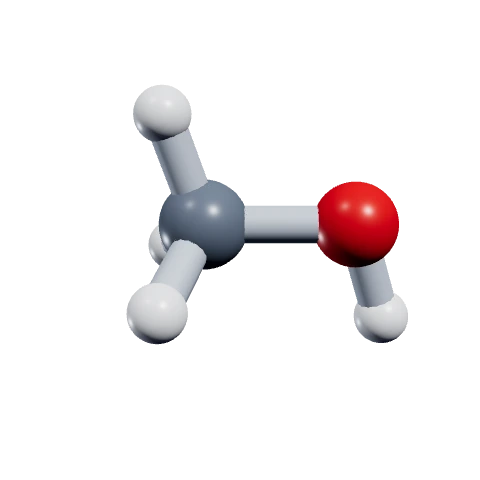


Photo by Claudio Schwarz on Unsplash
Researchers at ETH Zurich have engineered a single-atom indium catalyst that significantly lowers the energy required to convert carbon dioxide and hydrogen into methanol, a key industrial precursor.
Key Facts
- The new catalyst system utilizes individual indium atoms as active sites rather than traditional grouped metal particles.
- Methanol serves as a universal precursor for industrial materials, including plastics and various chemicals.
- The catalyst significantly reduces the energy hurdle for the reaction between carbon dioxide and hydrogen.
- Researchers reported that the single-atom design allows for more precise observation and deliberate optimization of surface reactions.
What Happened
A research team at ETH Zurich has announced a significant advance in catalyst design aimed at improving the efficiency of carbon dioxide (CO2) conversion. The researchers developed a system that facilitates the production of methanol from CO2 and hydrogen by lowering the energy barrier required for the chemical reaction to occur. This development focuses on the use of the metal indium in a highly specialized configuration.

Unlike traditional industrial catalysts that rely on clumps or particles of metal, this new system utilizes single-atom catalysis. In this framework, every individual indium atom acts as its own active site, driving the reaction with higher efficiency. The study, published in March 2026, suggests that this shift from metal groupings to isolated atoms represents a major change in how these reactions are engineered at the molecular level.
Why It Matters
Every chemical reaction requires an initial input of energy to overcome an energy hurdle. In large-scale industrial processes, these requirements can lead to substantial operational costs. By reducing this energy barrier, the single-atom catalyst could make the production of sustainable fuels and chemical precursors more economically viable for industrial operators and chemical manufacturers.

The versatility of the output is equally significant. Javier Pérez-Ramírez, Professor of Catalysis Engineering at ETH Zurich, described methanol as the "Swiss army knife of chemistry," noting its role as a universal precursor for a wide range of materials. As the industry moves toward sustainable production, efficient methods for turning captured CO2 into high-demand chemicals like methanol become critical for supply chain stability.
Key Details
The breakthrough hinges on the precise engineering of the indium atoms. By ensuring that each atom functions independently, the researchers achieved an unusually efficient use of the metal. This precision offers several advantages over traditional trial-and-error catalyst development methods:
- Lower energy requirements for CO2-to-methanol conversion.
- Improved ability to observe and understand surface-level reactions.
- Reduced reliance on metal particles that may not use all atoms effectively.
- A more deliberate path toward optimizing catalyst performance for specific industrial needs.
The report found that the ability to better understand reactions happening on the catalyst surface opens the door for further optimization. This level of control is often missing in traditional systems where metal atoms are clustered together, making the active sites harder to study and refine.
What To Watch Next
The transition from laboratory breakthrough to industrial application will depend on the scalability of single-atom catalyst production. As energy costs and carbon regulations continue to influence the chemical sector, the adoption of such high-efficiency catalysts could accelerate the shift toward cleaner fuel production. Industrial operators should monitor developments in indium-based catalysis as a potential driver for lowering the overhead of sustainable chemical manufacturing.
Alliance's Take
For Alliance Chemical customers, this development signals a potential shift in the cost structure and availability of sustainably sourced methanol. As a primary precursor for plastics and specialized chemicals, improvements in methanol production efficiency could eventually stabilize pricing for downstream derivatives while helping facilities meet increasingly stringent ESG targets.
From a procurement and lab management perspective, the move toward single-atom catalysts suggests a broader trend of utilizing more efficient, high-performance materials to replace traditional bulk catalysts. While this technology is emerging from the research phase, the emphasis on precision and reduced energy hurdles reflects the industry's long-term direction toward optimized, lower-emission chemical processing.
Related Products
Frequently asked questions
Why is methanol considered a "universal precursor" in the chemical industry?
Methanol is used as a foundational building block for a vast range of materials, most notably plastics, making it essential for diverse industrial manufacturing processes.
How does a single-atom catalyst differ from traditional catalysts?
Traditional catalysts often use clumps or particles of metal atoms. Single-atom catalysts isolate individual atoms to act as active sites, which increases metal efficiency and lowers the energy required for reactions.
What are the primary benefits of the new indium catalyst reported by ETH Zurich?
The main benefits include significantly lower energy needs for CO2 conversion, more efficient use of the metal indium, and improved precision in observing and optimizing the chemical reaction.
Sources
Related Chemical Collections
About the author
Andre Taki
This article is for informational purposes only.


