Nitric Acid

HNO3 5% to 70% — ACS and low-particle grades

7 Products
Sort by:: Best Selling
Sort by: Best Selling

FILTERS

Chemical name
  • (7)
Grade
  • (3)
  • (4)
Percentage
  • (1)
  • (1)
  • (1)
  • (1)
  • (1)
  • (1)
  • (1)
Form
  • (6)
Industry
  • (1)
  • (2)
  • (6)
  • (5)

About Nitric Acid

About Nitric Acid

Nitric Acid (CAS 7697-37-2), also known as aqua fortis or spirit of niter, is a highly corrosive mineral acid and powerful oxidizing agent essential to modern industrial chemistry. In its pure form, it is colorless, but older samples often acquire a yellow cast due to decomposition into oxides of nitrogen. As a primary reagent for nitration, metal etching, and chemical synthesis, it is utilized across concentrations ranging from 5% to 70% in high-precision manufacturing and analytical laboratories.

Common Applications

  • Stainless Steel Passivation: Removal of exogenous iron and compounds from the surface of stainless steel using 20% to 50% concentrations to maximize corrosion resistance per ASTM A967 standards.
  • Semiconductor Fabrication: Utilizing Low Particle ACS Grade 70% nitric acid for silicon wafer etching and cleaning cycles in Class 100 cleanroom environments.
  • Precious Metal Recovery: Dissolving base metals from jewelry scrap and electronic waste to isolate gold, silver, and platinum group metals.
  • Metal Pickling: Removing scales and oxidation from copper, brass, and bronze surfaces to prepare them for secondary coating or finishing.
  • Electroplating and Anodizing: Serving as a critical electrolyte component and surface activator in the aerospace and defense sectors.
  • Analytical Chemistry: Performing acid digestion of complex samples for trace metal analysis in ICP-OES and ICP-MS instrumentation.

What We Carry

Alliance Chemical stocks multiple concentrations of nitric acid to meet specific technical and regulatory requirements. We provide high-purity ACS Reagent Grade for laboratory use and Technical Grade for industrial applications, available in packaging ranging from 1-quart bottles to 330-gallon IBC totes.

Grade Purity / Concentration Best For
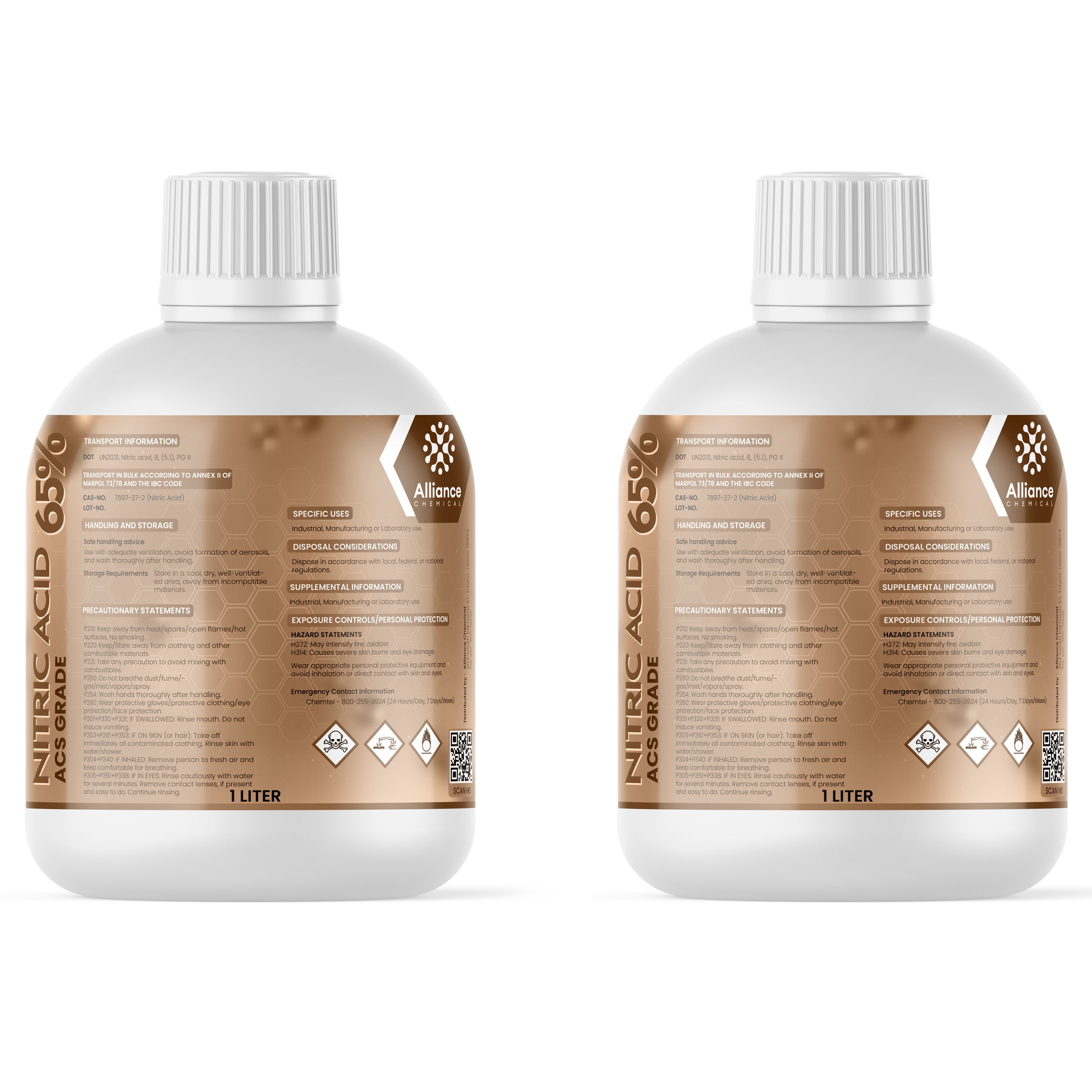
ACS Reagent 65% - 70% (Low Particle) Analytical research, semiconductor etching, and trace metal analysis.
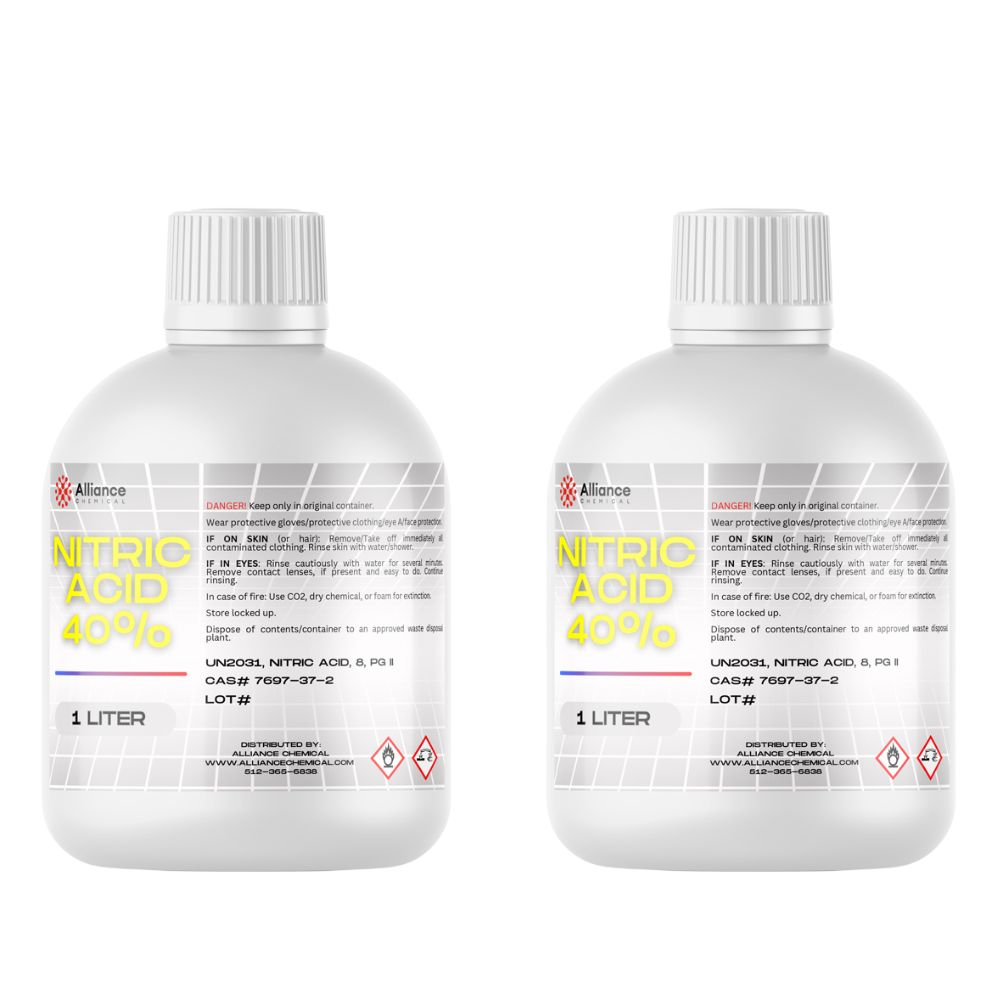
Technical Grade 40%, 42° Baumé Industrial passivation, metal pickling, and large-scale chemical synthesis.
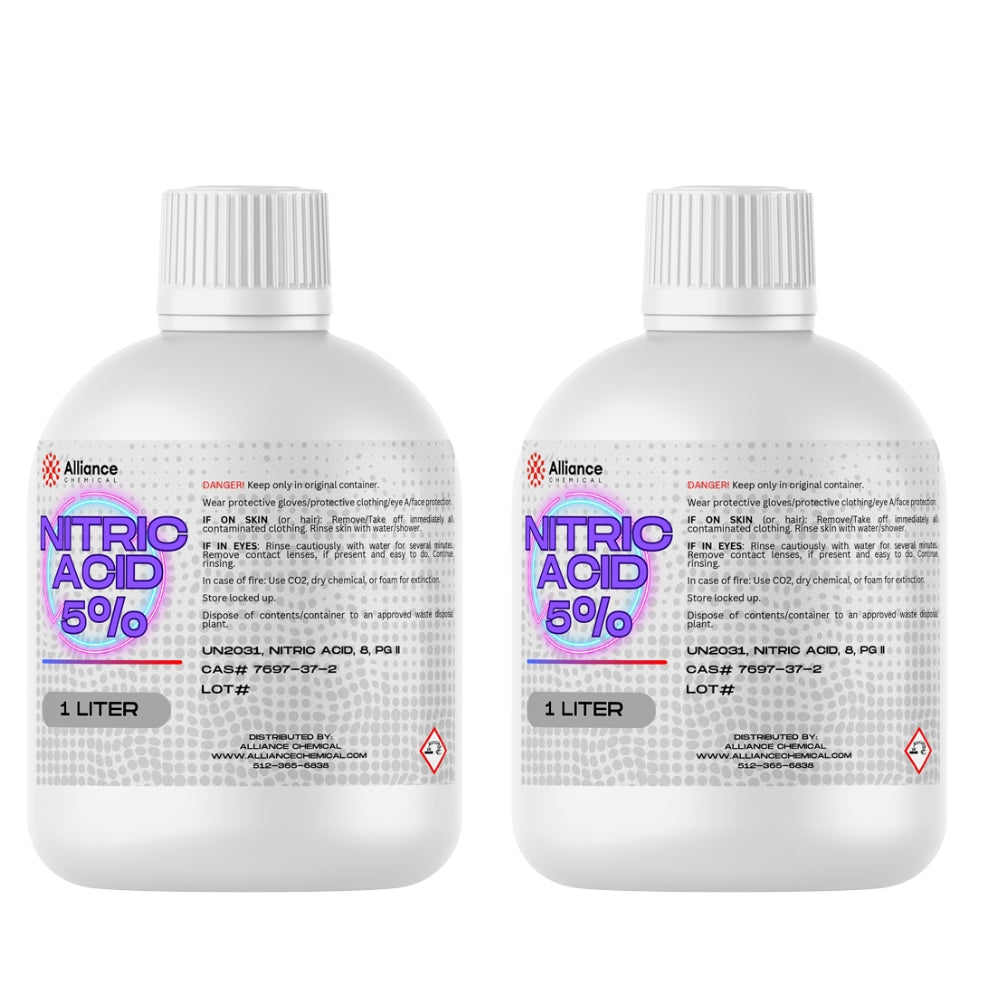
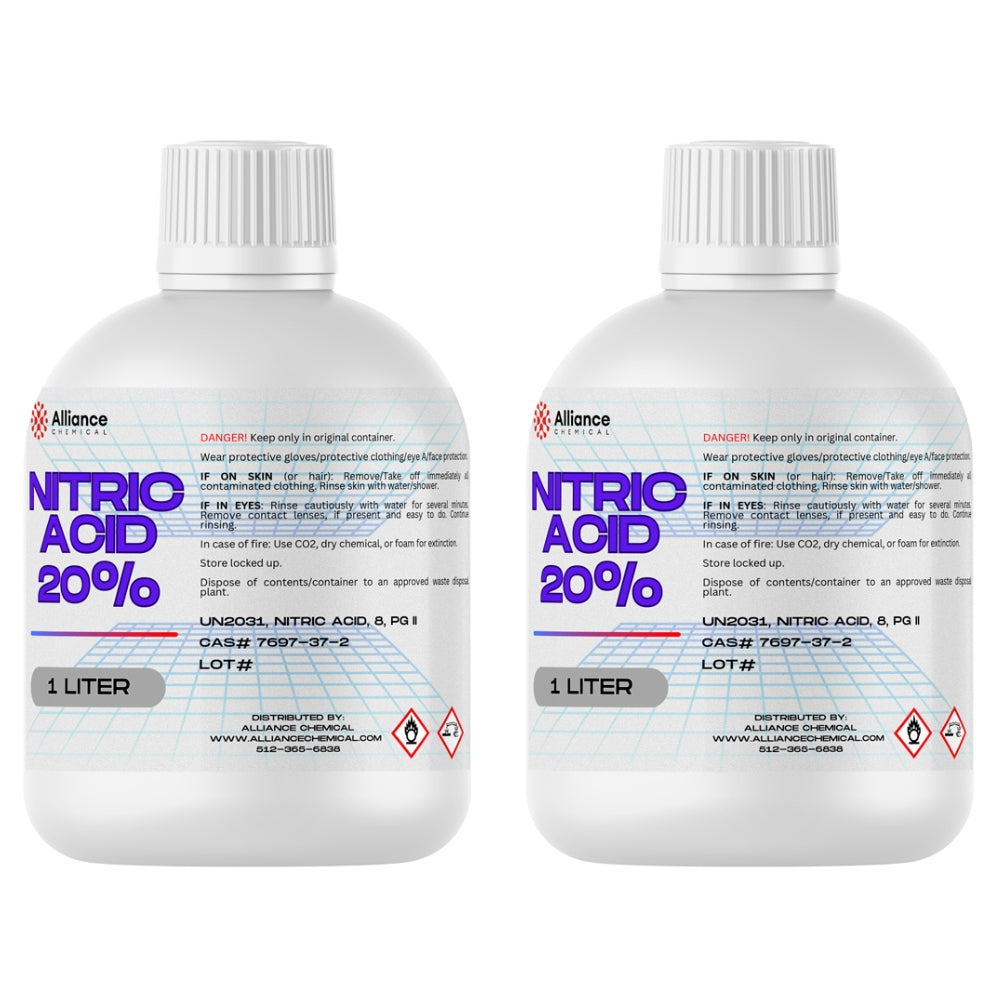
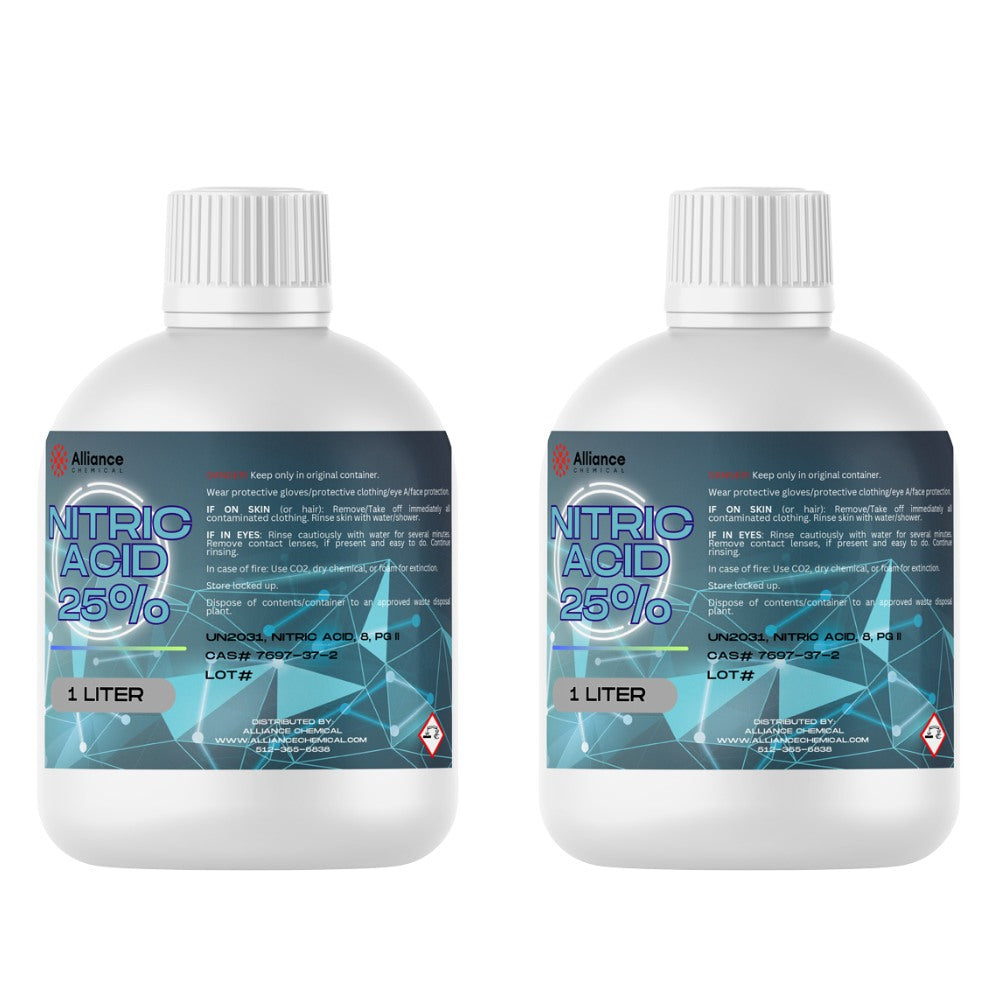
Dilute Grades 5%, 20%, 25% Routine cleaning, pH adjustment, and standardized passivation baths.

Safety & Handling

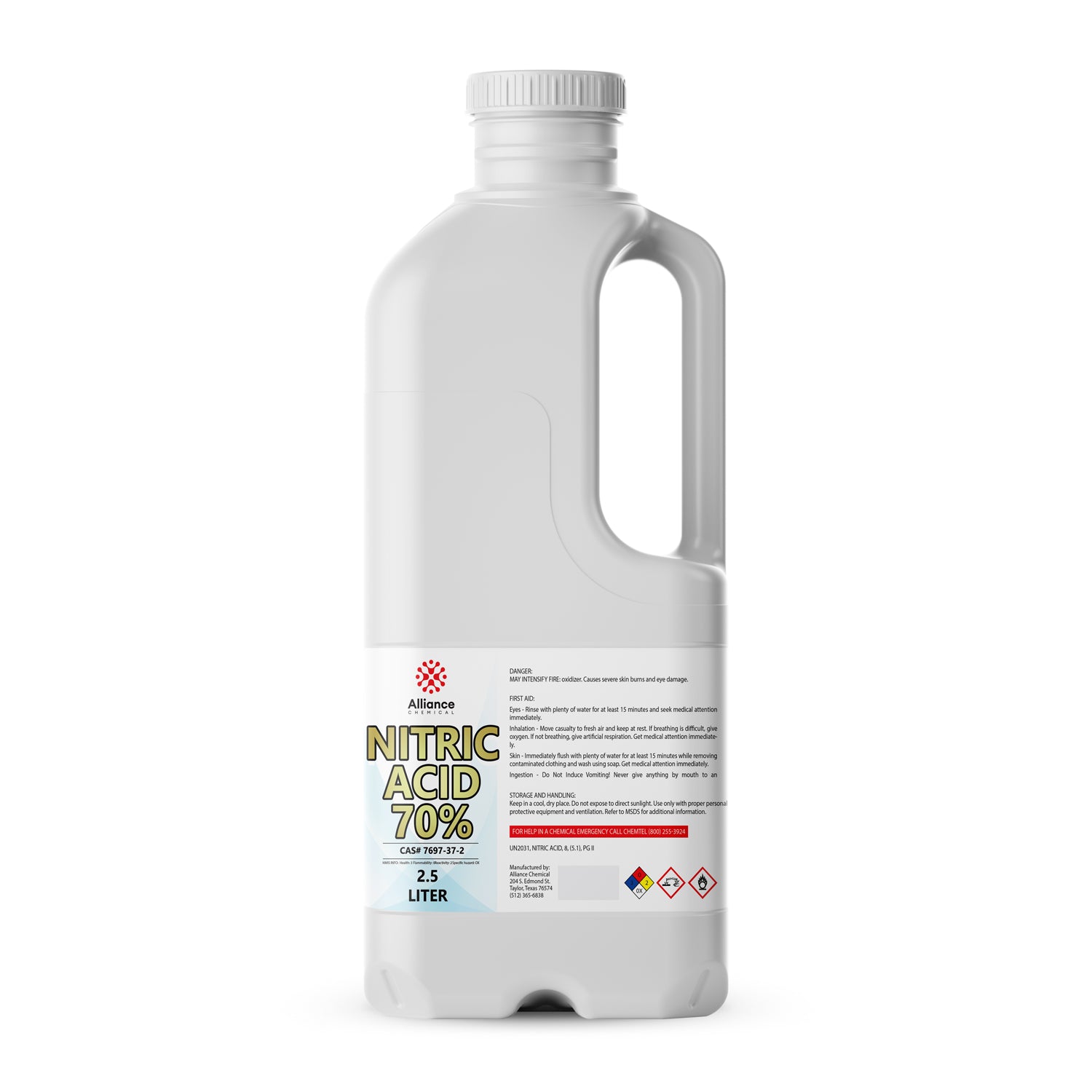
Nitric Acid is classified as a GHS03 Oxidizer and GHS05 Corrosive, capable of causing severe skin burns and eye damage upon contact. Operators must utilize specific PPE including acid-resistant gloves (Butyl or heavy-duty Nitrile), chemical splash goggles, a full-face shield, and a chemical-resistant apron. Nitric acid must be stored in a cool, dry, well-ventilated area away from organic solvents, bases, and metallic powders to prevent violent exothermic reactions.

Handling procedures must comply with OSHA 29 CFR 1910.1200 (HazCom) and DOT 49 CFR requirements for Class 8 Corrosive substances with secondary 5.1 Oxidizer risks where applicable. In the event of a spill, neutralize with sodium bicarbonate or lime only after consulting the Safety Data Sheets. The NFPA 704 rating for 70% nitric acid is Health: 4, Flammability: 0, Instability: 0, Special: OX.

Sourcing & Quality

Shipped from Taylor, Texas — same-day on in-stock items.

COA included with every order. Certificate of Analysis documents lot-specific purity and specifications.

28 years serving 55,000+ customers including 244 federal contracts.

✓ SDS Included ✓ COA Available ⚡ Same-Day Shipping ★ No Minimum Order

Last updated: March 2026

Frequently Asked Questions

What concentration of nitric acid is used for stainless steel passivation?
Industrial passivation typically requires nitric acid concentrations between 20% and 50% by volume. According to ASTM A967, the process often occurs at temperatures ranging from 70°F to 140°F (21°C to 60°C) for a duration of 20 to 30 minutes. This treatment removes free iron from the surface and promotes the formation of a protective chromium oxide layer.
What is the shelf life and proper storage for Nitric Acid 70%?
Nitric acid has a shelf life of approximately two years when stored in its original, unopened container in a cool, dark environment. Exposure to light and heat causes the acid to decompose into nitrogen dioxide (NO₂), which results in a yellowish tint. It must be stored in secondary containment away from organic materials, as it is a powerful oxidizer that can ignite combustible substances.
How should nitric acid be neutralized for disposal?
Nitric acid disposal is regulated under EPA RCRA as a D002 corrosive hazardous waste. Small laboratory quantities can be neutralized by slowly adding the acid to a large volume of cold water, followed by the addition of a neutralizing agent like sodium bicarbonate (baking soda) until a neutral pH of 6-8 is achieved. Large industrial quantities must be managed by a licensed hazardous waste professional in accordance with 40 CFR 261.
Can nitric acid be stored in stainless steel containers?
Nitric acid can be stored in specific high-chromium stainless steel alloys, such as 304L or 316L, because the acid's oxidizing nature passivates the metal. However, at concentrations above 70% (fuming nitric acid) or at elevated temperatures, the corrosion rate increases significantly. For most commercial 40% to 70% grades, glass or specialized fluoropolymers like PTFE and HDPE are the preferred materials for long-term storage.
What are the DOT shipping requirements for nitric acid?
Nitric acid is regulated by DOT 49 CFR 172.101 as UN2031. It is classified as a Class 8 Corrosive material, and concentrations exceeding 65% require a secondary 'Oxidizer' (5.1) hazard label. All shipments must utilize UN-rated packaging, and transport is subject to strict quantity limitations on passenger aircraft and rail.
What is the difference between ACS Grade and Technical Grade Nitric Acid?
ACS Grade Nitric Acid meets or exceeds the purity standards set by the American Chemical Society, featuring extremely low metal and particle counts suitable for analytical research. Technical Grade is intended for industrial processes where minor impurities (such as iron or chlorides) do not interfere with the application. For semiconductor and electronic uses, a 'Low Particle' ACS grade is specifically filtered to remove contaminants that could damage microcircuits.
What PPE is required by OSHA for handling nitric acid?
Under OSHA 29 CFR 1910.132, employers must provide appropriate PPE for the hazards presented by nitric acid. This includes a full-face shield over chemical splash goggles to prevent eye and face contact. Hand protection must consist of acid-resistant gloves made of butyl rubber or neoprene, as standard thin nitrile gloves may degrade quickly when exposed to high concentrations.
What concentration of nitric acid is used for gold refining?
In gold refining, 67-70% nitric acid is used to create Aqua Regia (a 3:1 mixture of hydrochloric acid and nitric acid) which dissolves gold. Alternatively, it is used alone at approximately 30-40% concentration to dissolve base metals like silver and copper out of a gold alloy, a process known as inquartation. This process must always be conducted under a high-efficiency fume hood due to the release of toxic nitrogen oxide fumes.