



The Vinegar Weed Killer That Actually Works (Hint: It's Not in Your Pantry)
30% industrial vinegar destroys tough weeds fast—without leaving harsh synthetic chemicals in your soil.
Why 30% Vinegar is the Best Weed Killer for Industrial Use
When facility managers and landscapers search for the best weed killer, they often overlook high-strength acetic acid. Standard grocery store vinegar sits at a mere 5% concentration. While 5% acetic acid might wilt a young dandelion sprout, it lacks the chemical power to destroy mature, deep-rooted vegetation. The plant simply recovers a few days later. For permanent, rapid desiccation, operators rely on 30% vinegar. This concentration represents the sweet spot for industrial weed control.
At 30% strength, acetic acid is strongly phytotoxic on contact — a fact of the chemistry rather than an approved use. It aggressively strips the waxy protective cuticle from plant leaves. Once this barrier is breached, the plant loses its ability to retain moisture. The resulting cellular damage causes rapid dehydration, turning green foliage brown and brittle within hours, especially under direct sunlight. Industrial vinegar for killing weeds is not a systemic chemical; it does not travel through the vascular system to the roots over a period of weeks. Instead, it destroys exactly what it touches.
This makes it highly predictable and easy to manage around established, desirable vegetation, provided you control the spray drift. Alliance Chemical supplies 30% Vinegar as a clear, colorless liquid that is fully water soluble. Because it is a technical-grade chemical, it delivers consistent acidity without the impurities found in food-grade alternatives. Technical-grade 30% acetic acid is supplied for industrial cleaning, processing and formulation use, where consistent acidity matters more than food-grade provenance.
How Acetic Acid Damages Plant Tissue: The Science of Desiccation
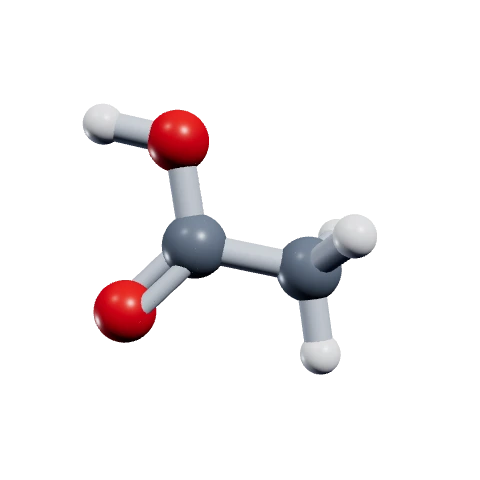
A common question is whether acetic acid damage is permanent or superficial. The answer lies in the concentration and the mechanism of action. Acetic acid (CAS 64-19-7) is a simple carboxylic acid with the chemical formula C2H4O2. When applied at high concentrations, it acts as a potent desiccant. Plant leaves are protected by a lipid-based cuticle that prevents water loss. High-strength acetic acid dissolves this lipid layer on contact.
Without its protective cuticle, the plant's internal moisture evaporates rapidly into the surrounding air. This process is known as rapid desiccation. The plant cells collapse, the tissue necrotizes, and the visible foliage dies. Because acetic acid acts only where it lands, it damages only the tissue it directly touches. It does not translocate down into the root system like glyphosate or other systemic chemicals. For annual weeds, destroying the top growth is usually sufficient to kill the entire plant, as it lacks the energy reserves to regrow.
For established perennial weeds with deep taproots, the plant may attempt to push new growth after the initial application. However, repeated applications of 30% vinegar will eventually exhaust the root system's energy stores, leading to total plant death. The molecular weight of acetic acid is 60.05, and its simple structure allows it to act quickly and then break down rapidly in the environment. It does not bind to soil particles or remain active in the dirt. Once it hits the soil, microbes quickly metabolize the acetic acid, breaking it down into water and carbon dioxide. This rapid degradation is why high-strength vinegar is heavily favored in organic farming and environmentally sensitive commercial zones.
Comparing Vinegar Concentrations: 10%, 30%, 50%, and 75%
Alliance Chemical stocks several concentrations of industrial vinegar, each suited for different operational requirements. Selecting the correct strength is vital for both efficacy and safety. 10% Vinegar is a step up in acidity from grocery-store vinegar, but still well below the concentrations used for industrial cleaning and processing.
30% Vinegar is the industry standard for weed control. It provides the optimal balance of aggressive desiccation and manageable safety protocols. For the vast majority of landscaping and facility maintenance tasks, 30% is the exact concentration required. 50% Vinegar is a highly aggressive formulation. With a flash point between 68–72°C, it requires stricter handling procedures. This concentration is typically reserved for extreme overgrowth, heavy industrial descaling, or agricultural applications where rapid, massive tissue destruction is necessary.
Finally, 75% Vinegar is an exceptionally potent technical-grade chemical. It has a boiling point of 118°C (244.4°F) and a flash point of 39°C (102.2°F). At 75% concentration, acetic acid is a clear, viscous liquid with acidic transparency that is fully miscible with water and alcohols. This grade is rarely used for standard weed control; it is primarily utilized in chemical manufacturing, pH adjustment in industrial water treatment, and specialized cleaning operations. Using 50% or 75% vinegar for routine weed spraying is generally overkill and introduces unnecessary handling risks. Operators should default to the 30% concentration for herbicidal applications, scaling up only if specific, stubborn vegetation resists standard treatment and safety protocols can be strictly maintained.
What is the environmental impact and soil degradation profile of horticultural vinegar?
One of the primary reasons facility managers and agricultural operators switch to 30% vinegar is its favorable environmental profile. Traditional synthetic herbicides, such as glyphosate or pre-emergents, can persist in the soil for months or even years. They can leach into groundwater, run off into local waterways, and disrupt local ecosystems. Acetic acid behaves entirely differently.
As a simple organic compound (C2H4O2), it is highly reactive but environmentally transient. When industrial vinegar is sprayed onto weeds, the portion that misses the plant and hits the soil does not remain active for long. Soil bacteria and microorganisms readily recognize acetic acid as a food source. They metabolize the compound rapidly, breaking it down into harmless byproducts: water and carbon dioxide. This degradation process typically occurs within a few days, depending on soil temperature and microbial activity.
Because it breaks down so quickly, 30% vinegar does not leave residual toxicity in the dirt. You can safely replant an area shortly after treating it with acetic acid, making it an excellent tool for crop rotation preparation or garden bed clearing. because it is fully water soluble, any unexpected rainfall will quickly dilute the acid to negligible concentrations. while acetic acid is natural, applying massive quantities of high-strength vinegar can temporarily lower the pH of the topsoil. However, the buffering capacity of most soils, combined with the rapid microbial breakdown, means this pH shift is usually short-lived and localized to the top few millimeters of dirt.
What are the safety protocols, PPE, and storage requirements for high-strength acetic acid?
Handling 30% vinegar requires strict adherence to industrial safety protocols. This is not the mild 5% solution found in a kitchen pantry; it is a technical-grade chemical that can cause severe burns to skin and permanent damage to eyes. The boiling point of our standard acetic acid solutions is 118°C (244.4°F), and the melting point is 16°C (60.8°F). The flash point for the 30% and 75% grades is 39°C (102.2°F), meaning it must be kept away from open flames, sparks, and excessive heat sources. Always consult the product SDS for specific hazard classes and UN numbers before transport or application.
Personal protective equipment (PPE) is non-negotiable. Operators must wear heavy-duty, chemical-resistant gloves (such as nitrile or neoprene), long sleeves, long pants, and closed-toe shoes. Eye protection is critical; splash-proof chemical goggles or a full face shield should be worn to prevent accidental exposure from wind drift or splash-back during pouring. If 30% vinegar contacts the skin, flush the area immediately with copious amounts of water.
Store industrial vinegar in its original, clearly labeled high-density polyethylene (HDPE) container. Keep it in a cool, dry, well-ventilated area away from incompatible materials, particularly strong oxidizing agents and strong bases. Because the melting point is 16°C (60.8°F), pure glacial acetic acid can freeze at relatively mild temperatures, though diluted solutions like 30% have lower freezing points. Ensure the storage area remains above freezing to prevent container expansion or rupture. Proper handling ensures that this highly effective herbicide remains a safe tool for your facility maintenance program.
Cost-Effectiveness and Bulk Sourcing for Commercial Operations
For large-scale commercial operations, municipalities, and industrial parks, weed control is a significant line item in the annual maintenance budget. Transitioning to 30% vinegar offers a highly cost-effective alternative to proprietary synthetic herbicide blends. Because acetic acid is a fundamental industrial chemical, it can be sourced in bulk quantities at highly competitive rates. Alliance Chemical supplies industrial vinegar in various sizes, from single-gallon jugs for small facilities to 55-gallon drums and 275-gallon IBC totes for massive agricultural or municipal applications.
Buying in bulk drastically reduces the cost per applied gallon. When evaluating the cost-effectiveness of industrial vinegar, operators must factor in the speed of action. Synthetic systemic herbicides often take one to two weeks to show visible results, leading to repeated applications by impatient crews. 30% vinegar delivers visible desiccation within hours. This immediate feedback prevents over-application and saves significant labor hours. Crews can spray an area in the morning and verify the kill by the afternoon.
the reduced regulatory burden associated with storing and applying acetic acid compared to restricted-use synthetic pesticides can lower compliance and training costs. There are fewer restrictions on proximity to waterways (though direct application to water should always be avoided) and less risk of long-term liability from chemical persistence. By partnering with a reliable chemical distributor like Alliance Chemical, facilities can ensure a steady, cost-effective supply of technical-grade 30% vinegar, keeping their grounds clear of weeds while maintaining a responsible environmental footprint. Additionally, the versatility of acetic acid means that bulk supplies can be cross-utilized for other facility needs, such as hard water descaling or pH adjustment in wastewater treatment systems, further maximizing the return on investment. Always ensure that any cross-application adheres to the specific safety and dilution guidelines outlined in the product SDS.
| Concentration | Product Link | Primary Use Case |
|---|---|---|
| 10% | <a href="/products/10-vinegar-concentrated-industrial-strength">10% Vinegar</a> | Light maintenance; wilts young seedlings but struggles with mature weeds. |
| 30% | <a href="/products/30-vinegar-concentrated-industrial-strength">30% Vinegar</a> | The most common industrial concentration. |
| 50% | <a href="/products/50-vinegar-concentrated-industrial-strength">50% Vinegar</a> | Aggressive desiccation for extreme overgrowth. Requires strict PPE. |
| 75% | <a href="/products/75-vinegar">75% Vinegar</a> | Highly concentrated technical grade. Rarely needed for standard weed control. |
Frequently Asked Questions
Ready to upgrade your facility's weed control program? Alliance Chemical stocks premium 30% industrial vinegar in sizes ranging from 1-gallon jugs to 275-gallon totes. Order today for reliable, technical-grade acetic acid.
30% Vinegar - Concentrated Industrial Strength10% Vinegar - Concentrated Industrial Strength50% Vinegar - Concentrated Industrial StrengthReferences & Authoritative Sources
Chemical identity, properties, and safety data sourced from the U.S. National Library of Medicine's PubChem database — the authoritative open-chemistry data resource maintained by the National Institutes of Health.
- PubChem CID 176: 30% Vinegar - Concentrated Industrial Strength — National Center for Biotechnology Information, U.S. National Library of Medicine. CAS 64-19-7.
Related: Concentrated Vinegar Strength Guide: what 10%, 30%, 50% & 75% each do — the complete strength-selection, dilution, and Technical-vs-Food-grade guide.
Key numbers and sources
| Fact | Value | Source |
|---|---|---|
| CAS number | 64-19-7 | pubchem.ncbi.nlm.nih.gov |
| Chemical formula | C2H4O2 | pubchem.ncbi.nlm.nih.gov |
| Boiling point | 118°C (244.4°F) | pubchem.ncbi.nlm.nih.gov |
| Melting point | 16°C (60.8°F) | pubchem.ncbi.nlm.nih.gov |
| Molecular weight | 60.05 | pubchem.ncbi.nlm.nih.gov |
| Industry standard concentration for weed control | 30% | See article text |
| Flash point (75% acetic acid) | 39°C (102.2°F) | pubchem.ncbi.nlm.nih.gov |
Frequently asked questions
Is 30% vinegar safe for the soil?
Yes. Acetic acid breaks down rapidly in the soil. Soil microbes metabolize it into water and carbon dioxide within a few days, leaving no residual toxicity, which makes it ideal for environmentally sensitive areas.
What PPE is required when spraying 30% vinegar?
Operators must wear chemical-resistant gloves (such as nitrile or neoprene), splash-proof goggles or a face shield, long sleeves, long pants, and closed-toe shoes. Consult the product SDS for comprehensive safety guidelines.
Related Chemical Collections
About the author
Andre Taki
This article is for informational purposes only.


