Oxidizers and Bleaching Agents

H2O2, Sodium Hypochlorite & Sodium Chlorite

25 Products
Sort by:: Best Selling
Sort by: Best Selling

FILTERS

Chemical name
  • (15)
  • (2)
  • (8)
Grade
  • (8)
  • (15)
  • (2)
Percentage
  • (1)
  • (1)
  • (2)
  • (2)
  • (1)
  • (3)
  • (1)
  • (3)
  • (2)
  • (1)
  • (2)
  • (2)
  • (2)
  • (2)
Form
  • (2)
  • (23)
Industry
  • (2)
  • (11)
  • (23)
  • (4)
  • (21)

About Oxidizers and Bleaching Agents

About Oxidizers and Bleaching Agents

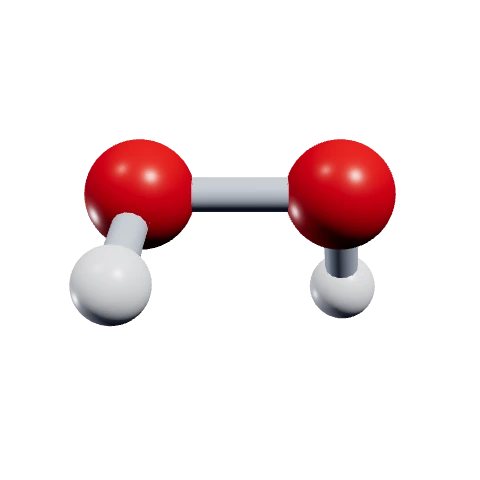
Oxidizers and bleaching agents are highly reactive chemical compounds that facilitate the transfer of oxygen or electrons to other substances, effectively breaking down organic matter, removing pigments, or neutralizing contaminants. This category primarily features Hydrogen Peroxide (CAS 7722-84-1) and Sodium Hypochlorite (CAS 7681-52-9) in various industrial and laboratory concentrations. These agents are essential for high-level disinfection, chemical synthesis, and industrial bleaching processes where rapid oxidation is required.

Common Applications

  • Municipal Water Treatment: Sodium Hypochlorite is used at concentrations of 12.5% to eliminate pathogens and maintain residual disinfection in potable water systems.
  • Non-Chlorine Pool Sanitation: Hydrogen Peroxide 35% serves as a powerful oxidizer for residential and commercial pools, providing a chlorine-free alternative for water clarity.
  • Industrial Facility Sanitization: Hydrogen Peroxide solutions are utilized for surface sterilization in food processing and pharmaceutical cleanrooms to meet FSMA standards.
  • Agricultural Pathogen Control: Sodium Hypochlorite is applied in controlled environment agriculture to sterilize irrigation lines and prevent biofilm accumulation.
  • Textile and Pulp Bleaching: High-concentration Hydrogen Peroxide (30-50%) is used as a sustainable whitening agent that decomposes into water and oxygen without leaving halogenated residues.
  • Wood and Surface Refinishing: Oxidizing agents are applied to remove stains, weather damage, and natural tannins from timber surfaces prior to coating.
  • Laboratory Analysis: ACS Grade Hydrogen Peroxide is required for analytical procedures requiring high purity and low metallic residue, such as metal digestion and sample preparation.

What We Carry

Alliance Chemical stocks a comprehensive range of oxidizers in grades ranging from Technical (Industrial) to ACS (High Purity). We provide concentrations from 3% consumer-ready solutions to 35% industrial-strength concentrates, packaged in sizes from 1-quart bottles to 330-gallon IBC totes.

Grade Purity / Concentration Best For
ACS Grade 30% (Meets ACS Reagent Specs) Laboratory research, semiconductor cleaning, and precision analysis.
Technical Grade 10%, 25%, 30%, 35% H2O2 | 12.5% NaOCl Industrial manufacturing, water treatment, and bulk disinfection.
Food Grade (FCC) 35% Hydrogen Peroxide Aseptic packaging, food surface contact sanitization, and agricultural use.
Standard Bleach 5.25% - 6% Sodium Hypochlorite General facility maintenance and low-level disinfection.

Safety & Handling

Oxidizers are classified under GHS03 (Flame over Circle) and GHS05 (Corrosive). They can significantly intensify fires and cause severe skin burns or eye damage upon contact. Proper PPE including chemical-resistant nitrile or neoprene gloves, indirect-vent goggles, and face shields is mandatory for handling concentrations above 10%.

Storage must comply with OSHA 29 CFR 1910.1200 (HazCom) and NFPA 400 (Hazardous Materials Code). Keep oxidizers strictly separated from flammable liquids, organic acids (like Acetic Acid), and reducing agents to prevent spontaneous combustion or explosion. In case of spills, neutralize according to the specific Safety Data Sheets and report releases as required by EPA RCRA guidelines. Ensure storage areas are cool, well-ventilated, and protected from direct sunlight to prevent pressure build-up in containers.

Sourcing & Quality

Shipped from Taylor, Texas — same-day on in-stock items.

COA included with every order. Certificate of Analysis documents lot-specific purity and specifications.

28 years serving 55,000+ customers including 244 federal contracts.

✓ SDS Included ✓ COA Available ⚡ Same-Day Shipping ★ No Minimum Order

Last updated: March 2026

Frequently Asked Questions

What is the DOT shipping classification for 12.5% Sodium Hypochlorite?
Sodium Hypochlorite at concentrations of 12.5% is classified by the Department of Transportation (DOT) as a Class 8 Corrosive Substance under 49 CFR 172.101. It is typically assigned UN1791, Hypochlorite Solutions, Packing Group II or III depending on the specific concentration and container volume. This requires proper hazardous material labeling and manifesting for all commercial shipments.
How do I dilute 30% Hydrogen Peroxide to a 3% solution?
To dilute 30% Hydrogen Peroxide (CAS 7722-84-1) to 3%, use the C1V1 = C2V2 formula. Mix 1 part of 30% H2O2 with 9 parts of high-purity distilled or deionized water. Always add the chemical to the water, not water to the chemical, to prevent exothermic splashing, and use a clean, vented container as H2O2 continuously off-gasses oxygen.
What are the OSHA storage requirements for industrial oxidizers?
Under OSHA 29 CFR 1910.106 and NFPA 400, oxidizers must be stored in a manner that prevents contact with incompatible materials such as flammables, combustible solids, or reducing agents. They should be kept in a cool, dry, well-ventilated area, ideally on non-combustible shelving or secondary containment pallets. Storage areas must be clearly marked with GHS hazard communication signage.
Is 35% Hydrogen Peroxide safe for use in food processing facilities?
Hydrogen Peroxide 35% is widely used in food processing provided it meets Food Chemicals Codex (FCC) specifications. It is commonly used for aseptic packaging and as a surface sanitizer because it decomposes into water and oxygen, leaving no toxic residue. Use must comply with FDA 21 CFR 178.1005 regulations regarding concentrations and contact times.
Can I use 12.5% Sodium Hypochlorite for well water disinfection?
Sodium Hypochlorite 12.5% (industrial bleach) is frequently used for shock chlorination of wells to eliminate bacterial contamination. The EPA recommends specific dosing based on the well volume and depth; typically, the target is 50-200 ppm of free chlorine. Users must ensure the product used is certified to NSF/ANSI Standard 60 for drinking water treatment chemicals.
What is the difference between Technical Grade and ACS Grade Hydrogen Peroxide?
Technical Grade Hydrogen Peroxide is intended for industrial applications like wastewater treatment or bleaching where minor impurities do not interfere with the process. ACS Grade Hydrogen Peroxide meets or exceeds the purity standards set by the American Chemical Society, ensuring extremely low levels of chloride, phosphate, sulfate, and heavy metals, making it suitable for analytical chemistry and semiconductor manufacturing.
How should an industrial spill of Sodium Hypochlorite be neutralized?
Spills of Sodium Hypochlorite should first be contained with non-combustible absorbent materials like sand or vermiculite. The solution can then be neutralized using a reducing agent such as Sodium Bisulfite or Sodium Thiosulfate. Avoid using acids for neutralization, as this will release toxic chlorine gas; always refer to the specific SDS for safety protocols under OSHA 1910.1200.
Does Hydrogen Peroxide degrade over time during storage?
Hydrogen Peroxide is inherently unstable and naturally decomposes into water and oxygen. At standard room temperature (20-25°C), high-quality stabilized H2O2 typically loses less than 1% of its concentration per year. However, exposure to heat, sunlight, or catalytic impurities (like dust or transition metals) will drastically accelerate this decomposition rate, potentially leading to container over-pressurization.