Lab Chemicals

200+ chemicals — ACS Reagent, USP & technical grades

90 Products
Sort by:: Best Selling
Sort by: Best Selling

FILTERS

Chemical name
  • (1)
  • (1)
  • (1)
  • (1)
  • (5)
  • (1)
  • (1)
  • (1)
  • (2)
  • (1)
  • (1)
  • (2)
  • (1)
  • (1)
  • (4)
  • (7)
  • (2)
  • (2)
  • (1)
  • (1)
  • (1)
  • (2)
  • (1)
  • (1)
  • (1)
  • (2)
  • (1)
  • (1)
  • (1)
  • (2)
  • (4)
  • (2)
  • (1)
  • (1)
  • (8)
  • (1)
  • (1)
  • (3)
  • (1)
  • (8)
  • (1)
  • (2)
  • (1)
  • (1)
  • (1)
  • (1)
  • (1)
  • (2)
Grade
  • (79)
  • (11)
Percentage
  • (5)
  • (1)
  • (6)
  • (1)
  • (5)
  • (4)
  • (3)
  • (1)
  • (2)
  • (1)
  • (1)
  • (1)
  • (2)
  • (2)
  • (1)
  • (1)
  • (2)
  • (2)
  • (1)
  • (1)
  • (1)
  • (2)
  • (4)
  • (2)
  • (1)
  • (1)
  • (1)
  • (2)
  • (5)
Form
  • (2)
  • (1)
  • (66)
  • (1)
  • (7)
Industry
  • (34)
  • (1)
  • (11)
  • (1)
  • (2)
  • (15)
  • (2)
  • (71)
  • (23)
  • (2)
  • (37)

About Lab Chemicals

About Lab Chemicals

Lab Chemicals encompass a comprehensive range of high-purity reagents, solvents, acids, bases, and salts required for precision analytical and research applications. These chemicals primarily adhere to ACS (American Chemical Society) grade standards, ensuring they meet the stringent purity requirements for quantitative analysis and reproducibility. For over 28 years, these materials have served as the foundation for laboratory workflows, from standard preparation to complex instrumental analysis.

Common Applications

  • Quantitative Analysis: Utilizing ACS-grade reagents to establish precise concentrations in titration and gravimetric procedures.
  • Standard Preparation: Formulating accurate calibration standards for UV-Vis, HPLC, and GC-MS instrumentation.
  • Chromatographic Analysis: Employing low-particle solvents to prevent column contamination and ensure baseline stability in high-performance liquid chromatography.
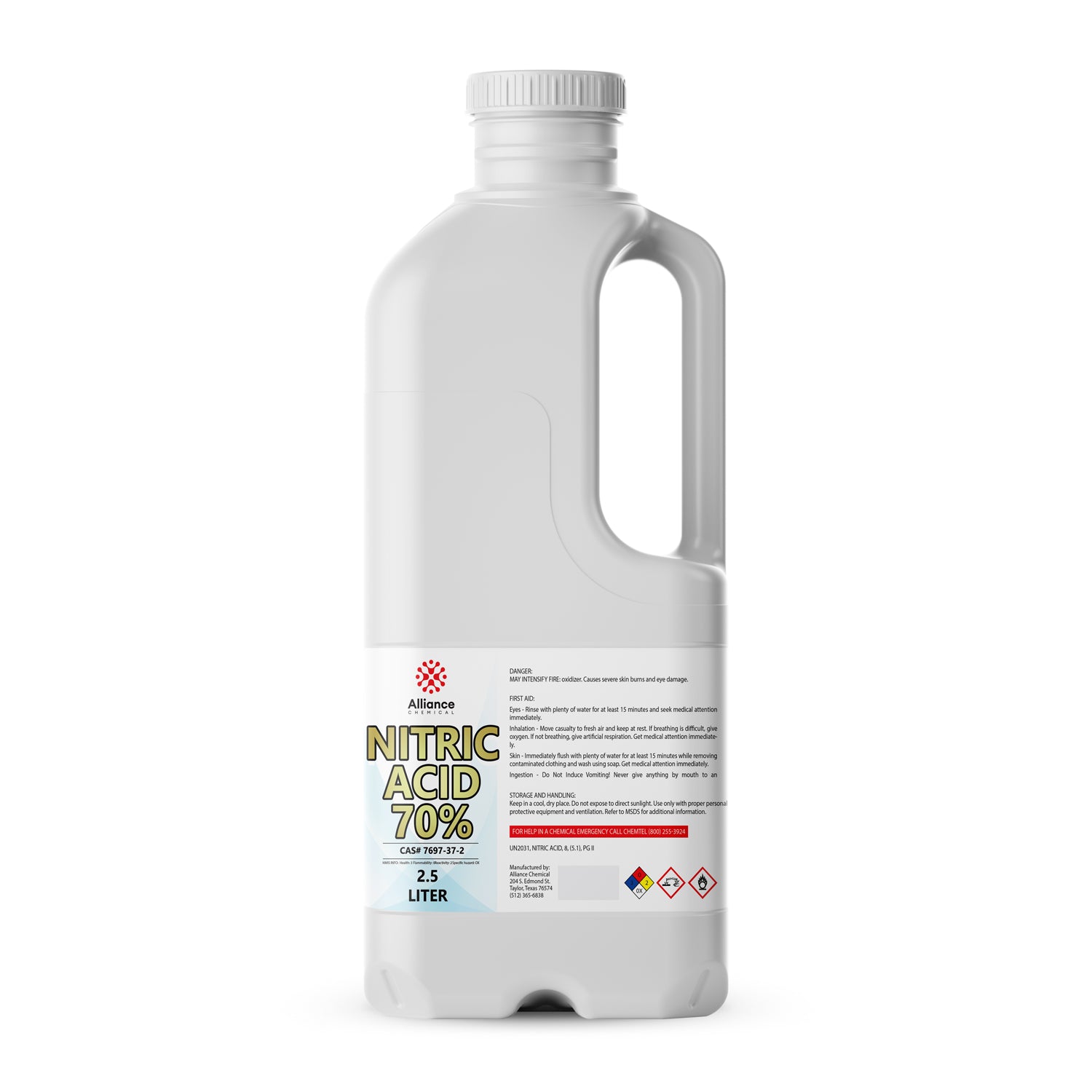
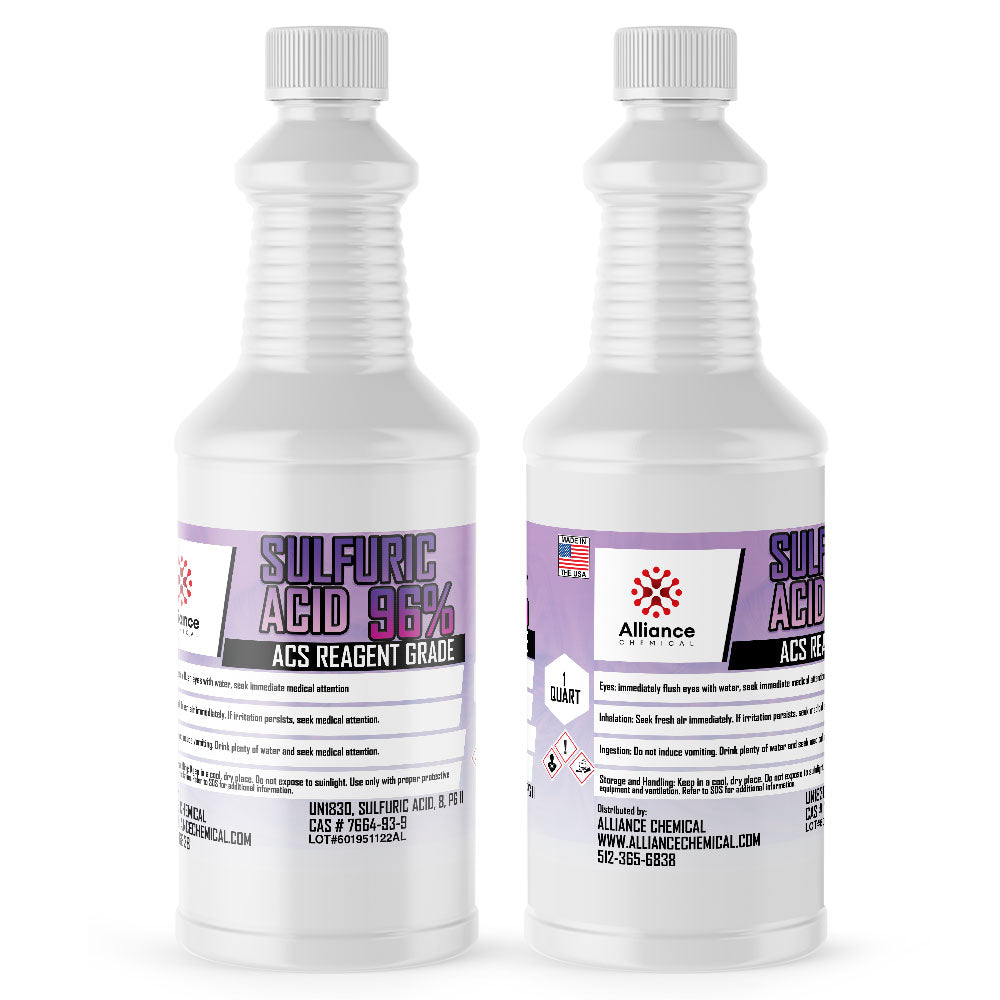
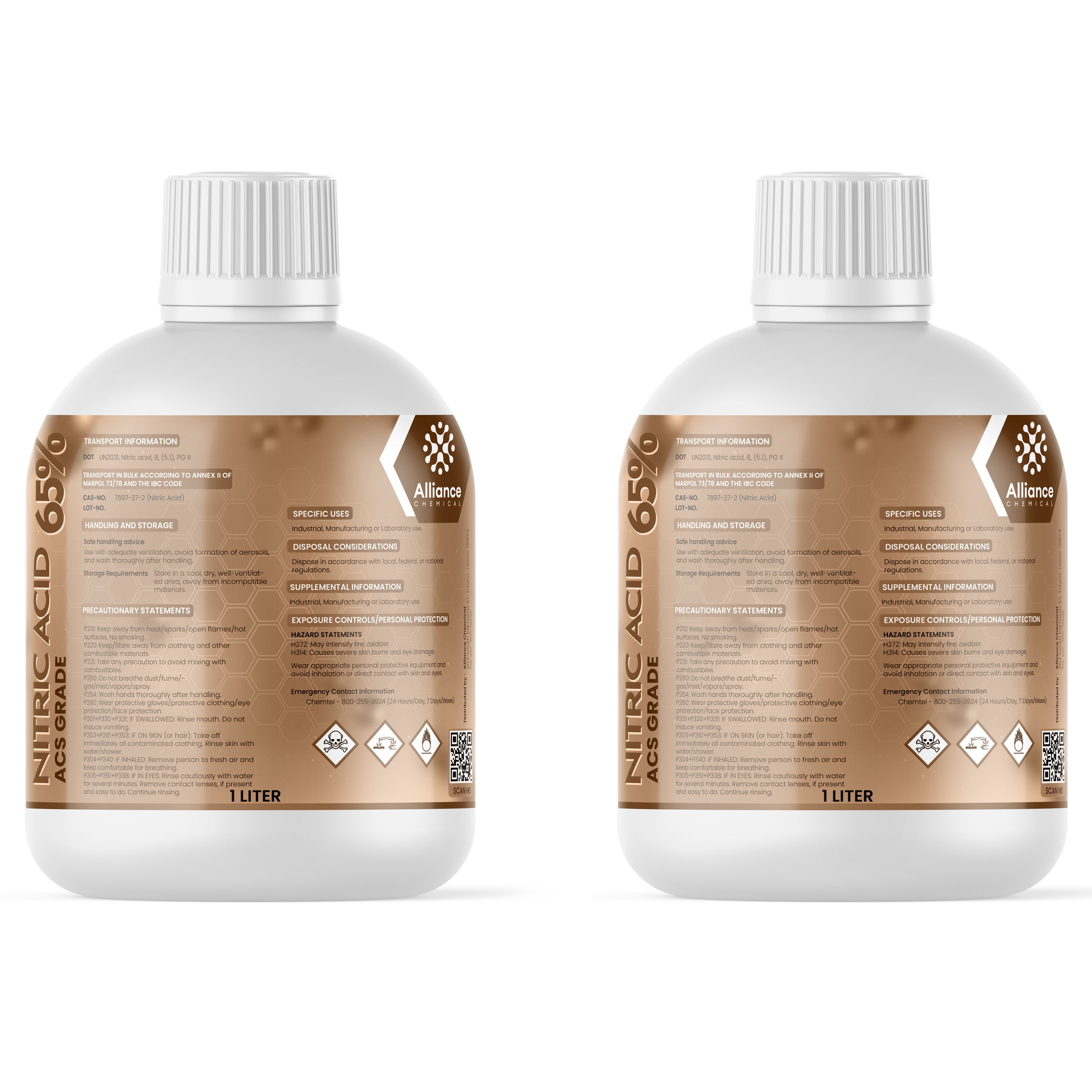
  • Sample Digestion: Using concentrated Nitric Acid (CAS 7697-37-2) or Sulfuric Acid (CAS 7664-93-9) for the total dissolution of inorganic samples.
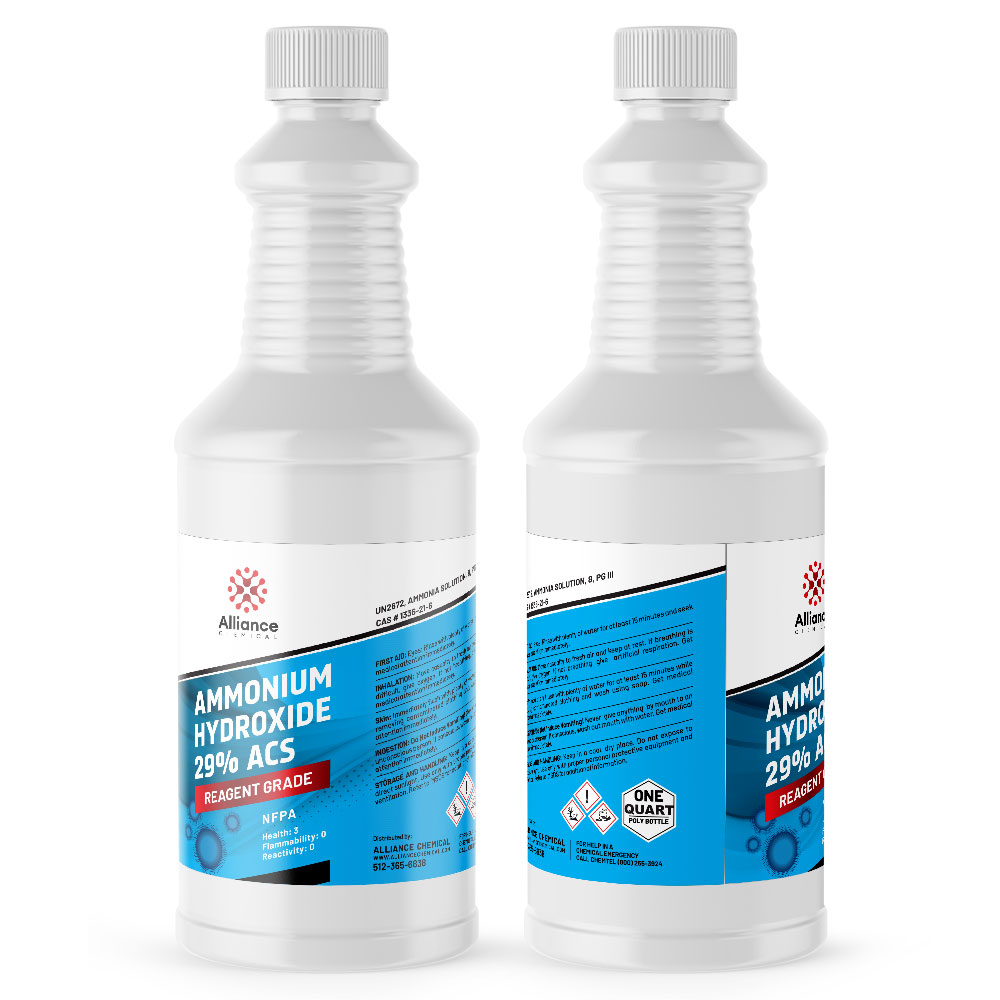
  • Wet Chemistry: Performing qualitative reactions and pH adjustments using standardized bases like Ammonium Hydroxide.
  • Reagent Solvation: Leveraging high-purity water and solvents to minimize trace metal interference in critical experiments.
  • Battery Testing: Utilizing specific 37% battery-grade sulfuric acid for electrochemical research and lead-acid maintenance.
  • Quality Control: Verifying raw material purity through comparative analysis against established lab-grade benchmarks.

What We Carry

Alliance Chemical stocks over 200 lab-grade products ranging from reagent-grade solids to high-purity electronic-grade liquids. We provide flexible packaging options, including 500mL bottles, 4-liter poly containers, 5-gallon pails, and 55-gallon drums to accommodate both bench-top research and pilot-plant operations.

Grade Purity Best For
ACS Reagent Highest (>99.5%) Analytical research, chromatography, and quantitative lab work.
USP/NF High Purity Pharmaceutical testing and medical-grade applications.
Technical/Industrial 90-98% General cleaning, manufacturing, and non-critical processes.

Safety & Handling

Laboratory chemicals often present diverse hazards, ranging from flammability (GHS02) to severe corrosion (GHS05) and acute toxicity (GHS06). Proper storage requires segregation based on compatibility; for example, oxidizers must be stored away from organic solvents to prevent exothermic reactions. All handling must comply with OSHA 29 CFR 1910.1200 (HazCom) and NFPA 45 (Standard on Fire Protection for Laboratories Using Chemicals).

Mandatory PPE includes chemical-resistant nitrile or viton gloves, indirect-vent splash goggles, and lab coats; highly volatile reagents should only be used within a certified fume hood. In the event of exposure, immediate irrigation with water for at least 15 minutes is required, followed by a review of the specific SDS for further medical instruction. Consult our Safety Data Sheets for specific chemical properties and DOT 49 CFR shipping classifications.

Sourcing & Quality

Shipped from Taylor, Texas — same-day on in-stock items.

COA included with every order. Certificate of Analysis documents lot-specific purity and specifications.

28 years serving 55,000+ customers including 244 federal contracts.

✓ SDS Included ✓ COA Available ⚡ Same-Day Shipping ★ No Minimum Order

Last updated: March 2026

Frequently Asked Questions

What is the difference between ACS grade and Reagent grade chemicals?
ACS Grade chemicals meet or exceed the purity standards set by the American Chemical Society, which are the most stringent for laboratory reagents. While 'Reagent Grade' is often used interchangeably, it only guarantees that the purity is sufficient for analytical use, whereas ACS Grade specifically follows the official ACS monographs. Using ACS Grade ensures maximum reliability in quantitative analysis where even trace impurities could skew results.
How should I store incompatible lab chemicals like acids and solvents?
Safe storage requires strict segregation following NFPA 45 and OSHA 29 CFR 1910.1450 standards. Acids, particularly oxidizers like Nitric Acid, must be stored in dedicated acid cabinets away from flammable solvents to prevent fire or toxic gas release. Always consult a chemical compatibility chart to ensure secondary containment is used for hazardous reagents, keeping them below eye level and away from heat sources.
Where can I find the Certificate of Analysis (COA) for my lab chemicals?
Alliance Chemical provides a lot-specific Certificate of Analysis with every order to confirm actual purity, assay percentages, and trace impurity levels. The COA is critical for labs maintaining ISO 17025 certification or those performing GLP-compliant research. If a hard copy is not in your shipment, digital copies can be requested using your order number and the product lot code.
What is the proper disposal method for expired ACS solvents under EPA regulations?
Disposal of laboratory chemicals is governed by the EPA under the Resource Conservation and Recovery Act (RCRA) 40 CFR Parts 260-273. Solvents are typically classified as hazardous waste (D-list for ignitability or F-list for spent solvents) and must be collected in labeled, compatible containers. You must contact a licensed hazardous waste professional for transport and disposal; lab reagents should never be poured down the drain.
Why does ACS Nitric Acid require 'Low Particle' classification for some labs?
Low Particle Nitric Acid (70% ACS) is specifically processed to minimize suspended solids that could interfere with sensitive instrumentation or cleanroom processes. In semiconductor manufacturing and trace metal analysis (ICP-MS), even microscopic particles can cause catastrophic failure or background noise. This grade ensures that the reagent introduces the fewest possible variables into the analytical environment.
What concentration of Sulfuric Acid is considered 'Laboratory Grade'?
Laboratory grade Sulfuric Acid is most commonly supplied at 96% ACS Reagent Grade for general analytical work. For more specific applications, we offer 30%, 37% (Battery Grade), and 93% Technical Grade options. The choice depends on the required molarity and the sensitivity of the reaction; ACS 96% is preferred for creating precise dilutions for titration and organic synthesis.
Are there specific OSHA requirements for labeling lab-prepared chemical solutions?
Yes, under OSHA 29 CFR 1910.1200 (HazCom), all secondary containers must be clearly labeled with the product identifier and words, pictures, or symbols that provide general information regarding the hazards. Even if a reagent is diluted from an ACS-grade stock, the lab must ensure the new container reflects the actual concentration and any revised hazard classifications. This prevents accidental exposure and ensures emergency responders can identify the contents.
How does DOT 49 CFR affect the shipping of small-volume lab chemicals?
The Department of Transportation (DOT) regulates lab chemicals as hazardous materials, requiring specific packaging, marking, and labeling based on their Hazard Class (e.g., Class 3 for flammables, Class 8 for corrosives). Many small lab packs may qualify for 'Limited Quantity' or 'Excepted Quantity' exceptions under 49 CFR 173.4, which reduces some shipping requirements while maintaining safety. Alliance Chemical ensures all lab shipments comply with current PHMSA regulations for safe ground and air transport.