Hydrochloric

HCl 5% to 37% — ACS and technical grade

8 Products
Sort by:: Best Selling
Sort by: Best Selling

FILTERS

Chemical name
  • (8)
Grade
  • (1)
  • (7)
Percentage
  • (1)
  • (1)
  • (1)
  • (1)
  • (1)
  • (1)
  • (2)
Form
  • (8)
Industry
  • (6)
  • (8)
  • (3)
  • (4)

About Hydrochloric

About Hydrochloric Acid

Hydrochloric acid (CAS 7647-01-0), also known as muriatic acid in industrial contexts, is a colorless, highly pungent solution of hydrogen chloride in water. It is a fundamental mineral acid used across global manufacturing for pH control, metal cleaning, and chemical synthesis. Due to its high reactivity and ability to fully dissociate in aqueous solutions, it is the primary choice for heavy-duty industrial descaling and reagent-grade laboratory analysis.

Common Applications

  • Metal Pickling: Removing rust, scale, and oxidized impurities from iron or steel prior to galvanizing or coating using concentrations typically between 10% and 18%.
  • Concrete Etching: Preparing masonry surfaces for epoxy coatings or removing efflorescence by applying diluted 10% to 15% solutions.
  • Water Treatment: Adjusting the pH of industrial process water and municipal wastewater to meet discharge requirements or optimize coagulation.
  • Oil Well Acidizing: Injecting 15% HCl into rock formations to dissolve carbonates and stimulate the flow of oil or gas in well stimulation.
  • Laboratory Analysis: Utilizing ACS Reagent Grade HCl for titrations, sample digestion, and maintaining precise pH environments in analytical chemistry.
  • Ion Exchange Regeneration: Restoring the capacity of cation exchange resins used in demineralized water systems.
  • Chemical Manufacturing: Serving as a precursor in the production of vinyl chloride for PVC plastic and various organic compounds.
  • Industrial Cleaning: Descaling boilers, heat exchangers, and cooling towers to remove calcium carbonate and mineral deposits.

What We Carry

Alliance Chemical stocks Hydrochloric Acid in a wide range of concentrations to support both precision laboratory work and bulk industrial processes. We offer packaging ranging from individual quarts and gallons to 55-gallon drums and 275-gallon IBC totes.

Grade Purity / Concentration Best For
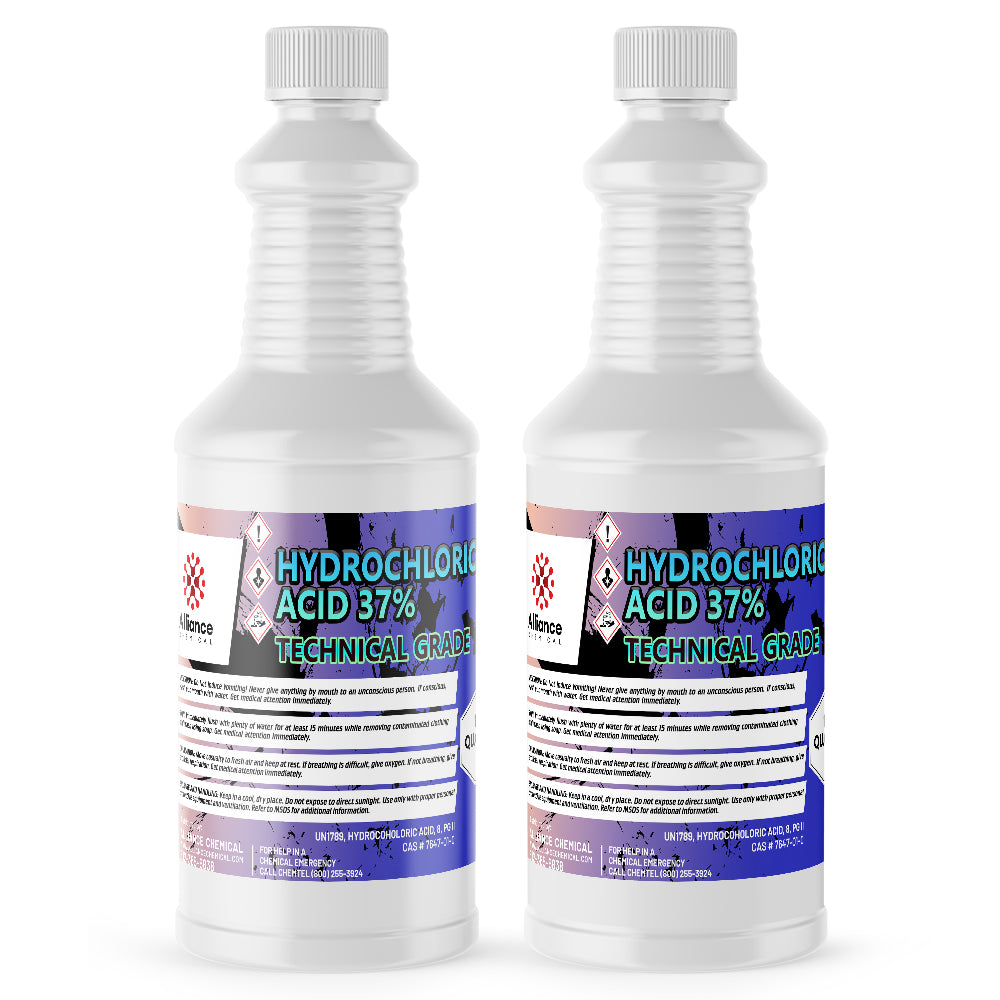
ACS Reagent 37.0% - 38.0% Analytical labs, pharmaceutical manufacturing, and high-precision R&D.
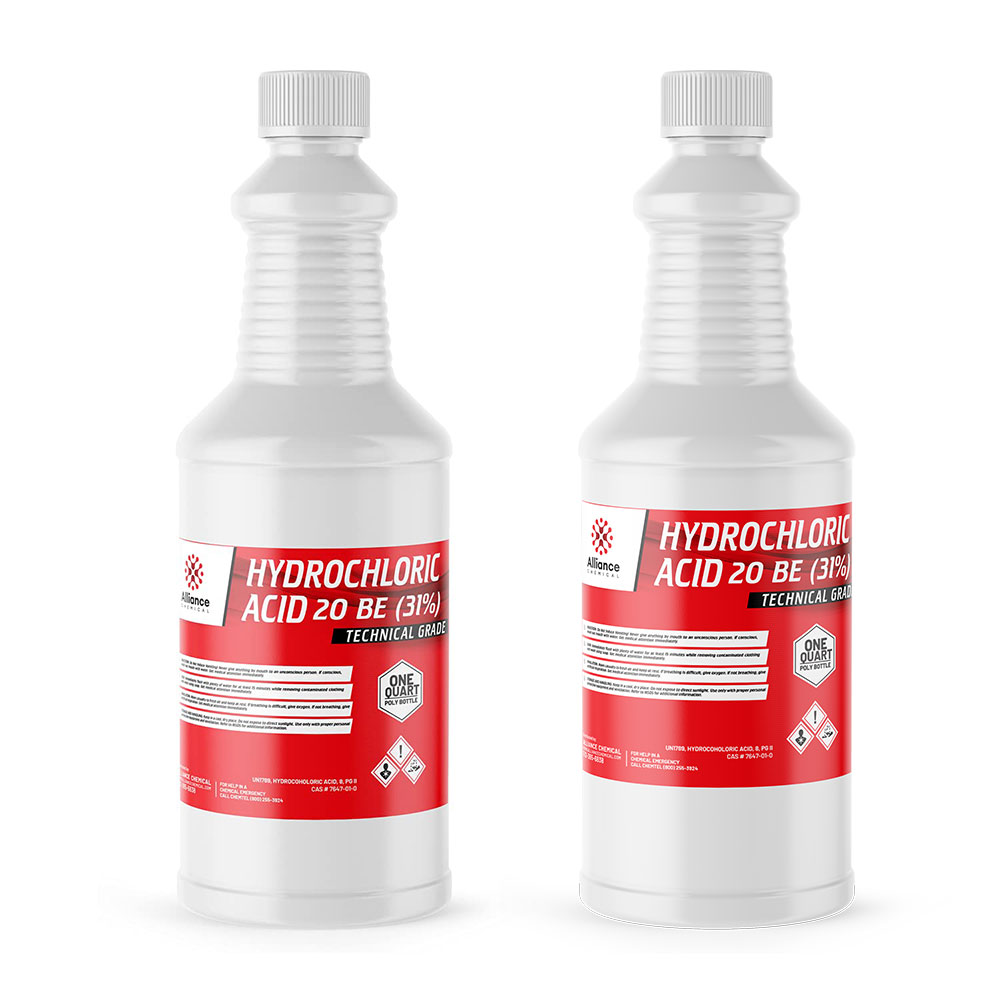
Technical Grade 31% - 37% Steel pickling, large-scale pH adjustment, and industrial synthesis.
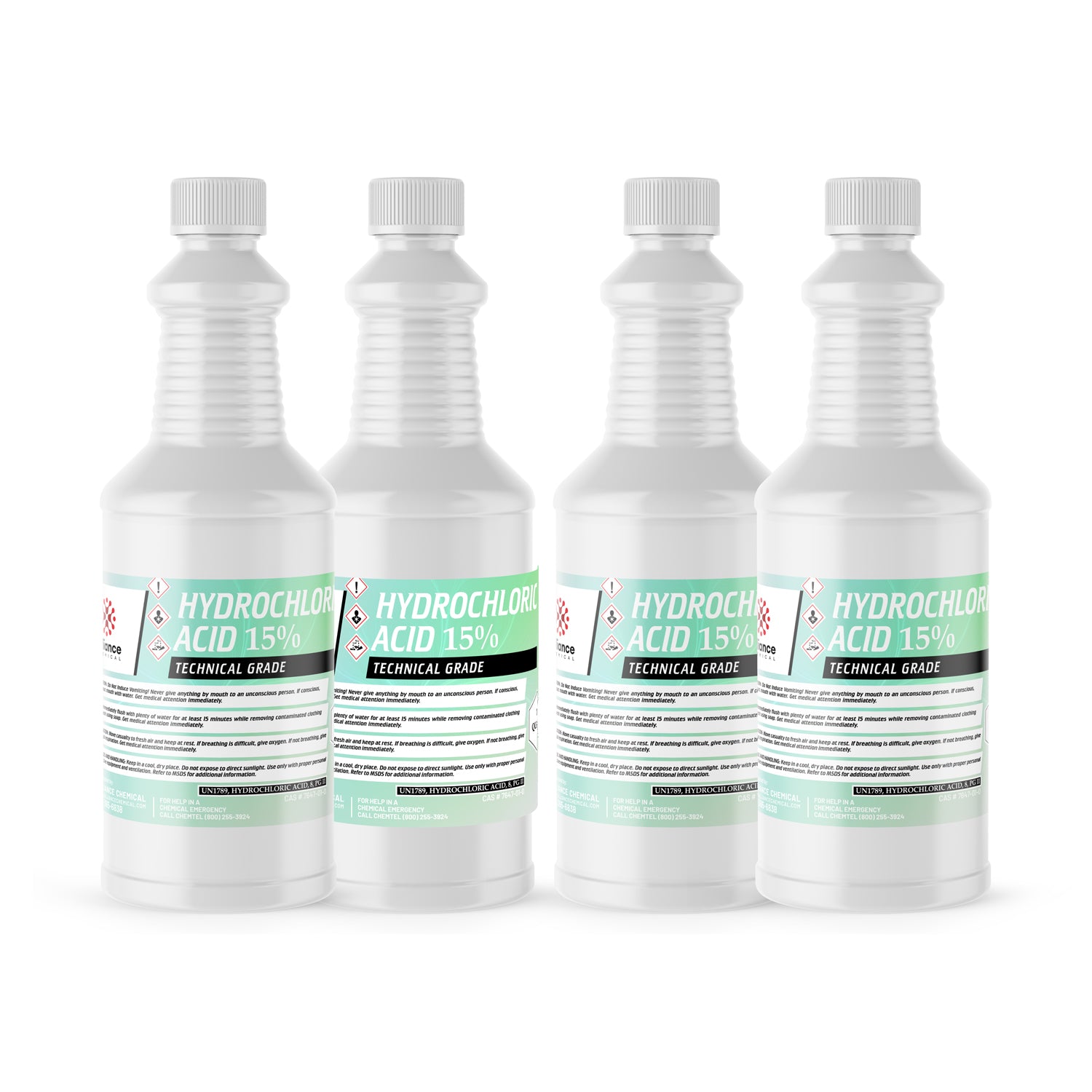
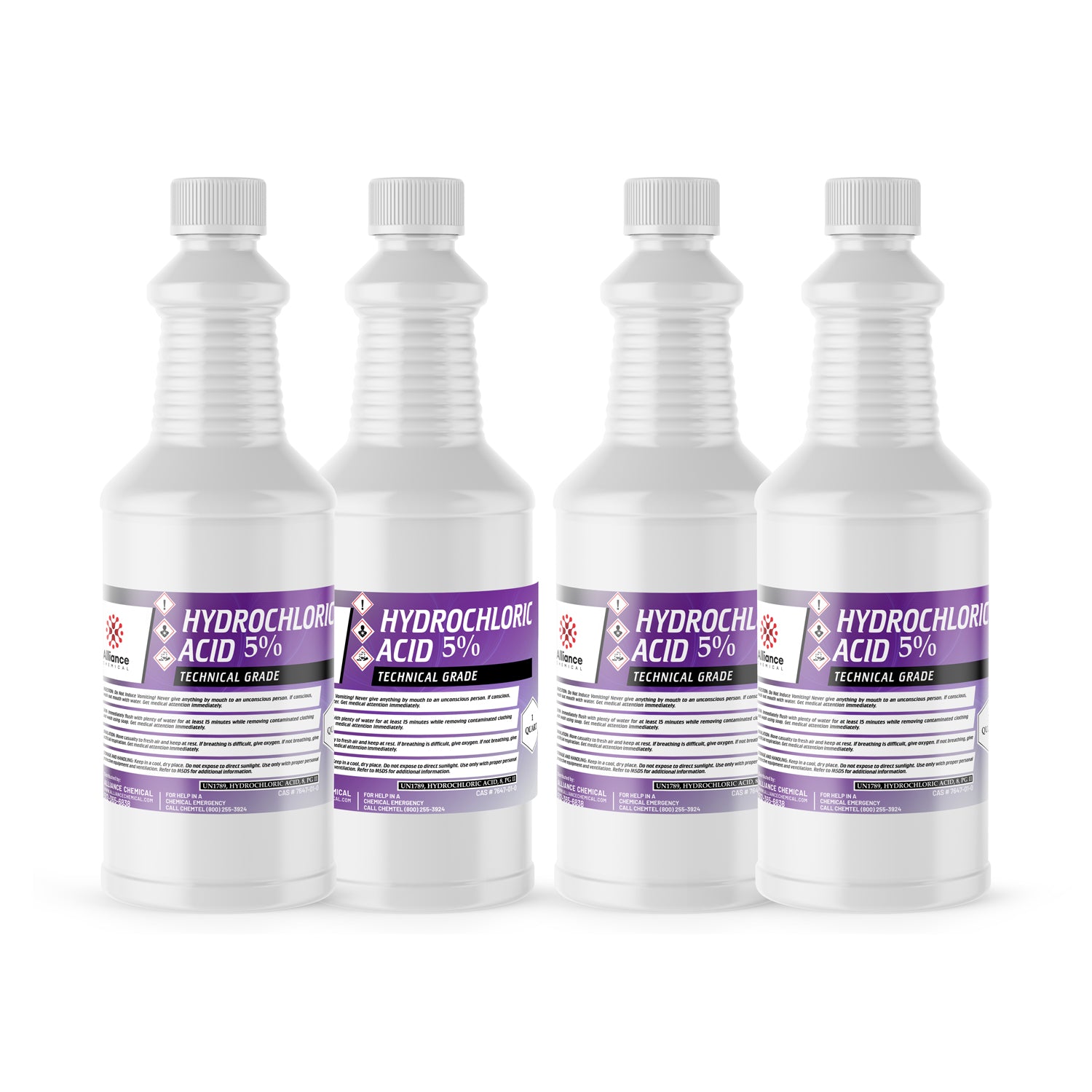
Diluted Technical 5%, 15%, 20% Concrete etching, boiler descaling, and oilfield stimulation.

Safety & Handling

Hydrochloric acid is classified under GHS05 (Corrosion) and GHS07 (Exclamation Mark) for its ability to cause severe skin burns, eye damage, and respiratory irritation. Inhalation of vapors can cause pulmonary edema; therefore, HCl must always be handled in a well-ventilated area or under a certified laboratory fume hood. Minimum PPE requirements include acid-resistant gloves (Nitrile or Neoprene), chemical splash goggles, a full-face shield, and an acid-resistant apron.

Storage must comply with OSHA 29 CFR 1910.1200 (HazCom) and NFPA 400 Hazardous Materials Code. Store in secondary containment made of acid-resistant materials like polyethylene; avoid contact with strong bases, cyanides, sulfides, and oxidizing agents to prevent the release of toxic chlorine or hydrogen cyanide gases. Under EPA RCRA, spent hydrochloric acid is typically categorized as D002 corrosive hazardous waste if the pH is ≤ 2. For emergencies, consult the Safety Data Sheets immediately.

Sourcing & Quality

Shipped from Taylor, Texas — same-day on in-stock items.

COA included with every order. Certificate of Analysis documents lot-specific purity and specifications.

28 years serving 55,000+ customers including 244 federal contracts.

✓ SDS Included ✓ COA Available ⚡ Same-Day Shipping ★ No Minimum Order

Last updated: March 2026

Frequently Asked Questions

What is the difference between muriatic acid and hydrochloric acid?
Muriatic acid is a less-pure, industrial version of hydrochloric acid, typically containing iron impurities that give it a yellow tint. While both share the same chemical formula (HCl), 'Hydrochloric Acid' usually refers to higher purity Technical or ACS grades used in lab work and precise manufacturing, whereas muriatic acid is used for masonry and pool care. Alliance Chemical provides technical specifications for both to ensure compatibility with your specific process.
What concentration of hydrochloric acid is needed for concrete etching?
For most concrete etching applications, a concentration between 10% and 15% is standard. This is achieved by diluting 31.45% (20° Baume) technical grade acid with water at a ratio of approximately 1 part acid to 2 or 3 parts water. Always add acid to water (never water to acid) to prevent exothermic splashing, as per standard safety protocols.
How should hydrochloric acid be stored according to NFPA 400?
According to NFPA 400, hydrochloric acid must be stored in a cool, dry, well-ventilated area in corrosion-resistant containers, such as those made of high-density polyethylene (HDPE). It must be physically separated from incompatible materials, specifically strong bases (Sodium Hydroxide) and strong oxidizers, to prevent dangerous chemical reactions. Containers should be kept tightly closed and stored in secondary containment capable of holding the entire volume of the largest container.
Is 37% hydrochloric acid considered a hazardous material for shipping?
Yes, 37% hydrochloric acid is regulated by the DOT under 49 CFR 172.101 as a Class 8 Corrosive material. It carries the UN number UN1789 and belongs to Packing Group II. Shipping requires specific hazmat labeling, authorized packaging, and documented dangerous goods manifests to comply with federal transportation safety regulations.
How do I safely neutralize a hydrochloric acid spill?
Neutralization should be performed using a weak base such as sodium bicarbonate (baking soda) or soda ash, applied slowly from the perimeter of the spill inward. According to OSHA safety standards, the neutralization process should continue until bubbling ceases and the pH reaches a neutral range (pH 6-8). Large industrial spills should be managed according to your facility's Spill Prevention, Control, and Countermeasure (SPCC) plan.
What is the shelf life of 31% technical grade HCl?
Hydrochloric acid is a stable mineral acid with an indefinite shelf life if stored in an airtight, UV-resistant container at temperatures between 15°C and 25°C. However, concentrated solutions (above 30%) will 'fume' when opened, losing hydrogen chloride gas to the atmosphere and slightly decreasing in concentration over time. We recommend re-testing the concentration via titration for high-precision applications if the product has been stored for more than two years.
Can I use hydrochloric acid to lower the pH of a swimming pool?
Hydrochloric acid, often sold as muriatic acid for this purpose, is highly effective for lowering both pH and total alkalinity in pool water. A concentration of 15% to 31% is typically used, with dosages calculated based on the total gallonage and current saturation index. Users must follow the guidelines in our Pool Chemistry 101 guide to avoid damaging equipment or irritating swimmers' eyes and skin.
What PPE is required by OSHA for handling concentrated HCl?
OSHA 29 CFR 1910.132 requires an employer assessment to determine specific PPE, but for concentrated 37% HCl, it generally mandates chemical splash goggles, a face shield, and acid-resistant gloves such as those made of Nitrile or Butyl rubber. A chemical-resistant apron and closed-toe safety boots are also required to protect against accidental splashes. If local ventilation is insufficient to keep vapor levels below the Ceiling Limit of 5 ppm, a NIOSH-approved respirator with acid gas cartridges must be used.