

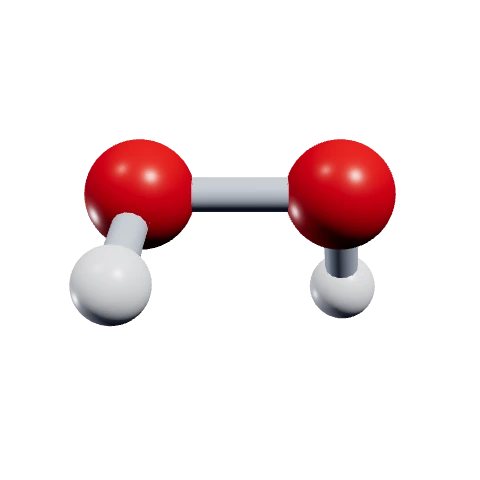


Rethinking Hydrogen Peroxide Production: Two Startups Tackle an Old Problem
Hydrogen peroxide is one of the most widely used oxidants in industry — pulp bleaching, wastewater treatment, electronics manufacturing, chemical synthesis. Global production exceeds 5 million tonnes per year. But the way we make it hasn't changed much since the 1940s.
The standard anthraquinone process concentrates H₂O₂ at centralized plants, ships it at high concentrations (introducing handling and transport hazards), and end users dilute it back down for their applications. Two UK-based startups — Hydro-Oxy and Addible — are challenging that model from different angles.
Hydro-Oxy: Generate It Where You Need It
Hydro-Oxy, a team from the Cardiff Catalysis Institute at Cardiff University, has developed a palladium-based composite catalyst that converts dilute hydrogen and oxygen directly into hydrogen peroxide — right at the point of use. No transport. No concentration step. No re-dilution.
The numbers are compelling:
- Yields approaching 100% from H₂ and O₂ feedstocks
- 15% lower materials costs compared to the anthraquinone process
- 30% reduction in energy consumption
- Catalyst lifetime of ~18 months with 100+ hours of continuous operation
The technology has been demonstrated at multi-litre scale, and the team is currently running 20-litre experiments with partners in Beijing. Beyond direct H₂O₂ production, Hydro-Oxy has applied the in-situ approach to synthesize cyclohexanone oxime — a key intermediate in making caprolactam, the monomer for nylon-6.
The research builds on over 20 years of work at Cardiff and has been recognized as a finalist in the Institution of Chemical Engineers (IChemE) Global Awards.
Addible: H₂O₂ Without the Water
Addible, a spin-out from the University of York's Green Chemistry Centre of Excellence, is solving a different piece of the puzzle. Many chemical processes are incompatible with water — yet standard hydrogen peroxide comes dissolved in it. Addible's answer is TMO₂, the first commercially available solution of hydrogen peroxide in an organic solvent.
The solvent is TMO (2,2,5,5-tetramethyloxolane), a bio-based green alternative to toluene that Addible co-founder Fergal Byrne helped develop at York. When aqueous H₂O₂ is combined with TMO, a hydrogen-bonded complex forms that enables oxidation reactions in organic conditions — no water required.
TMO₂ is heat-activated and reusable. Addible can currently produce TMO₂ at 10-litre scale, and TMO itself at 1-tonne scale — suggesting the path to industrial volumes is already underway.
Why This Matters for Chemical Users
Both approaches address real pain points in the current supply chain:
- Safety — Concentrated H₂O₂ transport is a DOT-regulated hazmat operation. In-situ generation eliminates that risk entirely.
- Cost — Shipping water (which makes up most of dilute H₂O₂ solutions) is expensive. On-site generation or organic-solvent alternatives could reshape the economics.
- Process compatibility — Water-free H₂O₂ opens applications in organic synthesis, polymer chemistry, and materials science where aqueous peroxide simply won't work.
These technologies are still scaling. Neither is ready to replace bulk 30% hydrogen peroxide delivery tomorrow. But they signal where the industry is headed — and chemical buyers should be watching.
Alliance's Take
Alliance Chemical supplies hydrogen peroxide in concentrations from 3% to 30%, in both Technical and ACS Reagent grades. Whether you're running a water treatment operation, a laboratory, or an industrial process line, we ship with full SDS documentation, and Certificates of Analysis are on request at no charge.
In-situ generation is an exciting development — but it's years away from replacing the bulk supply chain that most operations depend on today. In the meantime, reliable sourcing and proper documentation remain what keeps your operation running and compliant. Alliance Chemical has supplied hydrogen peroxide to customers ranging from small labs to the Department of Defense since 1998.
References & Authoritative Sources
Chemical identity, properties, and safety data sourced from the U.S. National Library of Medicine's PubChem database — the authoritative open-chemistry data resource maintained by the National Institutes of Health.
- PubChem CID 784: Hydrogen Peroxide 30% Technical — National Center for Biotechnology Information, U.S. National Library of Medicine. CAS 7722-84-1.
Frequently asked questions
How is hydrogen peroxide traditionally produced?
The dominant method is the anthraquinone process, which accounts for over 95% of global H₂O₂ production. It involves hydrogenating anthraquinone, oxidizing it with air to produce H₂O₂, and recycling the anthraquinone carrier. The process is energy-intensive and requires large centralized plants.
What new approaches to H₂O₂ production are being developed?
Startups are developing direct synthesis methods that combine hydrogen and oxygen directly to produce H₂O₂, as well as electrochemical methods using water and air. These approaches could enable smaller, distributed production facilities closer to the point of use.
Why does hydrogen peroxide production method matter for buyers?
Production method affects purity, cost, and supply chain reliability. Decentralized production could reduce transportation costs and improve freshness for applications where H₂O₂ stability matters, such as semiconductor manufacturing and water treatment.
Related Chemical Collections
About the author
Andre Taki
This article is for informational purposes only.


