

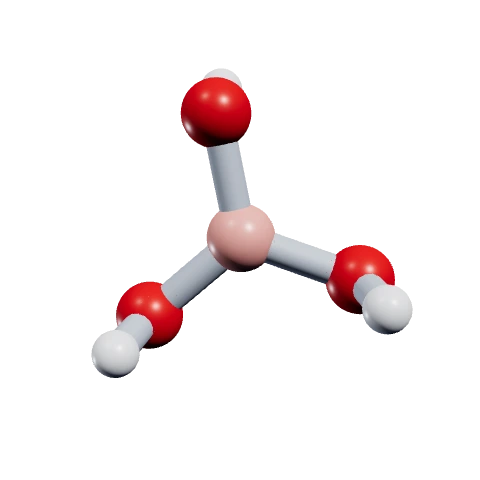


In the vast world of industrial and household chemistry, certain compounds earn the distinction of being true multi-purpose workhorses. Boric acid (H₃BO₃) stands as perhaps the finest example. This white, crystalline, naturally occurring compound has been used for well over a century across an astonishing range of applications—from eradicating persistent household pests to lubricating heavy industrial machinery, from retarding flames to nourishing crops.
Whether you are a pest control professional seeking a long-lasting solution with minimal resistance buildup, an industrial maintenance engineer looking for a superior dry lubricant, or a home gardener correcting a boron deficiency in your soil, boric acid delivers dependable results. This comprehensive guide explores the science behind every major application, helping you select the right chemical grade and method for your specific needs. For a broader look at safe chemical handling fundamentals, our chemical safety guide provides the essential foundation.
What is the unique chemistry of boric acid?
Boric acid is classified as a weak, monobasic Lewis acid of boron. Unlike the strong mineral acids covered in our professional guide to industrial acids, boric acid does not donate a proton in the classical Brønsted-Lowry sense. Instead, it accepts a hydroxide ion from water, creating the tetrahydroxyborate anion:
This mechanism is fundamental to understanding why boric acid is so mild compared to hydrochloric or sulfuric acid, yet retains powerful biological and industrial activity. At room temperature, it dissolves at approximately 47 g/L in water (20°C), increasing sharply at elevated temperatures. Its solubility in common industrial solvents such as methanol and glycerol is also notable, which opens up formulation possibilities in specialty products.
Physical and Chemical Properties
Understanding the core physical properties of boric acid helps practitioners choose the correct form factor—powder, granular, or solution—for each application:
- Appearance: White crystalline powder or transparent triclinic crystals
- Density: 1.435 g/cm³ (solid state)
- Solubility: 47 g/L at 20°C; 275 g/L at 100°C
- Thermal Decomposition: Loses water at 171°C, forming metaboric acid (HBO₂), then tetraboric acid, and finally boron trioxide (B₂O₃) above 300°C
- pH of saturated solution: Approximately 3.8–4.8
- CAS Number: 10043-35-3
Lewis Acid Behavior Explained
While most acids donate protons, a Lewis acid is any species that accepts an electron pair. Boric acid's boron atom has an empty p-orbital that readily accepts the hydroxide's lone pair, making it an electron-pair acceptor. This mechanism explains its gentleness—it does not attack metals or organic materials the way strong acids do, yet it is still effective against biological organisms like insects and fungi.
High-Efficacy Pest Control: The Cornerstone Application
The single most recognized use for technical grade boric acid is as a powerful, long-lasting insecticide. Unlike synthetic chemical pesticides that insects can rapidly develop resistance to, boric acid works through physical and metabolic mechanisms that make resistance virtually impossible. For those exploring complementary natural pest control options, D-Limonene provides another effective, plant-derived approach.
The Dual-Action Mechanism of Insect Control
Boric acid attacks insects through two distinct and synergistic pathways:
- Abrasive (Desiccant) Action: As insects traverse the fine powder, microscopic boric acid crystals abrade the protective waxy cuticle of their exoskeleton. This compromises the insect's ability to retain moisture, leading to progressive and fatal dehydration over 48–72 hours. The abrasive action is purely physical, meaning insects cannot develop a biochemical resistance to it.
- Stomach Poison (Metabolic Disruption): When insects groom themselves or consume bait, they ingest the boric acid. Once in the digestive system, it disrupts the insect's metabolism by interfering with enzyme function and damaging the gut lining. It also affects the nervous system, leading to paralysis and death within 3–10 days depending on species and dose.
This dual-action approach is why boric acid remains effective against populations that have developed resistance to conventional insecticides like pyrethroids and organophosphates. It complements D-Limonene's lower-hazard pest control approach, giving pest management professionals multiple tools in their arsenal.
Pest Control Effectiveness by Species
The following table summarizes the efficacy of boric acid against common household and structural pests, with recommended concentrations and application methods:
| Target Pest | Effectiveness | Concentration | Application Method | Time to Kill |
|---|---|---|---|---|
| German Cockroach | Excellent (95-99%) | 1–3% in bait | Powder dust, gel bait, paste | 3–7 days |
| American Cockroach | Excellent (93-98%) | 1–3% in bait | Powder dust, bait stations | 5–10 days |
| Argentine Ants | Very Good (90-95%) | 0.5–1% in sugar solution | Liquid bait stations | 5–14 days (colony) |
| Carpenter Ants | Good (85-92%) | 1–2% in bait | Gel bait near trails | 7–21 days (colony) |
| Silverfish | Excellent (95-99%) | 99% powder | Dust in cracks, voids | 2–5 days |
| Firebrats | Excellent (94-98%) | 99% powder | Dust in warm areas | 2–5 days |
| Subterranean Termites | Moderate (70-85%) | 5–10% in treated wood | Wood treatment, soil barrier | 14–30 days |
| Fleas (larvae) | Good (80-90%) | Powder form | Carpet/fabric dusting | 3–7 days (larvae only) |
| Bed Bugs | Low-Moderate (40-60%) | 99% powder | Dust in harborages | 10–14+ days |
Pro Tip: Creating Effective Boric Acid Bait
The key to boric acid bait is using a low concentration (1–3%) mixed with an attractive food matrix. Higher concentrations kill insects too quickly before they can carry the bait back to the colony. For cockroaches and ants, mix equal parts boric acid powder, sugar, and flour with enough water to form a dough. Place pea-sized amounts in bottle caps near pest activity zones—under sinks, behind appliances, and along baseboards. Replace every 1–2 weeks or when dried out.
Boric Acid vs. Other Pest Control Chemicals
How does boric acid compare to other common insecticides? The following comparison highlights its unique advantages and limitations:
| Property | Boric Acid | Pyrethroids | Fipronil | Diatomaceous Earth | D-Limonene |
|---|---|---|---|---|---|
| Mode of Action | Physical + metabolic | Nerve poison (sodium channels) | Nerve poison (GABA receptor) | Physical (desiccation) | Contact dissolves cuticle |
| Resistance Risk | Very Low | High | Moderate | None | Very Low |
| Residual Duration | Indefinite (if dry) | 1–3 months | 1–3 months | Indefinite (if dry) | Hours to days |
| Mammalian Toxicity | Low (LD50 ~2660 mg/kg) | Low-Moderate | Moderate | Very Low | Very Low |
| Environmental Impact | Low | Moderate-High | High (aquatic) | Very Low | Very Low |
| Speed of Kill | Slow (3–10 days) | Fast (minutes-hours) | Moderate (hours-days) | Slow (days) | Fast (contact kill) |
| Colony Transfer | Yes (at low conc.) | No | Yes (cascade effect) | No | No |
| Cost (per treatment) | Very Low | Low | Moderate | Very Low | Low-Moderate |
The combination of virtually no resistance risk, indefinite residual activity (when kept dry), and colony transfer capability makes boric acid an unmatched value proposition for long-term integrated pest management (IPM) programs.
The Industrial Workhorse: Lubrication, Fire Retardancy, and Beyond
Beyond household pest control, boric acid is a critical industrial chemical used across manufacturing, metallurgy, energy, and materials science. Its unique combination of thermal stability, lubricity, and chemical mildness makes it invaluable in applications where harsher chemicals would cause damage.
Industrial Lubrication and Friction Reduction
Boric acid possesses a layered, triclinic crystalline structure similar to graphite and molybdenum disulfide. The layers are held together by weak van der Waals forces, allowing them to slide over one another with minimal resistance. This gives boric acid a remarkably low coefficient of friction—as low as 0.02 under optimal conditions, which rivals PTFE (Teflon).
In practical industrial settings, boric acid serves as:
- Dry Lubricant: Applied as a powder to metal-on-metal interfaces where liquid lubricants would break down, evaporate, or attract contaminants
- Lubricant Additive: Added to mineral or synthetic oils, where it forms a protective boric oxide (B₂O₃) tribofilm on metal surfaces under high pressure and temperature, reducing wear by 30–50%
- Metal Drawing Lubricant: Used in wire drawing and tube drawing operations, providing smooth material flow and superior surface finish
- Release Agent: Applied to molds in glass and ceramic manufacturing to prevent sticking
For best results, machinery surfaces should be thoroughly cleaned with an appropriate industrial solvent before applying boric acid lubricant to ensure the tribofilm bonds properly. Proper storage of both lubricants and solvents should follow the guidelines in our chemical storage guide.
Flame Retardant Properties
Boric acid is one of the most effective and environmentally benign flame retardants available. When exposed to heat, it undergoes a multi-stage endothermic dehydration reaction that provides fire protection through three mechanisms:
- Heat Absorption: The loss of water molecules absorbs significant thermal energy (releasing ~92.5 kJ/mol), slowing temperature rise at the material surface
- Char Formation: The resulting boron trioxide (B₂O₃) melts at 450°C and forms a glassy, insulating barrier on the substrate, sealing combustible gases inside
- Oxygen Exclusion: The glassy char layer prevents oxygen from reaching the fuel source, starving the combustion reaction
This triple mechanism makes boric acid particularly effective when treating cellulosic materials—wood, cotton, paper, and cellulose insulation. It is the active ingredient in many fire-retardant treatments for attic insulation, stage curtains, and timber framing. Its low toxicity profile aligns with green chemistry principles, making it preferable to halogenated flame retardants in many applications.
Other Major Industrial Applications
Nuclear Energy
Boron-10 isotope has an enormous neutron absorption cross-section (3,840 barns). Boric acid dissolved in reactor coolant water controls the nuclear fission rate in pressurized water reactors (PWRs).
Glass & Ceramics
Borosilicate glass (Pyrex) contains 12–15% B₂O₃ derived from boric acid, providing superior thermal shock resistance, low expansion coefficient, and chemical durability.
Metallurgy & Welding
Used as a flux in brazing, soldering, and welding of ferrous and non-ferrous metals. Dissolves metal oxides at the joint surface, enabling clean, strong bonds.
Electronics
High-purity boric acid serves as a dopant source in semiconductor fabrication and as an electrolyte additive in electroplating baths for nickel and other metals.
The Household and Horticultural Hero
A Powerful Cleaning and Deodorizing Agent
Boric acid's mild antiseptic, antifungal, and deodorizing properties make it an excellent addition to household cleaning solutions. It is used industrially in glass, ceramics, metallurgy and laboratory buffers. Mould and mildew control is a registered-pesticide function. For enhanced cleaning power, a combination of boric acid with 30% industrial-strength vinegar can tackle tough grime with remarkable effectiveness.
Common household applications include:
- Mold and Mildew Treatment: A solution of 1 cup boric acid per gallon of water, applied to affected surfaces and allowed to dry, creates a long-lasting antifungal barrier
- Carpet Deodorizer: Sprinkle boric acid powder over carpets, let sit for 30 minutes, then vacuum thoroughly to neutralize odors and kill flea larvae
- Laundry Booster: Add 1/2 cup boric acid per load to enhance stain removal, brighten whites, and deodorize fabrics
- Porcelain and Tile Cleaner: Make a paste with boric acid and water, apply to stained surfaces, allow to sit 15–20 minutes, then scrub clean
For comprehensive household chemical safety, including proper mixing and ventilation, refer to our PPE and chemical safety guide. Always ensure adequate ventilation when using boric acid solutions, and never mix with bleach or ammonia products. The proper disposal of chemical solutions is equally important for environmental protection.
An Essential Plant Micronutrient
Boron is one of the seven essential micronutrients for healthy plant growth, and boric acid is the most common way to deliver supplemental boron to deficient soils. Despite being needed in very small quantities (typically 0.5–2.0 ppm in soil solution), boron plays critical roles in multiple plant physiological processes:
- Cell Wall Synthesis: Boron cross-links pectic polysaccharides in cell walls, providing structural rigidity. Deficient plants show brittle stems and hollow or cracked tissues
- Pollen Tube Growth: Essential for successful pollination. Boron-deficient fruit trees and vegetable crops show poor fruit set and misshapen produce
- Sugar Translocation: Facilitates the transport of sugars from leaves to growing points and storage organs, directly impacting crop yield
- Root Elongation: Supports healthy root tip development and elongation into new soil zones
Caution: Narrow Margin Between Deficiency and Toxicity
Boron has the narrowest range between deficiency and toxicity of any plant micronutrient. A soil boron level of 0.5 ppm may indicate deficiency, while 5 ppm can be toxic to sensitive crops. Always conduct a soil test before applying boric acid as a foliar spray or soil amendment. A typical corrective rate is 1–2 lbs boric acid per acre, dissolved in water and applied evenly. Over-application can damage or kill plants. It works best as part of a complete nutrition program that includes macronutrients and other micronutrients like calcium chloride for calcium supplementation.
Buyer's Guide: Choosing the Right Grade of Boric Acid
Selecting the correct chemical grade ensures both efficacy for your application and the appropriate level of purity and safety. Alliance Chemical offers boric acid in two primary grades, each manufactured to specific purity standards. Understanding which grade you need prevents overspending on unnecessary purity while ensuring your application performs correctly.
| Specification | Technical Grade | NF/USP Grade | ACS Reagent Grade |
|---|---|---|---|
| Purity Standard | Industrial specification | National Formulary / USP | American Chemical Society |
| Minimum Assay | ≥99.0% H₃BO₃ | ≥99.5% H₃BO₃ | ≥99.5% H₃BO₃ |
| Heavy Metals (as Pb) | ≤15 ppm | ≤10 ppm | ≤5 ppm |
| Sulfate (SO₄) | ≤200 ppm | ≤100 ppm | ≤40 ppm |
| Chloride (Cl) | ≤50 ppm | ≤20 ppm | ≤5 ppm |
| Iron (Fe) | ≤20 ppm | ≤10 ppm | ≤5 ppm |
| Insoluble Matter | ≤0.05% | ≤0.02% | ≤0.005% |
| Primary Applications | Pest control, lubrication, flame retardants, horticulture | Pharmaceutical, cosmetic, ophthalmic, food processing | Analytical chemistry, buffer solutions, research |
| Ideal User | PCOs, farmers, industrial maintenance, DIY homeowners | Pharmaceutical mfg., cosmetics, medical facilities | Research labs, QA/QC depts., universities |
| Certifications | COA available | COA + USP monograph compliance | COA + ACS reagent specifications |
Which Grade Should You Choose?
For pest control, lubrication, and general industrial use, Technical Grade provides the best value with fully adequate purity. For laboratory analysis, buffer preparation, and research, ACS Reagent Grade guarantees the tight impurity limits required for reproducible analytical results. NF/USP Grade occupies the middle ground for pharmaceutical and personal care applications where pharmacopeial compliance is mandatory. When in doubt, contact our technical team for guidance on selecting the optimal grade. Understanding chemical grading systems will also help you make informed purchasing decisions for all your chemical needs.
What are the specialized and emerging applications of boric acid?
Ophthalmic and Medical Uses
Dilute boric acid solutions (typically 2–5%) have been used for over a century as eyewash and antiseptic preparations. The mild acidity helps maintain the natural pH of the eye (approximately 7.0–7.4), and the gentle antiseptic action reduces bacterial contamination without irritating sensitive tissues. NF/USP grade is required for all medical applications. Its antiseptic properties parallel the versatility of other multi-purpose chemicals like hydrogen peroxide in industrial and medical settings.
Wood Preservation
Boric acid and borax (sodium tetraborate) combinations are among the most effective and least toxic wood preservatives available. The treatment penetrates the wood fiber and provides protection against wood-boring beetles, termites, and fungal decay organisms. Unlike chromated copper arsenate (CCA) and other heavy-metal preservatives, borate-treated wood is safe for interior use, playground equipment, and garden structures.
pH Buffering in Chemistry
ACS-grade boric acid is widely used to prepare borate buffer systems, which are effective in the pH range of 8.0–10.0. These buffers are essential in biochemistry laboratories for gel electrophoresis (TBE and SBE buffers), enzyme assays, and protein purification. The exceptionally low impurity profile of ACS-grade material ensures that buffer performance is not compromised by trace contaminants. For related buffer and reagent preparation, high-purity isopropyl alcohol is another laboratory staple worth understanding.
Corrosion Inhibition
In closed-loop cooling water systems and metalworking fluid reservoirs, boric acid serves as an effective corrosion inhibitor for ferrous metals. It forms a passive borate film on iron and steel surfaces, reducing the corrosion rate by 60–80% compared to untreated water. This is particularly valuable in systems where strong alkaline inhibitors like sodium hydroxide would be too aggressive or where environmental regulations restrict the use of chromate-based inhibitors.
What are the safety, handling, and storage protocols for boric acid?
Critical Safety Information
- Toxicity upon Ingestion: Boric acid is toxic if ingested in significant quantities (human LD50 estimated at 2–3 g/kg body weight). Keep all powders and baits securely out of reach of children and pets. Never apply directly on food preparation surfaces.
- Reproductive Toxicity: Classified as a reproductive toxicant (Category 1B) in the EU. Avoid chronic occupational exposure, particularly for workers of reproductive age. Observe workplace exposure limits (TWA: 10 mg/m³ for inhalable dust).
- Personal Protective Equipment: Wear chemical-resistant gloves to prevent skin irritation and safety glasses or goggles to protect from dust. When handling large quantities of fine powder, use a NIOSH-approved dust mask (N95 minimum) or respirator. Our PPE guide covers equipment selection in detail.
- Storage Requirements: Store in a cool, dry location in clearly labeled, sealed containers. Boric acid is hygroscopic and will clump in humid conditions. Keep away from incompatible materials, particularly strong reducing agents and alkali metals. Follow our chemical storage guide for proper organization and segregation.
- First Aid: If ingested, do not induce vomiting; seek medical attention immediately. For eye contact, flush with clean water for at least 15 minutes. For skin contact, wash thoroughly with soap and water.
- Environmental Considerations: Boric acid is moderately toxic to aquatic organisms. Avoid release to waterways or storm drains. For guidance on proper chemical disposal, see our chemical disposal guide.
How can I unlock the full potential of boric acid?
From protecting your home against persistent pests to enhancing industrial processes, boric acid is a uniquely versatile and cost-effective chemical solution. Alliance Chemical provides high-quality boric acid in Technical and ACS Reagent grades, with fast shipping, expert technical support, and Certificates of Analysis on request at no charge.
Shop Technical GradeShop ACS Reagent GradeConsult Our ExpertsReferences & Authoritative Sources
Chemical identity, properties, and safety data sourced from the U.S. National Library of Medicine's PubChem database — the authoritative open-chemistry data resource maintained by the National Institutes of Health.
- PubChem CID 887: Methanol Technical Grade — National Center for Biotechnology Information, U.S. National Library of Medicine. CAS 67-56-1.
- PubChem CID 753: Glycerin Technical Grade — National Center for Biotechnology Information, U.S. National Library of Medicine. CAS 56-81-5.
- PubChem CID 7628: Boric Acid — National Center for Biotechnology Information, U.S. National Library of Medicine. CAS 10043-35-3.
- PubChem CID 176: 30% Vinegar - Concentrated Industrial Strength — National Center for Biotechnology Information, U.S. National Library of Medicine. CAS 64-19-7.
Related: Boric Acid for Ants: the sugar-water bait recipe that actually works — the same boron chemistry, aimed at ants instead of roaches.
Related: Soda Ash and Boric Acid Come Out of the Same Lake — where US boric acid actually comes from, and why it shares a risk with soda ash.
Frequently asked questions
What are the main uses of boric acid beyond pest control?
Boric acid serves as an industrial lubricant for metalworking (especially wire drawing), a flux in welding and brazing, a fire retardant in cellulose insulation, a wood preservative (prevents rot and insect damage), a pH buffer in electroplating baths, an antiseptic in medical applications, and a glazing agent in ceramics.
How does boric acid work as an industrial lubricant?
Boric acid's layered crystal structure (similar to graphite) provides excellent boundary lubrication with a coefficient of friction of 0.15-0.25. It's particularly effective in wire drawing, cold forming, and metalworking where extreme pressure lubrication is needed. Unlike petroleum lubricants, it leaves no carbon residue after heat treatment.
Is boric acid safe for use around the home?
Boric acid has low mammalian toxicity (EPA Category III—slightly toxic) and is safer than most synthetic pesticides. It's used in eyewash solutions and as a food-grade preservative in some countries. However, it should be kept away from children, used in controlled amounts, and never ingested in large quantities. Chronic exposure to high levels can affect reproductive health.
How does boric acid compare to borax for pest control?
Both contain boron and kill insects through similar mechanisms, but boric acid (H₃BO₃) is more refined and effective per unit weight. Borax (Na₂B₄O₇) is better for laundry and general cleaning. For pest baits, boric acid at 1-3% concentration is optimal—higher concentrations repel insects before they can carry bait back to the colony.
About the author
Andre Taki
This article is for informational purposes only.


