Product Overview
Trichloroethylene (TCE) ACS Grade is a grade-specific chlorinated solvent built for precision work — vapor degreasing of machined parts, analytical extractions, and chemical synthesis where trace impurities compromise results. ACS Grade means this product meets the purity specifications established by the American Chemical Society for laboratory reagent use, giving QC labs and production teams a solvent they can trust against documented standards.
We stock TCE in our Taylor, TX warehouse and ship it daily as a fully regulated Class 6.1 hazmat. Every drum, pail, and bottle leaves our dock in DOT-compliant packaging with a current SDS.
Why This Grade
ACS Grade sets the bar for grade tier purity. For a buyer running gravimetric degreasing tests, solvent extractions under EPA methodology, or chromatographic sample prep, that distinction matters: residue levels and trace metals are controlled to published ACS reagent specifications, so your blanks stay clean and your results hold up to audit.
If your process is straight production degreasing — cleaning stamped parts before plating, flushing machined housings — a technical grade would cost less and perform fine. ACS Grade earns its keep when the work demands documented purity: analytical labs, method development, QC reference standards, and any process where you need to prove the solvent isn't the variable.
Chemical Profile
Trichloroethylene is a clear, colorless, volatile liquid with an ethereal odor, sometimes described as chloroform-like. Its molecular formula is C₂HCl₃ with a molecular weight of 131.38 g/mol (CAS 79-01-6). The liquid is noticeably dense at 1.46 g/mL at 68 °F — substantially heavier than water, which means spills sink rather than float and pooled TCE will settle to the bottom of a water column. Solubility in water is low, less than 1 mg/mL at 70 °F. Vapor pressure is significant at 60 mmHg (68 °F), rising to 77 mmHg at 77 °F — in warm shops, expect rapid evaporation and plan for local exhaust ventilation. The liquid is noncombustible under normal conditions.
Industrial Applications
TCE's solvency power, high density, and noncombustibility make it a workhorse across several demanding processes:
-
Vapor Degreasing — TCE is one of the original vapor-degreasing solvents. Metal parts fresh off CNC machines, stamping presses, or lathes are lowered into a TCE vapor zone, where the solvent condenses on the cooler metal surface, dissolves cutting oils and shop grease, and drips clean. The result is a residue-free surface ready for plating, welding, or inspection.
-
Analytical Extraction Solvent — Environmental and QC laboratories use ACS Grade TCE to extract organic compounds from water, soil, and waste samples. Its density (heavier than water) and low miscibility make liquid-liquid extractions straightforward — the TCE phase separates cleanly to the bottom of a separatory funnel.
-
Chemical Synthesis Intermediate — TCE serves as a feedstock in the production of fluorinated compounds, including refrigerants and specialty polymers. ACS Grade purity keeps side reactions to a minimum and improves yield consistency.
-
Chromatography and Analytical Chemistry — Used as a solvent or mobile-phase component in gas and liquid chromatography, TCE's well-characterized solvency profile makes it suitable for analytical methods where baseline purity is non-negotiable.
Handling & Storage
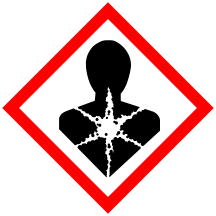
TCE carries a Danger signal word (per the product's GHS classification). The hazard statements are specific and serious: causes skin irritation (H315), causes serious eye irritation (H319), may cause drowsiness or dizziness (H336), suspected of causing genetic defects (H341), may cause cancer (H350), and harmful to aquatic life with long-lasting effects (H412) — all per the product's GHS classification.
Work with TCE under local exhaust ventilation or in a fume hood. Wear chemical-splash goggles, solvent-resistant gloves (Viton or Silver Shield — not latex or nitrile for prolonged contact), and a lab coat or chemical-resistant apron. In areas where vapor concentrations may exceed occupational limits, use a supplied-air respirator or an organic-vapor cartridge respirator.
Store in tightly closed containers in a cool, well-ventilated area away from direct sunlight and heat sources. Keep away from strong oxidizers and strong bases, which can cause decomposition. Use HDPE or glass containers — TCE will attack certain plastics and rubbers, so verify container compatibility before transferring.
Hazmat & Shipping
Trichloroethylene is regulated for transport under DOT and IATA:
-
UN Number: UN1710 (per 49 CFR 172.101)
-
Hazard Class: 6.1 — Toxic (per 49 CFR 172.101)
-
Packing Group: III (per 49 CFR 172.101)
-
Proper Shipping Name: Trichloroethylene (per 49 CFR 172.101)
Every order ships from our Taylor, TX facility in DOT-compliant packaging — proper labels, markings, and placards as required. We handle the hazmat paperwork so you don't have to chase compliance on receiving.
Documentation
A current Safety Data Sheet (SDS) ships with every order, available in English, Spanish, French, and Japanese. Lot-specific Certificates of Analysis (COA) are available on request, documenting the purity and trace-level composition of your specific shipment. A Technical Data Sheet (TDS) is also available for detailed product specifications.
Why Buy from Alliance Chemical
We are hazmat operators — not a marketplace, not a broker. TCE ships from our warehouse in Taylor, TX every business day, packed by a team that handles Class 6.1 materials as routine work. Our shipping and handling guidance is reviewed by Andre Taki, DOT Hazmat Specialist, so your shipment arrives labeled, documented, and compliant. From a single quart for a bench-scale extraction to a 55-gallon drum for production degreasing, you get the same level of DOT-compliant packaging, the same documentation, and the same direct access to a team that knows the product.