

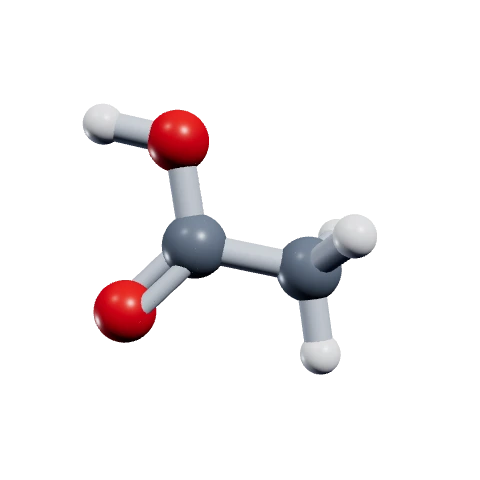


Understanding the Science: What Makes 50% Vinegar So Effective?
Vinegar is simply a solution of acetic acid (CH3COOH) dissolved in water. The percentage on the label tells you how much of the solution is actual acetic acid by weight. The 5% white vinegar on your kitchen shelf contains just 5 grams of acetic acid per 100 milliliters of solution. A 50% concentration delivers ten times that amount in the same volume.
This dramatic increase in acid concentration changes the chemistry in several important ways. At 50%, acetic acid is far more effective at donating protons (H+ ions), which is the fundamental mechanism by which acids dissolve mineral deposits, break down organic films, and disrupt biological cell structures. The pH drops from roughly 2.4 for grocery vinegar to approximately 1.0 for 50% vinegar, placing it in the same acidity range as hydrochloric acid at comparable dilutions. If you are working with other acidic cleaners, our guides on citric acid descaling and phosphoric acid applications are excellent companion reading.
Acetic acid is also a volatile organic acid, meaning it evaporates relatively quickly and does not leave behind toxic residues. This makes it a cornerstone of green chemistry approaches to cleaning, weed control, and maintenance. Unlike many synthetic chemicals, vinegar breaks down into carbon dioxide and water in the environment, making it one of the most ecologically responsible cleaning agents available to homeowners and professionals alike.
Vinegar Concentration Comparison Chart
Not all vinegar is created equal. The table below illustrates how concentration affects key chemical properties and the applications each strength is best suited for. For an in-depth look at the lower concentrations, our guide to 10% and 30% vinegar provides additional context.
| Property | 5% (Kitchen) | 10% (Cleaning) | 30% (Horticultural) | 50% (Industrial) |
|---|---|---|---|---|
| Acetic Acid | 5 g/100 mL | 10 g/100 mL | 30 g/100 mL | 50 g/100 mL |
| Approximate pH | ~2.4 | ~2.2 | ~1.5 | ~1.0 |
| Weed Killing | Ineffective | Light weeds only | Moderate weeds | All contact weeds |
| Hard Water Scale | Light film only | Moderate deposits | Heavy deposits | Severe buildup |
| Degreasing | Minimal | Light grease | Moderate grease | Heavy/baked grease |
| Rust Removal | Very slow | Slow (24-48 hr) | Moderate (12-24 hr) | Fast (4-12 hr) |
| PPE Required | None | Gloves suggested | Gloves + goggles | Gloves + goggles + ventilation |
| Best For | Cooking, light rinses | Everyday cleaning | Garden weed control | Heavy-duty all applications |
15 High-Performance Household Hacks for 50% Vinegar
Below you will find fifteen proven applications for industrial-strength vinegar. Each hack includes the exact dilution ratio, step-by-step application method, and expected results. Always review the chemical safety fundamentals and the safety section at the end of this article before starting any project.
Master Dilution Ratio Guide
Refer to this quick-reference table as you work through the hacks below. The dilution ratio determines the effective acetic acid percentage in your working solution.
| Application | Dilution Ratio | Effective % | Soak/Dwell Time | Notes |
|---|---|---|---|---|
| Weed killer (tough) | Undiluted | 50% | Spray, wait 24 hr | Full sun, no wind |
| Weed killer (light) | 1:1 water | 25% | Spray, wait 24 hr | Young annual weeds |
| Heavy descaling | 1:1 water | 25% | 2-8 hours soak | Showerheads, faucets |
| Light descaling | 1:3 water | 12.5% | 30-60 min soak | Coffee makers, kettles |
| Drain maintenance | Undiluted 1/2 cup | 50% | 30 min + hot flush | Pair with baking soda |
| Glass cleaner | 1 tbsp per 2 cups | ~1.5% | Spray and wipe | Add 1 tbsp IPA for streak-free |
| Degreaser (heavy) | 1:1 hot water | 25% | 5-15 min | Add dish soap |
| Laundry brightener | 1/4 cup per load | ~2-3% | Rinse cycle | Dissolves detergent residue |
| Rust removal | Undiluted | 50% | 4-12 hours | Oil parts after rinse |
| Bathroom scum | 1:1 water | 25% | 15-30 min | Scrub with stiff brush |
| Salt residue removal | 1:4 water | 10% | Scrub and rinse | Concrete, pavers |
| Garbage bin deodorizing | 1:1 water | 25% | Wipe and air dry | Neutralizes alkaline odors |
| Tile grout cleaning | 1:2 water | ~17% | 10-20 min | Use grout brush |
| Pet odor neutralizer | 1:3 water | 12.5% | Blot and soak 10 min | Test fabric first |
| Concrete etching | 1:1 water | 25% | 5-10 min | Rinse thoroughly |
Quick Overview: All 15 Hacks at a Glance
Weed & Grass Killer
Organic contact herbicide for driveways, paths, and garden borders.
Mineral Deposit Remover
Dissolves calcium, lime, and hard water scale on fixtures.
Drain Unclogger
Baking soda + vinegar fizz breaks up clogs naturally.
Streak-Free Glass Cleaner
Crystal-clear windows and mirrors without chemical fumes.
Kitchen Degreaser
Cuts through baked-on grease on stovetops and hoods.
Laundry Brightener
Dissolves residue, softens fabric, restores colors.
Bathroom Sanitizer
Kills mold, mildew, and busts soap scum.
Rust Dissolver
Soaks rust off tools, bolts, and metal parts.
Salt Stain Remover
Neutralizes winter salt residue on concrete.
Odor Eliminator
Deodorizes garbage bins, diaper pails, and more.
Tile Grout Restorer
Removes grime and discoloration from grout lines.
Pet Stain Neutralizer
Breaks down urine crystals and eliminates odor.
Concrete Prep & Etching
Etches concrete for painting, staining, or sealing.
Garden Soil pH Adjuster
Lowers soil pH for acid-loving plants.
DIY Fruit & Veggie Wash
Removes pesticide residue and wax coatings.
Hack 1: Potent Organic Weed and Grass Killer
This is the number-one reason homeowners and landscapers turn to 50% vinegar. As a non-selective contact herbicide, industrial-strength acetic acid rapidly draws moisture out of plant cells through a process called desiccation. Within 24 hours of application, treated weeds wilt, brown, and die. Unlike systemic herbicides like glyphosate, vinegar works on contact, meaning it destroys the foliage it touches without translocating to the root system. For deep-rooted perennials, repeated applications may be necessary.
For general weed control on driveways, sidewalks, fence lines, and gravel paths, apply undiluted 50% vinegar using a chemical-resistant pump sprayer. For younger annual weeds, a 1:1 dilution with water (yielding an effective 25% solution) is usually sufficient. Always spray on a hot, sunny, calm day for maximum effectiveness, as UV radiation accelerates the desiccation process. For more about plant-safe chemical options, see our D-Limonene safe pesticide guide.
- Pour 1 gallon of 50% Vinegar into a chemical-resistant garden sprayer.
- Add 1-2 oz of readily broken down in the environment liquid soap (acts as a surfactant to help vinegar cling to waxy leaves).
- Optional: add 1/4 cup table salt for extra desiccation power on stubborn weeds (avoid if you plan to replant the area).
- Shake gently to mix. Spray directly on weed foliage until dripping wet.
- Avoid overspray on desirable plants. Shield nearby plants with cardboard if needed.
Hack 2: Heavy-Duty Mineral Deposit and Scale Remover
Hard water deposits are composed primarily of calcium carbonate (CaCO3) and magnesium carbonate. Acetic acid dissolves these minerals through a neutralization reaction that produces water, carbon dioxide gas (the fizzing you see), and soluble calcium acetate. At 50% concentration, this reaction is dramatically faster and more thorough than with kitchen vinegar.
For heavily scaled showerheads and faucet aerators, create a 1:1 solution and submerge the fixture in a bowl or plastic bag for 2 to 8 hours. For flat surfaces like shower doors or tile, spray the 1:1 solution, let it dwell for 15 to 30 minutes, then scrub with a non-abrasive pad. For extreme scale buildup in appliances and equipment, you might also consider our citric acid descaling guide for complementary approaches that work well alongside vinegar treatments.
Hack 3: Unclog and Deodorize Drains Naturally
The classic baking soda and vinegar reaction produces carbon dioxide gas and sodium acetate. This vigorous fizzing action can break up minor organic clogs composed of soap scum, hair, and food particles. While not a substitute for mechanical clearing of severe blockages, it is an excellent preventive maintenance tool that keeps drains flowing freely when used on a weekly schedule.
- Pour 1/2 cup of baking soda down the drain.
- Follow immediately with 1/2 cup of undiluted 50% Vinegar.
- The mixture will foam vigorously. Cover the drain opening immediately to force the reaction downward into the pipe.
- Wait 30 minutes for the reaction to work through the buildup.
- Flush with a full kettle of boiling water to clear loosened debris.
Repeat weekly as a maintenance routine to prevent buildup. For heavy grease clogs or persistent blockages, a dedicated caustic cleaner may be necessary. Our sodium hydroxide applications guide covers how caustic solutions tackle grease at the molecular level.
Hack 4: Streak-Free Window and Glass Cleaner
Commercial glass cleaners often contain ammonia and synthetic dyes that leave residue over time. A vinegar-based solution delivers a truly streak-free finish while being completely lower-toxicity once diluted. The key is using the right ratio so the acid cuts through grime and grease without leaving its own residue behind.
- In a spray bottle, combine 2 cups of water.
- Add 1 tablespoon of 50% Vinegar.
- Add 1 tablespoon of isopropyl alcohol (70% or 99%) for faster evaporation and enhanced degreasing.
- Shake gently. Spray on glass surfaces and wipe with a microfiber cloth or crumpled newspaper.
This formula costs pennies per bottle compared to commercial alternatives and works beautifully on windows, mirrors, glass tabletops, and even phone and tablet screens. The isopropyl alcohol accelerates evaporation, which is the secret to eliminating streaks.
Hack 5: Powerful Kitchen Degreaser
Kitchen grease is a complex mixture of triglycerides and fatty acids that bonds stubbornly to surfaces when heated. Acetic acid at 25% concentration (50% vinegar diluted 1:1 with hot water) breaks these molecular bonds effectively. The addition of a small amount of dish soap provides surfactant action that lifts the dissolved grease away from the surface.
Spray the warm solution on range hoods, backsplashes, stovetops, and oven doors. Let it dwell for 5 to 15 minutes, then scrub with a sponge or nylon brush. For extremely baked-on residue, consider using TSP cleaner as a complementary degreaser for the toughest kitchen surfaces, or alternate between vinegar and TSP treatments for maximum grease removal.
Hack 6: Laundry Brightener and Natural Fabric Softener
Detergent residue is the hidden enemy of fresh laundry. Over time, soap molecules that are not fully rinsed away accumulate in fabric fibers, creating a film that dulls colors, stiffens fabric, and traps odors. Adding 1/4 cup of 50% Vinegar to the final rinse cycle dissolves this residue completely.
The acetic acid also relaxes textile fibers, producing a natural softening effect without the waxy chemical coating used by commercial fabric softeners. This makes it especially beneficial for towels, which lose absorbency when coated with conventional softener. The vinegar smell dissipates entirely during drying, leaving fabrics fresh, soft, and residue-free.
Hack 7: Natural Bathroom Sanitizer and Scum Buster
Soap scum is formed when fatty acids in soap react with calcium and magnesium ions in hard water, creating an insoluble film. Acetic acid dissolves this film by breaking the calcium-fatty acid bonds. At 25% effective concentration (1:1 dilution), the reaction is fast and thorough.
For routine bathroom cleaning, spray the diluted solution on shower doors, tubs, sinks, and tile surfaces. Let it sit for 15 to 30 minutes, then scrub with a stiff brush and rinse thoroughly. For heavy mold and mildew in grout lines, use undiluted 50% vinegar with proper ventilation. The acid also inhibits future mold growth by creating an acidic environment that discourages spore germination. For complementary bathroom cleaning power, hydrogen peroxide is excellent for whitening grout without the harsh fumes of chlorine bleach.
Hack 8: Rust Dissolver for Tools and Metal Parts
Iron oxide (rust) reacts with acetic acid to form soluble iron acetate and water. At 50% concentration, this reaction proceeds quickly enough to visibly dissolve rust in just a few hours. Submerge rusted tools, bolts, hinges, or decorative hardware in undiluted 50% vinegar for 4 to 12 hours, depending on the severity of the rust.
After soaking, scrub with a wire brush or steel wool to remove loosened rust, then rinse thoroughly with clean water. Critical step: dry the metal immediately and apply a thin coat of oil (mineral oil, WD-40, or light machine oil) to prevent flash rust, which can form within minutes on bare iron exposed to moisture. For larger restoration projects involving multiple metal treatments, our isopropyl alcohol guide covers degreasing metal surfaces before protective coating.
Hack 9: Neutralize Sidewalk and Driveway Salt Residue
Road salt and deicing compounds leave white alkaline deposits on concrete, pavers, and brick surfaces after winter. These deposits are primarily sodium chloride and calcium chloride residues. A dilute vinegar solution (1:4 with water, yielding approximately 10% effective concentration) neutralizes the alkaline salts and dissolves the white film.
Apply the solution with a pump sprayer or mop, scrub with a stiff bristle brush, and rinse with a garden hose. For more detailed concrete cleaning and preparation techniques, our concrete cleaning guide covers complementary approaches including muriatic acid for heavy-duty restoration work on severely stained or damaged hardscapes.
Hack 10: Deodorize Garbage Bins, Diaper Pails, and Pet Areas
Most foul odors from organic waste are caused by alkaline compounds such as ammonia and amines produced by bacterial decomposition. Acetic acid is an effective odor neutralizer because it chemically reacts with these alkaline compounds, converting them into odorless salts. A 1:1 solution of 50% vinegar and water provides a 25% effective concentration that eliminates odors at their molecular source rather than simply masking them with fragrance.
After cleaning garbage bins, diaper pails, litter box areas, or compost containers, wipe all interior surfaces with the solution and allow to air dry. The vinegar smell dissipates within 30 minutes, taking the offending odors with it. For persistent organic odors on hard surfaces, repeated applications over several days will progressively break down the odor-causing compounds.
Hack 11: Tile Grout Restorer
Discolored grout is a common frustration in kitchens and bathrooms. The porous nature of grout absorbs dirt, soap scum, mold spores, and mineral deposits over time, creating a darkened, dingy appearance. A solution of 50% vinegar diluted 1:2 with water (approximately 17% effective concentration) penetrates grout pores and dissolves the embedded contaminants.
Apply the solution to grout lines using a spray bottle or small brush. Let it dwell for 10 to 20 minutes, then scrub vigorously with a dedicated grout brush. Rinse with clean water and dry the surface. For best long-term results, reseal the grout with a silicone-based sealer after cleaning to prevent future absorption. For an alternative approach to heavy tile deposits, phosphoric acid is also widely used in professional tile restoration and can tackle mineral stains that even vinegar struggles with.
Hack 12: Pet Stain and Odor Neutralizer
Pet urine contains uric acid crystals that are notoriously difficult to remove with standard cleaners. These crystals bond to fabric fibers and release odor when exposed to humidity, which is why pet stains can seem to return even after cleaning. Acetic acid breaks down uric acid crystals and neutralizes the ammonia component of the odor at its chemical source.
First, blot up as much liquid as possible with clean towels. Then apply a 1:3 solution of 50% vinegar and water (approximately 12.5% effective concentration) directly to the stain. Let it soak for 10 minutes, then blot dry with fresh clean towels. Follow with a sprinkling of baking soda to absorb remaining moisture and odor, then vacuum thoroughly after 30 minutes. Always test on an inconspicuous area of carpet or upholstery first, as concentrated acid solutions may affect some fabric dyes.
Hack 13: Concrete Prep and Surface Etching
Before applying paint, stain, or sealant to concrete, the surface must be properly etched to create a microscopic texture that allows coatings to bond effectively. A 1:1 solution of 50% vinegar and water provides a 25% acetic acid etch that opens concrete pores without the extreme fumes associated with muriatic acid. This makes it ideal for enclosed spaces like garage floors and basement slabs where ventilation is limited.
Apply the solution evenly across the concrete using a pump sprayer. Allow 5 to 10 minutes of dwell time, during which you will see light fizzing as the acid reacts with the calcium in the concrete. Scrub with a stiff bristle broom, then rinse thoroughly with a hose. Allow 24 hours of drying before applying coatings. Always wear proper PPE including chemical-resistant gloves and goggles during this process.
Hack 14: Garden Soil pH Adjuster for Acid-Loving Plants
Blueberries, azaleas, rhododendrons, hydrangeas, and gardenias thrive in acidic soil with a pH between 4.5 and 5.5. If your garden soil is too alkaline, a carefully measured dilution of 50% vinegar can lower the pH over time. Mix 1 tablespoon of 50% vinegar per gallon of irrigation water and water acid-loving plants with this solution once every two weeks during the growing season.
Monitor soil pH with a reliable test kit and adjust the frequency as needed. This is a gradual approach and will not produce the dramatic overnight results of sulfur amendments, but it provides a gentle, ongoing acidification effect that many experienced gardeners prefer because it avoids the risk of over-correction. For broader perspectives on lower-hazard garden chemistry, our green chemistry principles article provides excellent context on balancing effectiveness with environmental responsibility.
Hack 15: DIY Fruit and Vegetable Wash
Commercial produce is often coated with food-grade waxes and may carry pesticide residues even after field washing. A dilute vinegar wash removes these surface contaminants more effectively than water alone. Mix 1 tablespoon of 50% vinegar per 2 cups of water in a spray bottle or bowl. Spray or soak produce for 2 to 3 minutes, then rinse thoroughly under running water.
Research published in the Journal of Food Protection has shown that acetic acid solutions are effective at reducing surface bacteria including Salmonella and E. coli on fresh produce. The extreme dilution used in this application (approximately 1.5% effective concentration) is safe for food contact when followed by a thorough water rinse. This is especially valuable for produce that will be consumed raw, like salad greens, berries, and tomatoes.
Cost and Effectiveness: 50% Vinegar vs. Commercial Cleaners
One of the most compelling arguments for 50% vinegar is its remarkable versatility and cost efficiency. A single gallon can be diluted to create solutions for over a dozen different cleaning and maintenance tasks. The table below compares vinegar-based solutions against popular commercial products across several common applications.
| Task | Commercial Product | Commercial Cost/Use | 50% Vinegar Solution | Vinegar Cost/Use | Effectiveness |
|---|---|---|---|---|---|
| Weed killing | Roundup Ready-to-Use | $0.40/sq ft | Undiluted 50% | $0.08/sq ft | Comparable on contact weeds |
| Descaling | CLR Calcium Remover | $0.50/application | 1:1 dilution | $0.12/application | Equal or better |
| Glass cleaning | Windex Original | $0.15/use | Dilute formula | $0.02/use | Equal (streak-free) |
| Degreasing | Simple Green | $0.25/use | 1:1 hot water | $0.10/use | Equal on kitchen grease |
| Drain maintenance | Drano Liquid | $1.50/application | 1/2 cup + baking soda | $0.30/application | Good for maintenance |
| Fabric softener | Downy Ultra | $0.12/load | 1/4 cup per load | $0.05/load | Equal, no residue |
| Rust removal | Naval Jelly | $1.00/application | Undiluted soak | $0.40/application | Slower but effective |
| Bathroom sanitizer | Scrubbing Bubbles | $0.30/use | 1:1 dilution | $0.08/use | Equal on scum/mold |
Mandatory Safety Protocols for 50% Vinegar
50% Vinegar is not the harmless condiment in your kitchen pantry. It is a concentrated acetic acid solution that is corrosive and demands careful handling. Review these safety protocols before every use and ensure all household members understand the risks. Our comprehensive chemical safety guide provides additional depth on these principles.
- Gloves: Chemical-resistant gloves (nitrile or neoprene) are mandatory. Latex gloves do not provide adequate protection against concentrated acetic acid.
- Eye Protection: Splash-proof safety goggles (not regular glasses) must be worn. Acetic acid can cause severe eye irritation and corneal damage.
- Ventilation: Always work in well-ventilated areas. Outdoors is ideal. Indoors, open windows and use fans to create cross-ventilation.
- Clothing: Wear long sleeves and old clothing. Splashes can cause skin irritation and will bleach or damage fabrics.
- Vinegar + Bleach: Produces toxic chlorine gas. This is a medical emergency if inhaled in significant quantities.
- Vinegar + Hydrogen Peroxide: Creates peracetic acid, which is highly corrosive and can cause chemical burns. If you use hydrogen peroxide in your cleaning routine, never combine it with vinegar in the same container or spray it on a surface that still has vinegar on it.
- Vinegar + Baking Soda (in sealed containers): While this combination is safe in open drains, never mix them in a sealed container. The CO2 gas buildup can cause the container to burst violently.
Material Compatibility
Acetic acid will damage or destroy several common household materials. Keep 50% vinegar away from the following:
- Natural stone (marble, granite, travertine, limestone) — acid etches the surface permanently
- Cast iron — strips seasoning and promotes rapid rust formation
- Waxed surfaces — dissolves wax finishes on wood floors and furniture
- Aluminum — prolonged contact causes pitting and discoloration
- Unsealed grout — test in an inconspicuous area first, as some grout formulations are acid-sensitive
- Rubber gaskets and seals — concentrated acetic acid degrades natural rubber over time
Storage and Disposal
Store 50% vinegar in its original, clearly labeled container in a cool, dark location away from children and pets. The container must be compatible with concentrated acetic acid (HDPE plastic or glass). Keep away from metals, which can corrode on contact with concentrated acid. Never transfer to unlabeled containers. For detailed guidance on responsible chemical disposal practices, see our safe chemical disposal guide.
First Aid Quick Reference
| Exposure Type | Immediate Action | Follow-Up |
|---|---|---|
| Skin contact | Flush with running water for 15+ minutes | Seek medical attention if irritation persists |
| Eye splash | Flush eyes with clean water for 20+ minutes | Seek immediate medical attention |
| Inhalation | Move to fresh air immediately | Seek medical attention if breathing difficulty occurs |
| Ingestion | Rinse mouth, drink water. Do NOT induce vomiting | Call Poison Control (1-800-222-1222) |
Which Vinegar Strength Is Right for You?
Alliance Chemical offers acetic acid solutions in multiple concentrations to match your specific needs. If you are tackling light household cleaning tasks, our guide to 10% and 30% vinegar can help you decide which concentration fits your workflow. For industrial-strength performance across all the applications covered in this guide, 50% is the optimal choice. A single gallon of 50% vinegar can be diluted down to create the equivalent of 10 gallons of standard cleaning vinegar, making it the most cost-effective option for frequent users and professionals alike.
Unleash the Power of Industrial-Strength Vinegar
From the garden to the garage, 50% Vinegar replaces a cabinet full of specialized cleaners with one versatile, lower-hazard, and cost-effective solution. Alliance Chemical provides premium-quality, industrial-grade vinegar shipped directly to your door.
Shop 50% VinegarBrowse All Vinegar StrengthsReferences & Authoritative Sources
Chemical identity, properties, and safety data sourced from the U.S. National Library of Medicine's PubChem database — the authoritative open-chemistry data resource maintained by the National Institutes of Health.
- PubChem CID 176: 50% Vinegar - Concentrated Industrial Strength — National Center for Biotechnology Information, U.S. National Library of Medicine. CAS 64-19-7.
- PubChem CID 313: Hydrochloric Acid 37% (HCL 37%) - Technical Grade — National Center for Biotechnology Information, U.S. National Library of Medicine. CAS 7647-01-0.
- PubChem CID 5284359: Calcium Chloride — National Center for Biotechnology Information, U.S. National Library of Medicine. CAS 10043-52-4.
- PubChem CID 784: Hydrogen Peroxide 3% Technical Grade — National Center for Biotechnology Information, U.S. National Library of Medicine. CAS 7722-84-1.
Related: Concentrated Vinegar Strength Guide: what 10%, 30%, 50% & 75% each do — the complete strength-selection, dilution, and Technical-vs-Food-grade guide.
Products in this guide: Acetic Acid Glacial - Food Grade · Acetic Acid Glacial ACS Grade · Acetic Acid Glacial Technical · 75% Vinegar ACS Grade
Key numbers and sources
| Fact | Value | Source |
|---|---|---|
| Chemical formula of acetic acid | CH₃COOH | pubchem.ncbi.nlm.nih.gov |
| Acetic acid concentration in 50% vinegar | 50 grams per 100 milliliters | See article text |
| Approximate pH of 50% vinegar | ~1.0 | See article text |
| Acetic acid concentration in standard kitchen vinegar | 5 grams of acetic acid per 100 milliliters | See article text |
| Approximate pH of 5% kitchen vinegar | ~2.4 | See article text |
| Personal protective equipment required for 50% vinegar | Gloves + goggles + ventilation | See article text |
| CAS number for acetic acid | 64-19-7 | pubchem.ncbi.nlm.nih.gov |
Frequently asked questions
What can you clean with 50% vinegar?
50% vinegar (50% acetic acid) is a powerful cleaning agent for heavy mineral deposits on faucets and showerheads, calcium buildup in commercial dishwashers and steam equipment, concrete efflorescence removal, rust stain treatment on stone and concrete, and agricultural equipment descaling. Always dilute for use—full strength is corrosive.
Is 50% vinegar safe to use around the house?
50% vinegar is corrosive at full strength and requires rubber gloves, eye protection, and good ventilation. Dilute to 5-15% for most household cleaning tasks. Never mix with bleach (produces chlorine gas). Keep away from children and pets. For routine cleaning, dilute to 10-20% concentration—still much stronger than grocery store vinegar.
How do you dilute 50% vinegar for different uses?
For kitchen cleaning: dilute 1:10 (5% solution). For bathroom scale removal: dilute 1:3 (12.5%). For weed killing: dilute 1:1 (25%) or use at 30-50% for tough weeds. For drain freshening: use 1 cup undiluted followed by baking soda. Add the vinegar to water when diluting, and label all diluted solutions with concentration.
Can 50% vinegar replace commercial cleaning products?
Yes, for descaling, mineral removal, deodorizing, and light disinfection. Diluted 50% vinegar is more cost-effective than most commercial descalers. However, it cannot replace bleach for disinfection of pathogens, is ineffective against grease (add dish soap), and should never be used on marble, limestone, or natural stone surfaces (acid etching).
Related Chemical Collections
About the author
Andre Taki
This article is for informational purposes only.


