

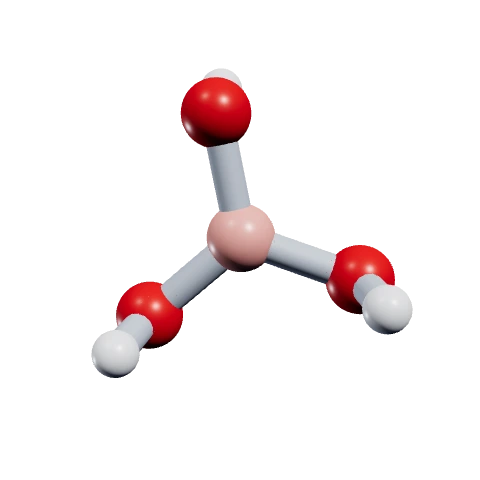


Boric acid for roaches: key facts
- Borates affect cockroach physiology two ways: as a slow-acting stomach toxicant once ingested during grooming, and as an abrasive that disrupts the waxy epicuticle and accelerates water loss. This is the published mechanism behind EPA-registered borate bait products — it is not a use direction for bulk boric acid.
- A proven DIY bait is 1 part boric acid to 3 parts powdered sugar, bound with just enough water to make a thick paste; the sugar is the attractant and the roach carries the poison back to the nest.
- A high-fat alternative bait is 1 part boric acid to about 3 tablespoons peanut butter (optionally with bacon grease) for protein-seeking roaches.
- Registered borate products are formulated and labelled for specific placements and quantities. The product label, not a general rule of thumb, governs where and how much may be applied.
- Boric acid is not the same as borax: both are boron compounds, but boric acid (H3BO3) is the more refined form used in insecticidal baits.
- Keep boric acid baits away from children, pets, and food-prep surfaces, and wear gloves when mixing.
Few household pests spark universal frustration and disgust quite like cockroaches. These nocturnal invaders aren’t just unwelcome houseguests; they can spread allergens, trigger asthma, contaminate food, and destroy your sense of peace at home. Seeing them scatter when you turn on a light is a uniquely unsettling experience.
The good news? You can fight back effectively. This comprehensive guide reveals the secrets to using **boric acid**, a time-tested and powerful weapon, to create irresistible baits that eliminate roach infestations. We'll cover everything from understanding your enemy and crafting the perfect bait to strategic placement, safety measures, and even natural complements like **D-Limonene**. Discover how to leverage quality ingredients from Alliance Chemical to win the war against roaches for good.
Ready to arm yourself with knowledge and reclaim your space? Let's begin.
Need boric acid for roach bait?
Quality boric acid in powder or solid form. ACS grade for cleanest bait recipes.
Ships from Taylor, TX · SDS included · COA on request, no charge.
1. A Brief History of Cockroaches: Earth's Ultimate Survivors
To defeat your enemy, you must understand them. Cockroaches aren't recent pests; their lineage stretches back hundreds of millions of years, predating even the dinosaurs. Their incredible evolutionary success story explains why they are such masters of survival and stealth.
1.1 Deep Evolutionary Roots
Fossil evidence indicates cockroaches have existed for at least 320 million years1. They witnessed the rise and fall of dinosaurs and survived multiple global extinction events that wiped out countless other species. This ancient heritage has equipped them with remarkable adaptability and resilience.
1.2 Why They Thrive Alongside Humans
Human settlements provide cockroaches with ideal conditions: abundant food sources (our crumbs, spills, garbage), ample water (leaky pipes, condensation), warmth, and countless dark, tight hiding places (cracks, crevices, clutter). They have co-evolved alongside us, becoming experts at exploiting our environments.
Cockroaches didn't just survive geological time; they mastered the art of living in the shadows, making our homes their preferred real estate.
Recognizing their deep-seated survival instincts is the first step toward developing a control strategy that works. Superficial measures often fail because roaches are programmed to overcome temporary threats.
2. Why Cockroaches Are So Hard to Kill
If you've battled roaches before, you know they seem almost indestructible. Several biological and behavioral traits contribute to their reputation as some of the planet's most resilient pests.
2.1 Unfussy Eaters (Omnivorous)
They aren't picky. Roaches will consume almost anything organic: food scraps, grease, glue, soap, wallpaper paste, book bindings, cardboard, fabrics, and even the shed skins or dead bodies of other roaches. This makes starvation an ineffective control method.
2.2 Explosive Reproduction
Cockroaches reproduce rapidly and prolifically. A single female German cockroach (the most common indoor pest species) can produce several egg cases (oothecae) in her lifetime, each containing 30-40 eggs. Under ideal conditions, one pregnant female can lead to an infestation numbering in the thousands within a year2.
2.3 Remarkable Hardiness & Resistance
Their physical toughness is legendary. They can survive high levels of radiation (though the "nuclear apocalypse survivor" claim is exaggerated), withstand significant physical pressure (allowing them to squeeze through tiny cracks), and even live for about a week without a head (eventually dying of dehydration). Critically, many populations have developed significant physiological resistance to common chemical insecticides through rapid adaptation3.
2.4 Masters of Stealth (Nocturnal & Thigmotactic)
Roaches are primarily active at night, avoiding detection. They exhibit thigmotaxis – a preference for tight spaces and contact with surfaces – leading them to hide deep within cracks, crevices, wall voids, and under appliances during the day. Their sensitive cerci (appendages on their rear) detect minute air currents, alerting them to approaching danger long before you see them.

Their ability to eat anything, breed quickly, resist chemicals, and hide effectively makes controlling cockroaches a true challenge requiring strategic intervention.
3. Preparing Your Battle Plan: Integrated Pest Management (IPM)
Forget relying solely on a can of roach spray. Effective, long-term cockroach control requires an Integrated Pest Management (IPM) approach. IPM combines multiple tactics – focusing on prevention and non-chemical methods first – to manage pests safely and sustainably.
3.1 Step 1: Inspection & Monitoring
- Identify the Enemy: Determine the species (usually German or American indoors) as control methods can vary slightly.
- Locate Hotspots: Use a flashlight to inspect dark, warm, moist areas at night (kitchen, bathrooms, utility rooms). Look for live roaches, droppings (like black pepper), egg cases, and shed skins.
- Use Sticky Traps: Place glue traps flat against walls under sinks, behind the refrigerator/stove, and inside cabinets. Check them weekly to pinpoint high-traffic areas and monitor population changes.
3.2 Step 2: Sanitation – Remove Food, Water & Shelter
- Eliminate Food Sources: Store ALL food (including pet food) in sealed containers. Clean up spills and crumbs immediately. Wash dishes promptly. Empty trash cans nightly (use bins with tight lids). Clean grease buildup from stoves and vents.
- Remove Water Sources: Fix all leaks (pipes, faucets, roofs). Dry sinks and tubs nightly. Address condensation issues. Empty pet water bowls overnight if possible.
- Reduce Harborage (Shelter): Declutter! Remove piles of paper, cardboard boxes, magazines, and unused items, especially near kitchen/bathroom areas. Roaches love cardboard and paper clutter.
3.3 Step 3: Exclusion – Block Their Entry & Movement
- Seal Cracks & Crevices: Use caulk or sealant to close gaps around pipes, baseboards, countertops, window/door frames, electrical outlets, and where cabinets meet walls. Pay special attention to gaps between apartments in multi-unit dwellings.
- Screen Vents & Drains: Ensure vents and floor drains have tight-fitting screens.
3.4 Step 4: Targeted Control Methods (Where Boric Acid Shines)
- Baits (Primary): Use slow-acting baits like **boric acid baits** (Section 5) placed strategically in hidden areas identified during inspection (Section 6).
- Dusts (Supplemental): Apply **boric acid dust** carefully into wall voids, behind electrical plates (turn off power first!), under heavy appliances, and in attics/crawlspaces (Section 6).
- Other Tools: Consider Insect Growth Regulators (IGRs) to disrupt reproduction, or targeted use of low-impact contact sprays (like D-Limonene, Section 8) if needed, ensuring they don't interfere with bait acceptance.
IPM is a systematic approach: inspect, clean, exclude, and then apply targeted treatments like boric acid. It addresses the root causes, not just the symptoms.
4. Boric Acid 101: The Unsung Hero of Roach Control
Amidst a market flooded with complex chemical sprays, **boric acid** (
4.1 The Published Mechanism of Borates in Insects
Boric acid employs a multi-pronged attack:
- Stomach Poison: When roaches ingest boric acid (either by eating bait or grooming powder off their bodies), it disrupts their metabolism and damages their digestive system. They slowly stop eating and eventually die from starvation and internal damage.
- Exoskeleton Abrasion: The microscopic crystals of boric acid powder are abrasive to the waxy outer layer (cuticle) of a roach's exoskeleton. This physical damage impairs the cuticle's ability to retain moisture, leading to dehydration (desiccation).
- Nervous System Effects (Secondary): While primarily a stomach poison and desiccant, some studies suggest boric acid may also have secondary effects on the insect nervous system at sufficient doses.
- Transfer Effect: Roaches contaminated with boric acid powder carry it back to their hidden nests (harborages). Other roaches become exposed through direct contact, grooming, or even cannibalism of dead roaches, potentially leading to control of individuals that never directly encountered the initial application.
4.2 Key Advantages for Roach Control
- Long-Lasting Residual: Boric acid powder remains effective indefinitely as long as it stays dry. A single application in a wall void or under a cabinet can provide protection for months or even years.
- Minimal Resistance: Unlike neurotoxic insecticides that target specific nerve receptors (where resistance mutations can arise), boric acid's primary modes of action (stomach poison, physical abrasion) make it extremely difficult for roaches to develop physiological resistance4.
- Non-Repellent: Roaches generally do not detect or avoid boric acid powder or properly formulated baits, increasing the likelihood of lethal exposure.
- Relatively Low Mammalian Toxicity: Compared to many synthetic organic pesticides, boric acid has lower acute toxicity to humans and pets *if used as directed*. However, it is still toxic if ingested, so safety precautions are essential (Section 7).
- Cost-Effective: Boric acid is generally inexpensive, especially when purchased as a technical grade powder for bait formulation or dusting.
4.3 Choosing the Right Boric Acid
For pest control, **Technical Grade Boric Acid** is typically the most suitable and cost-effective option. Higher purity grades (like lab or pharmaceutical grade) are unnecessary. Ensure you purchase from a reputable source to guarantee quality.
- Alliance Chemical Boric Acid (Technical Grade): Provides the quality needed for reliable bait and dust applications.
Boric acid is a slow but relentless killer. Its persistence, lack of resistance, and multiple modes of action make it an indispensable tool against resilient cockroach populations.
7. Safety First: Handling Boric Acid Responsibly
While often described as having "low toxicity" compared to other insecticides, boric acid is still a chemical and must be handled with appropriate care to protect yourself, your family, pets, and the environment. Always follow label instructions and these best practices.
7.1 Personal Protective Equipment (PPE)
- Gloves: Wear disposable, waterproof gloves (e.g., nitrile) when handling boric acid powder, mixing baits, or placing applications. This prevents skin absorption and potential irritation.
- Eye Protection: Use safety glasses, especially when working with the powder, to prevent accidental contact and irritation.
- Dust Mask/Respirator: Crucial when applying boric acid as a dust. Use at least an N95-rated mask to avoid inhaling fine particles, which can irritate the respiratory system. Ensure good ventilation during dusting.
7.2 Application Safety
- Targeted Placement ONLY: Apply boric acid *only* in cracks, crevices, wall voids, under/behind inaccessible appliances, and inside tamper-resistant bait stations.
- NEVER Apply Where Accessible: Do **NOT** apply boric acid powder or baits on countertops, tables, shelves, food preparation surfaces, floors where children crawl or pets walk, inside utensil drawers, or anywhere direct contact by non-targets is possible.
- Avoid Food Contamination: Keep boric acid far away from food, drinks, pet food, dishes, and cooking utensils during storage, mixing, and application.
- Use Minimal Effective Amount: Apply only the amount needed. A fine layer of dust or small bait placements are more effective and safer than large piles.
7.3 Storage and Disposal
- Secure, Labeled Storage: Store boric acid in its original, tightly closed container, clearly labeled, and completely out of reach of children and pets (e.g., high shelf, locked cabinet).
- Dry Conditions: Store in a cool, dry place to maintain powder integrity.
- Proper Disposal: Do not discard excess boric acid or baits down drains or in regular household trash unless specifically allowed by your local waste authority. Contact them or your local hazardous waste disposal facility for guidance on proper disposal methods. Clean up spills promptly and carefully.
7.4 First Aid & Emergency Reference
Keep emergency contact information readily available (e.g., Poison Control: 1-800-222-1222 in the US). Always refer to the product label and Safety Data Sheet (SDS) for specific first-aid measures. General advice:
- Skin: Wash area with soap and water.
- Eyes: Flush gently with water for 15-20 minutes. Seek medical advice if irritation persists.
- Inhalation (Dust): Move to fresh air. Seek medical attention if breathing difficulties occur.
- Ingestion: **Call Poison Control or a doctor immediately.** Do not induce vomiting unless instructed. Have the product container/label available.
Mandatory Reading: The SDS
The Safety Data Sheet (SDS) contains critical hazard, handling, storage, and first aid information. Before using any chemical, review its SDS. Access the SDS for Alliance Chemical's Boric Acid here: Boric Acid SDS.
Safety isn't optional. Responsible handling and precise, inaccessible placement are paramount when using boric acid for pest control.
10. Alliance Chemical: Your Source for Quality Ingredients
Achieving effective pest control often comes down to the quality and reliability of the active ingredients you use. Alliance Chemical provides dependable access to key components like boric acid and D-Limonene, supporting both DIY homeowners and pest control professionals.
10.1 Featured Products for Roach Control
- Boric Acid (Technical Grade): The essential ingredient for potent, long-lasting roach baits and dusts. Sourced for reliable purity and particle size suitable for pest control.
- D-Limonene (Technical Grade): High-quality citrus solvent for effective natural contact killing, cleaning, and repelling applications.
10.2 Why Quality Matters
- Consistency: Reliable chemical purity and physical properties (like powder fineness) ensure predictable performance in baits and dusts.
- Effectiveness: Using properly specified grades (like Technical Grade Boric Acid) ensures you have the right material for the job, maximizing efficacy against pests.
- Safety Information: Reputable suppliers provide easy access to critical Safety Data Sheets (SDS), enabling safe handling and use.
10.3 Beyond the Basics
Alliance Chemical also offers related products that can support your overall IPM program:
- Cleaning & Degreasing Agents: Essential for the sanitation aspect of roach control.
- Appropriate Containers: For safe storage of bulk chemicals or prepared baits.
- Support & Service: Assistance with product selection, bulk orders, and logistical needs.
Partner with Alliance Chemical
Whether formulating DIY baits or needing reliable components for professional pest management, Alliance Chemical offers quality products, accessible safety data, and dedicated service. Explore our full product catalog or contact us for specific needs.
Effective pest control starts with quality ingredients. Trust Alliance Chemical for the reliable boric acid and D-Limonene needed to win your war against roaches.
11. Frequently Asked Questions (FAQs) about Boric Acid for Roaches
- Q1: Is boric acid safe to use around food preparation areas?
- Answer: NO. Boric acid should **never** be applied directly on countertops, cutting boards, inside pantries where food is stored openly, or anywhere it could contaminate food, dishes, or utensils. Apply only in inaccessible cracks, crevices, voids, or bait stations away from food prep zones.
- Q2: How is boric acid different from borax?
-
Answer: They are related boron compounds but chemically different. Boric acid (
H₃BO₃ ) is generally considered more effective as an insecticide than borax (sodium tetraborate decahydrate,Na₂B₄O₇·10H₂O ). While borax has some insecticidal properties, boric acid is the preferred material for roach baits and dusts due to its higher efficacy. - Q3: Can I just sprinkle boric acid powder around my kitchen floor?
- Answer: This is **not recommended** and is unsafe. Roaches may avoid thick piles, it creates an inhalation hazard, and it poses a risk to children and pets walking through it and potentially ingesting it later via grooming. Apply only as a fine, barely visible dust in hidden, inaccessible areas using a bulb duster, or use formulated baits.
- Q4: Does boric acid kill roach eggs?
- Answer: No, boric acid does not effectively penetrate the protective egg case (ootheca). It kills nymphs after they hatch and come into contact with the powder or bait, and adult roaches. This is why long-term application/baiting is necessary – to catch newly hatched individuals.
- Q5: Why isn't my boric acid bait working?
-
Answer: Several reasons are possible:
- Placement: Baits might not be located where roaches are actively foraging. Re-inspect and adjust placement based on monitoring traps.
- Palatability: The bait recipe might not be attractive to your specific roach population, or the boric acid concentration might be too high. Try a different recipe or lower the boric acid ratio.
- Competing Food Sources: Poor sanitation means roaches have plenty of other things to eat and may ignore your bait. Improve cleaning efforts drastically.
- Bait Freshness: Old, dried out, or moldy bait is unattractive. Replace baits regularly.
- Moisture: If boric acid powder gets wet, its effectiveness is greatly reduced. Ensure dust applications stay dry.
- Q6: Is boric acid harmful to plants?
- Answer: Boron is an essential micronutrient for plants, but excessive amounts are toxic. Avoid applying boric acid directly to soil or plants unless specifically intended as a boron supplement (at very low, controlled rates). Keep pesticide applications away from garden areas or houseplants.
13. Conclusion: Achieving Long-Term Victory
Cockroaches are ancient survivors, experts at exploiting our living spaces. But they are not unbeatable. Armed with the right knowledge and the persistent power of **boric acid**, you can turn the tide and reclaim your home or business from these unwelcome invaders.
Remember that success lies not in a single application, but in a comprehensive **Integrated Pest Management (IPM)** strategy. By combining meticulous **sanitation**, diligent **exclusion** (sealing entry points), careful **monitoring**, and the **strategic application** of effective, low-resistance tools like boric acid baits and dusts, you address the infestation from multiple angles.
Key takeaways for winning the war:
- Boric acid offers long-lasting, non-repellent control with minimal resistance issues.
- Proper bait formulation (low boric acid concentration, attractive food source) is crucial for ingestion.
- Strategic placement in hidden pathways and harborages maximizes effectiveness and safety.
- Applying dust correctly (fine layer in inaccessible areas) provides durable residual control.
- Sanitation and exclusion are non-negotiable parts of any long-term solution.
- Natural complements like D-Limonene can enhance your strategy when used thoughtfully.
- Safety precautions (PPE, careful placement, proper storage) are paramount.
- Persistence pays off; boric acid is slow but steady.
Utilize high-quality ingredients, like those available from Alliance Chemical, follow safety guidelines diligently, and maintain your efforts consistently. With this approach, you can achieve lasting victory over even the most stubborn cockroach populations.
Ready to Fight Back?
Equip yourself with Technical Grade Boric Acid from Alliance Chemical and implement the strategies in this guide. Take control and enjoy a roach-free environment!
The battle against roaches is winnable. Combine knowledge, persistence, sanitation, and the proven effectiveness of boric acid to secure your victory.
14. References & Further Reading
Expand your knowledge with these resources:
- Graczyk, T. K., Knight, R., & Tamang, L. (2005). Mechanical transport and transmission of pathogens by synanthropic cockroaches. Clinical Microbiology Reviews, 18(1), 128–132.
- Appel, A. G., & Smith, L. M. (2002). Biology and management of the German cockroach. Annual Review of Entomology, 47, 33–55.
- Dong, K., et al. (2014). Molecular mechanisms of insecticide resistance. Annual Review of Entomology, 59, 145–163.
- Ebeling, W. (1994). Chapter 5: Pests On or Near Food. In Urban Entomology. University of California Division of Agriculture and Natural Resources. (Contains discussion on boric acid effectiveness and lack of resistance).
- U.S. Environmental Protection Agency. (1993). Reregistration Eligibility Decision (RED) for Boric Acid and its Sodium Salts. EPA 738-R-93-017. (Link to PDF)
- Karr, L. L., & Coats, J. R. (1992). Effects of four monoterpenoids on growth and reproduction of the German cockroach (Blattodea: Blattellidae). Journal of Economic Entomology, 85(2), 424–429.
- Alliance Chemical. (n.d.). Boric Acid Technical Grade Product Page.
- Alliance Chemical. (n.d.). Safety Data Sheet (SDS) - Boric Acid Technical.
- Alliance Chemical. (n.d.). D-Limonene Technical Grade Product Page.
- National Pesticide Information Center (NPIC). Boric Acid General Fact Sheet. (Link)
Disclaimer: This guide provides information for educational purposes. Chemical handling requires care and adherence to safety protocols. Always read and follow product labels and Safety Data Sheets (SDS) precisely. Wear appropriate PPE, ensure proper ventilation, and store chemicals safely out of reach of children and pets. Use pesticides responsibly and according to all local, state, and federal regulations. For severe infestations or safety concerns, contact a qualified pest control professional. Alliance Chemical assumes no liability for the misuse of information or products mentioned herein.
Ready to order boric acid?
COA + SDS included. Ships from Taylor, TX.
Call 512-365-6838 · Mon-Fri 8am-5pm CT · SDS included · COA on request, no charge
Related Reading
References & Authoritative Sources
Chemical identity, properties, and safety data sourced from the U.S. National Library of Medicine's PubChem database — the authoritative open-chemistry data resource maintained by the National Institutes of Health.
- PubChem CID 7628: Boric Acid Powder 99% Acs Grade — National Center for Biotechnology Information, U.S. National Library of Medicine. CAS 10043-35-3.
- PubChem CID 440917: D-Limonene Technical Grade — National Center for Biotechnology Information, U.S. National Library of Medicine. CAS 5989-27-5.
Related: Boric Acid for Ants: the sugar-water bait recipe that actually works — the same boron chemistry, aimed at ants instead of roaches.
Frequently asked questions
How do borates affect cockroaches?
Published work describes borates as a slow-acting stomach toxicant once ingested during grooming, which also abrades the waxy epicuticle and increases water loss. That mechanism is why registered borate baits work at low concentrations. Alliance Chemical supplies boric acid as ACS-grade raw material, not as a bait product.
Is boric acid safe to use around pets and children?
Boric acid has low mammalian toxicity (LD50 ~2,660 mg/kg for rats) but should be placed in areas inaccessible to pets and children. Use bait stations rather than loose powder, and avoid applying near food preparation areas. While less toxic than synthetic pesticides, ingestion can cause nausea—keep products labeled and stored safely.
About the author
Andre Taki
This article is for informational purposes only.


