Product Overview
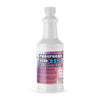
Alliance Chemical offers high-purity Phosphoric Acid 85% at a precise concentration, manufactured to meet demanding industrial and commercial requirements. As a Texas-based distributor operating since 1997, we provide consistent quality for our customers nationwide. Phosphoric acid, characterized by its molecular formula H3O4P and a molecular weight of 97.995, is a non-volatile, clear, colorless, and odorless liquid. This dense mineral acid, available in our acids collection, serves as a fundamental chemical building block across multiple industrial sectors, playing an integral role in chemical synthesis, metal finishing, and specialized compounding. By maintaining a reliable supply chain, we ensure that bulk and packaged quantities remain readily accessible for operations of all scales.
Operating at an 85% concentration, this liquid phosphoric acid exhibits a density of approximately 1.892 at 77 °F, causing it to sink in water. It is fully miscible with water, which allows for effortless dilution in industrial mixing processes. Our chemical products are carefully monitored and documented to guarantee consistency from batch to batch. We understand that precision is paramount in technical applications, and our team is committed to delivering solutions that align with standard industrial practices. Whether utilized for adjusting pH levels or as a reaction agent, this phosphoric acid offers the chemical stability and physical performance required to sustain your operations.
Why This Grade
Selecting the appropriate concentration and grade of phosphoric acid is critical to maintaining operational efficiency and ensuring product integrity. The 85% concentration represents a highly concentrated aqueous solution, providing maximum chemical activity while minimizing water volume during transport and storage. Utilizing a lower concentration would require larger storage capacities and alter reaction stoichiometry in industrial formulations. This specific high-purity grade ensures that trace metallic impurities and organic contaminants are kept to an absolute minimum, which is vital for operations that require predictable chemical behavior without side reactions or contamination.
Using an incorrect grade or an unverified concentration can lead to significant failure modes in industrial systems. For instance, in metal treatment or phosphatizing lines, excess impurities can cause uneven surface coatings, poor paint adhesion, or accelerated corrosion. In chemical synthesis, unwanted trace elements can poison expensive catalysts or alter the pH balance, rendering entire batches unusable. Opting for a generic, lower-grade acid can also introduce heavy metals that violate strict regulatory standards or cause mechanical fouling within process piping and heat exchangers. Ensuring the right grade prevents these costly disruptions and protects your equipment.
Chemical Profile
- CAS Number
- 7664-38-2
- Chemical Formula
- H3O4P
- Molecular Weight
- 97.995 g/mol
- Boiling Point
- greater than 266 °F at 760 mmHg (USCG, 1999)
- Melting Point
- 108 °F (NIOSH, 2024)
- Flash Point
- Not applicable °C
- Specific Gravity
- 1.892 at 77 °F (USCG, 1999) - Denser than water; will sink
- Appearance
- Phosphoric acid appears as a clear colorless liquid or transparent crystalline solid. The pure solid melts at 42.35 °C and has a density of 1.834 g / cm3. Liquid is usually an 85% aqueous solution. Shipped as both a solid and liquid. Corrosive to metals and tissue. Used in making fertilizers and detergents and in food processing.
- Solubility
- Miscible (NIOSH, 2024)
- UN Number
- UN1805
- Hazard Class
- Class 8
- Packing Group
- III
- Proper Shipping Name
- PHOSPHORIC ACID, SOLUTION
- GHS Signal Word
- Danger
Values sourced from Alliance Chemical's canonical chemistry registry. Certificate of Analysis (COA) per lot.
Industrial Applications
- Metal surface treatment and phosphatizing to prepare steel substrates for industrial painting and coating operations by creating a corrosion-resistant layer.
- Industrial wastewater treatment systems for adjusting pH levels and neutralizing alkaline process streams prior to discharge into municipal systems.
- Fertilizer formulation where it serves as a concentrated source of phosphorus, a critical nutrient for agricultural development and crop yields.
- Chemical synthesis of phosphate esters and salts which are used as flame retardants, plasticizers, and industrial catalyst components.
- Detergent and cleaning agent manufacturing where the acid assists in removing mineral deposits, rust, and scale from industrial equipment.
Hazmat & Shipping
Phosphoric Acid 85% is a regulated hazardous material. It is classified under shipping regulations as UN1805, Hazard Class 8 (Corrosive), Packing Group III. The proper shipping name for this material is PHOSPHORIC ACID, SOLUTION. The signal word associated with this chemical is Danger, and it carries the hazard statement H314, indicating that it causes severe skin burns and eye damage. Proper documentation, including compliance with DOT hazmat transportation regulations, is strictly observed for every shipment we dispatch.
Due to its corrosive nature, handling this chemical requires appropriate personal protective equipment (PPE). Operators must wear chemical-resistant gloves, protective clothing, and eye or face protection such as splash goggles or a full-face shield to mitigate the risk of severe burns from accidental exposure. Adequate ventilation must be maintained in the work area to prevent inhalation of mists or vapors. Emergency eyewash stations and safety showers must be readily accessible in any facility handling this acid. All handling procedures must align with the guidelines detailed in the safety documentation.
Handling & Storage
Proper storage of Phosphoric Acid 85% requires corrosion-resistant containers constructed from materials such as high-density polyethylene (HDPE), polypropylene, or glass. Storage temperatures should ideally be maintained above its melting point of 108 °F to prevent crystallization, though the 85% solution typically remains liquid at lower temperatures. It must be kept away from incompatible materials, including strong bases, active metals, and strong oxidizing agents, which can react violently or release flammable hydrogen gas. Ensure containment areas are dry, well-ventilated, and equipped with appropriate spill response materials.
Order & Documentation
Our team provides comprehensive support for logistics and technical documentation. A Safety Data Sheet (SDS) is provided with every order to ensure safe handling and regulatory compliance. If you require verification of the chemical properties or purity levels for your specific application, a Certificate of Analysis (COA) is available upon request. To proceed with your procurement, please use our online portal where you can Request a Quote for bulk volumes or Download the SDS for your safety records.
Why Buy from Alliance Chemical
Since 1997, Alliance Chemical has supplied premium industrial chemicals from Taylor, Texas under CAGE Code 1LT50, with a COA and SDS included on every order. For industrial use only.